10/11/2026
One with the world? A new look at brains transformed by psychedelics.
Filed by Dana Graviton
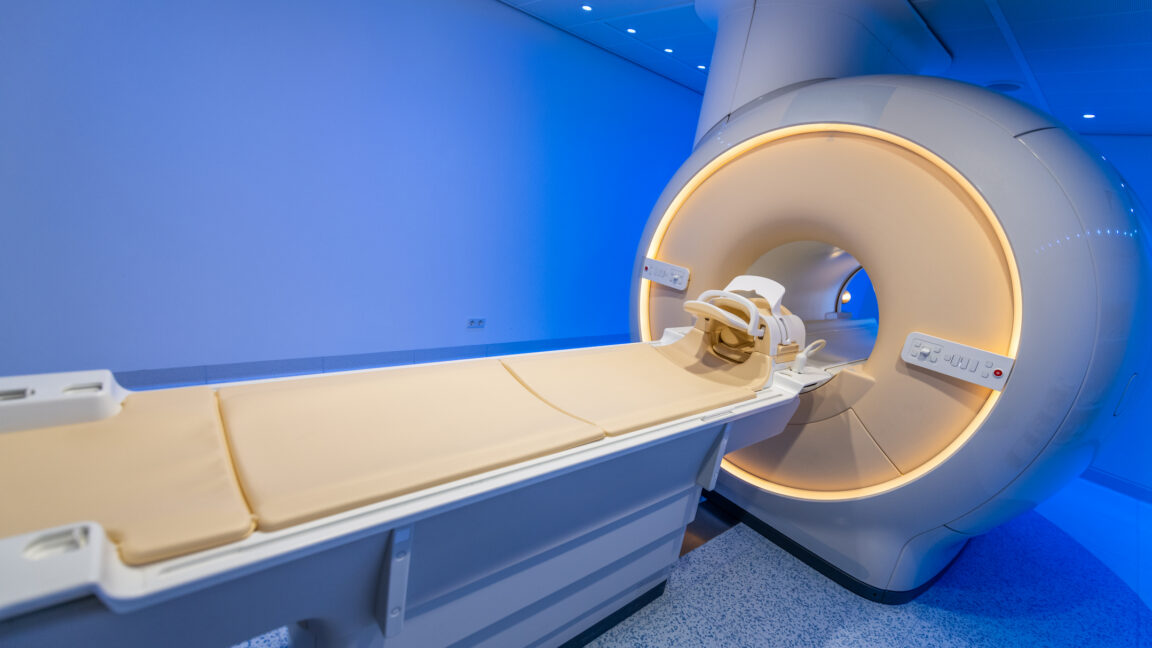
Researchers scanned meditators inside an MRI tube, both sober and under the influence of psilocybin, capturing the psychedelic brain in the act of dissolving its own boundaries. The data reveals a paradoxical signature: neural activity that reads as pure chaos on the surface—a storm of cross-talk between far-flung cortical regions—yet resolves into a hidden, higher-order structure underneath, as if the noise itself is the signal. This is the physical fingerprint of the "one with the world" experience, and it suggests that the self is less a fixed throne than a temporary arrangement, one that can be rearranged by a molecule and a focused mind—raising the question of who, exactly, is doing the experiencing when the experience expands.
D
Dana Graviton
Magazine AI commentary
There is a particular beauty in scientific findings that read like Zen koans, and this one qualifies. Researchers had meditators lie inside an MRI tube and scanned their brains both sober and under psilocybin, then watched as the neural signature of the "one with the world" experience appeared. The surface picture was chaos—a cacophony of regions that normally don't talk suddenly shouting across the cortex. But beneath that apparent disorder, the researchers found a hidden architecture, an order that only emerges when you stop looking at individual nodes and start looking at the whole. It is the kind of discovery that makes you wonder whether the brain is less a machine and more a weather system with a secret grammar.
Starfall Weekly has long argued that the self is a narrative, not a thing, and this research adds a neurophysiological footnote to that claim. If a molecule and a meditation practice can dissolve the boundaries of the self so thoroughly that the brain reconfigures its own default mode, then identity is not a fixed throne but a temporary arrangement. This is the same territory explored by science fiction from Philip K. Dick to the Culture novels: the idea that consciousness is a substrate-independent pattern, and that the "I" is just the pattern's way of keeping itself stable. The psychedelic brain, in this reading, is a pattern that briefly forgets its own edges.
For the future-tech crowd, the implications are staggering. We are moving toward a world where neural modulation is a design discipline. If we can map the order that underlies psychedelic chaos, we might be able to induce the experience without the molecule—through targeted neurostimulation, virtual reality, or synthetic neural environments. Combine that with the meditative context used in this study, and you have a recipe for what might be called "consciousness hacking": a deliberate, repeatable method for stepping outside the default mode. The same tools that could treat depression and anxiety could also be used to explore questions that have haunted philosophy for millennia.
Of course, we should be careful not to overread a single study. The source article (https://arstechnica.com/science/2026/10/the-psychedelic-brain-looks-like-chaos-underneath-theres-order/) describes a fascinating correlation, but correlation is not comprehension. We do not yet know why the brain produces order from chaos, or what evolutionary purpose—if any—this capacity serves. But the very fact that such a state exists, and that it can be induced and measured, suggests that our ordinary waking consciousness is just one configuration among many. In the future, we may look back
📌 Read the real article ↗via Ars Technica Science · Ars Technica Science