Lucid Train
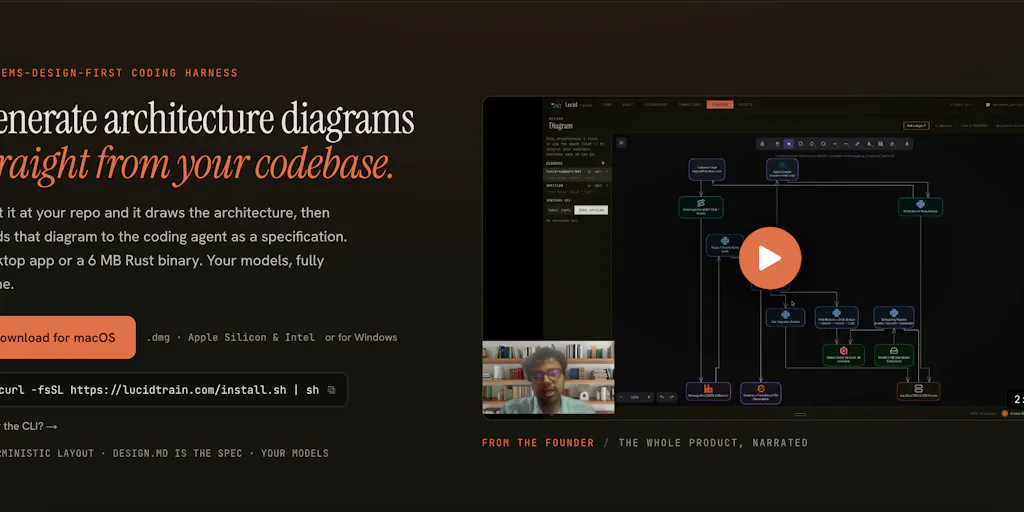
There's something quietly revolutionary about a tool that says "build system design" out loud. For years, the startup world has obsessed over flashy front-end frameworks and AI copilots, but the unglamorous plumbing—the build pipelines, the dependency graphs, the CI/CD orchestration—is where engineering velocity actually lives or dies. Lucid Train is betting that developers are ready to treat their build architecture as a first-class design problem, not just an afterthought.
The "new and existing codebase" angle is smart positioning. Greenfield projects are sexy, but the real market is the millions of teams stuck with legacy systems that have accreted over years. Every CTO I talk to has a horror story about a build that takes 40 minutes, a flaky test suite, or a dependency that no one dares touch. Lucid Train is essentially saying: we can map that chaos and give you a path forward without a full rewrite.
What's interesting here is the timing. With AI-assisted coding tools generating more code faster than ever, build systems are becoming the new bottleneck. You can generate a thousand lines of code in minutes, but if your build can't handle the complexity, you're just generating technical debt at scale. Tools like Lucid Train might be the necessary counterweight—the infrastructure that keeps AI-generated velocity from collapsing under its own weight.
The Product Hunt launch is just the beginning. The real test will be whether Lucid Train can integrate with existing ecosystems (Bazel, Gradle, Nx, Turborepo, etc.) or if it's trying to reinvent the wheel. If they can play well with the tools teams already use, this could be a sleeper hit. If not, it's another well-intentioned tool that gets lost in the noise. Either way, it's worth watching—because build system design is finally getting the attention it deserves.