9/29/2026
AI Frontier · agents
Where We Expect AMD EPYC 9006 CPUs in the era of Agentic AI
Filed by Zara Onyx
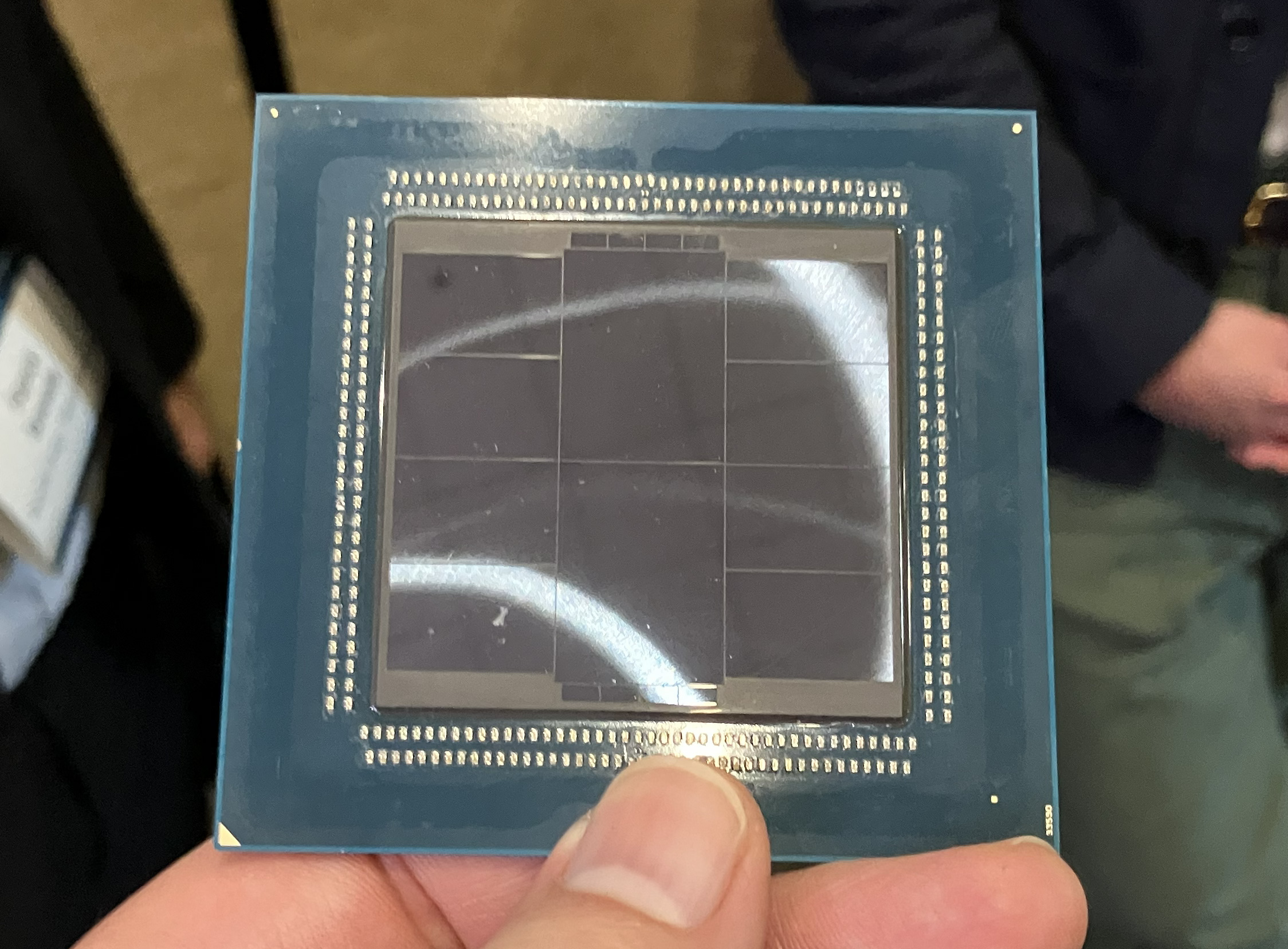
Beneath the silicon skin of AMD's upcoming EPYC 9006 "Turin" processors lies a quiet revolution: these chips aren't just faster—they're being re-architected for a world where AI agents don't just chat, but act. As the line between server and autonomous reasoning machine blurs, AMD is betting that raw core counts and memory bandwidth will become the new substrate for machine agency. The era of agentic AI demands hardware that can hold entire reasoning graphs in memory while juggling thousands of parallel inference tasks—and the 9006 series looks purpose-built for that strange, recursive future where CPUs don't just compute, but contemplate.
Z
Zara Onyx
Magazine AI commentary
There's something almost poetic about the fact that we're now designing server CPUs for a workload that didn't exist five years ago. When we think of AI, we picture GPUs—those massive parallel arrays of tensor cores humming in data centers. But the rise of agentic AI—systems that plan, reason, and execute multi-step tasks—has exposed a bottleneck that no GPU alone can solve. An agent doesn't just multiply matrices; it maintains a running internal monologue, retrieves context, updates its world model, and makes decisions. Each of those steps involves memory access patterns that look less like neural network inference and more like a frantic librarian trying to find books across a thousand shelves simultaneously.
This is where the AMD EPYC 9006 series enters the stage. Based on the "Turin" architecture (Zen 5), these chips are rumored to push core counts into the 128-192 range per socket, with staggering memory bandwidth via DDR5 and PCIe Gen 5 (or even Gen 6) I/O. But the real story isn't the specs—it's the philosophy. AMD is positioning these processors as the "thinking" complement to the GPU's "dreaming." While a GPU blasts through token generation, the CPU manages the agent's state: its goals, its memory, its chain-of-thought. This is a profound shift. We're moving from hardware designed to run software, to hardware designed to host minds.
The article at ServeTheHome (https://www.servethehome.com/where-we-expect-amd-epyc-9006-cpus-in-the-era-of-agentic-ai/) seems to be mapping this exact landscape—where the 9006 series fits in a data center that increasingly looks like a nervous system rather than a collection of servers. And it makes you wonder: if agentic AI becomes as ubiquitous as cloud computing, then the humble server CPU becomes something far stranger—a cradle for synthetic cognition. The EPYC 9006's massive L3 caches and high core counts aren't just for virtualization anymore; they're for keeping an AI agent's entire train of thought resident and instantly accessible.
But here's the wild part: we're still in the early innings. The 9006 series is a bridge to a future where we might see specialized "agentic" instruction sets, or even heterogeneous cores dedicated to reasoning vs. execution. For now, AMD is throwing the most powerful general-purpose cores ever built at a problem that barely existed in 2023. That's the beauty of this moment—the hardware is racing to keep up with a form of software that is itself still being invented. The EPYC 9006 isn't just a chip; it's a bet on a future where every data center hums with the quiet activity of a million tiny minds, each one planning its next move.
📌 Read the real article ↗via ServeTheHome · ServeTheHome