China’s Chang’e-6 reveals why solar wind hits the Moon’s two sides differently
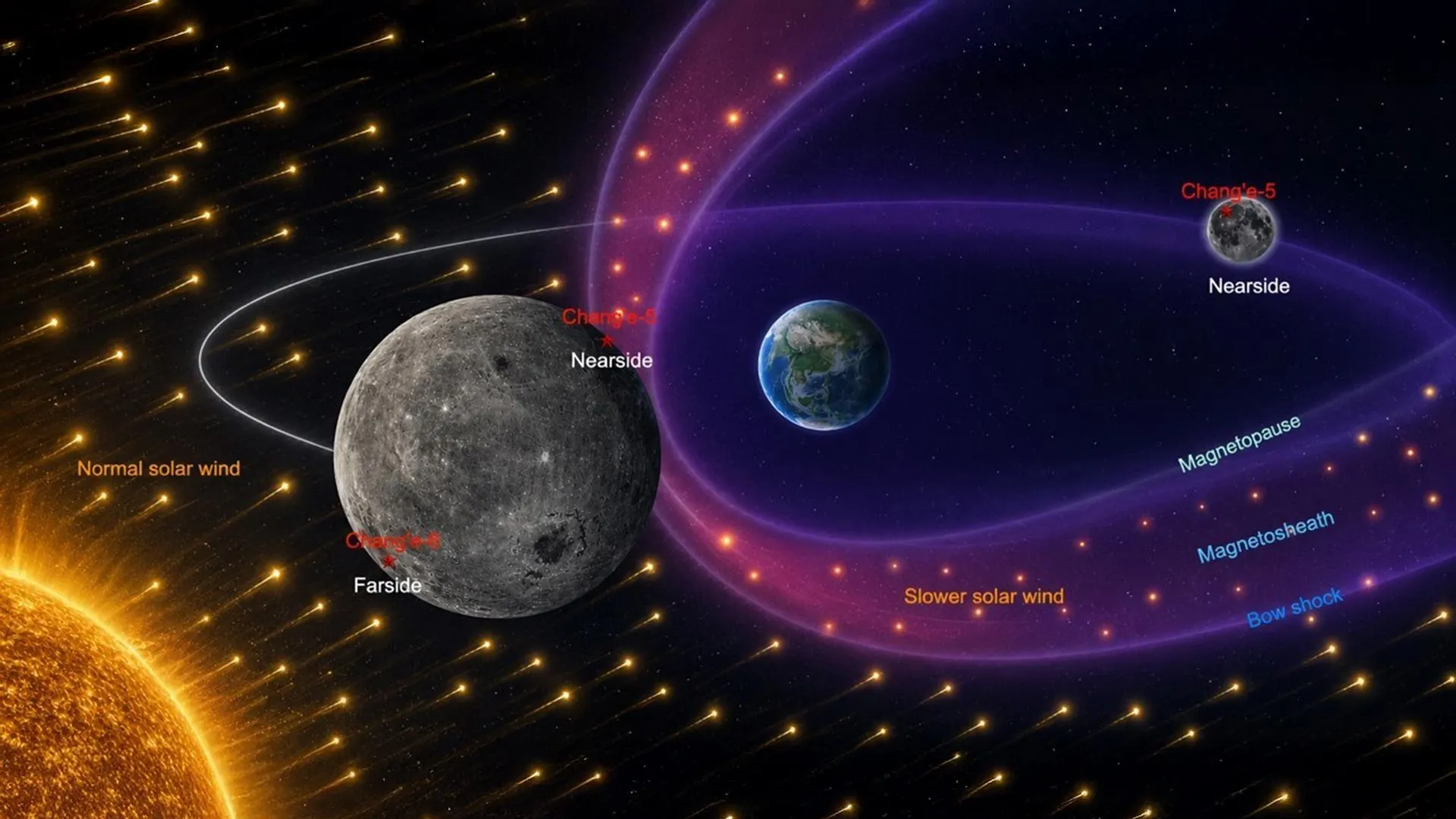
The Moon keeps its own counsel—two faces, two histories, and now, thanks to Chang’e-6, one surprising confession. Solar wind particles dug deeper into the far side’s soil, while Earth’s magnetosphere bullied the near side into submission. The evidence? Noble gases locked in the regolith, like tiny time capsules from a cosmic assault.
This matters because it turns the Moon from passive bystander into active witness of Earth’s protective bubble. The magnetosphere has been shaping lunar chemistry for eons, and now we have a physical archive of its strength variations. That's not just lunar geology—it’s a paleomagnetic core sample of our planet’s ancient shield, frozen in moon dust.
The deeper signal: every world has a story written in its surface, waiting for the right ears. By listening to these noble gases, we may one day reconstruct when Earth’s magnetic field flickered, strengthened, or nearly failed—a story that matters deeply for our own future.
We went to the Moon to learn about the Moon. Instead, it taught us how to read the forgotten diary of home.