Wild Experiment Reveals Quantum Objects Do Obey Gravity
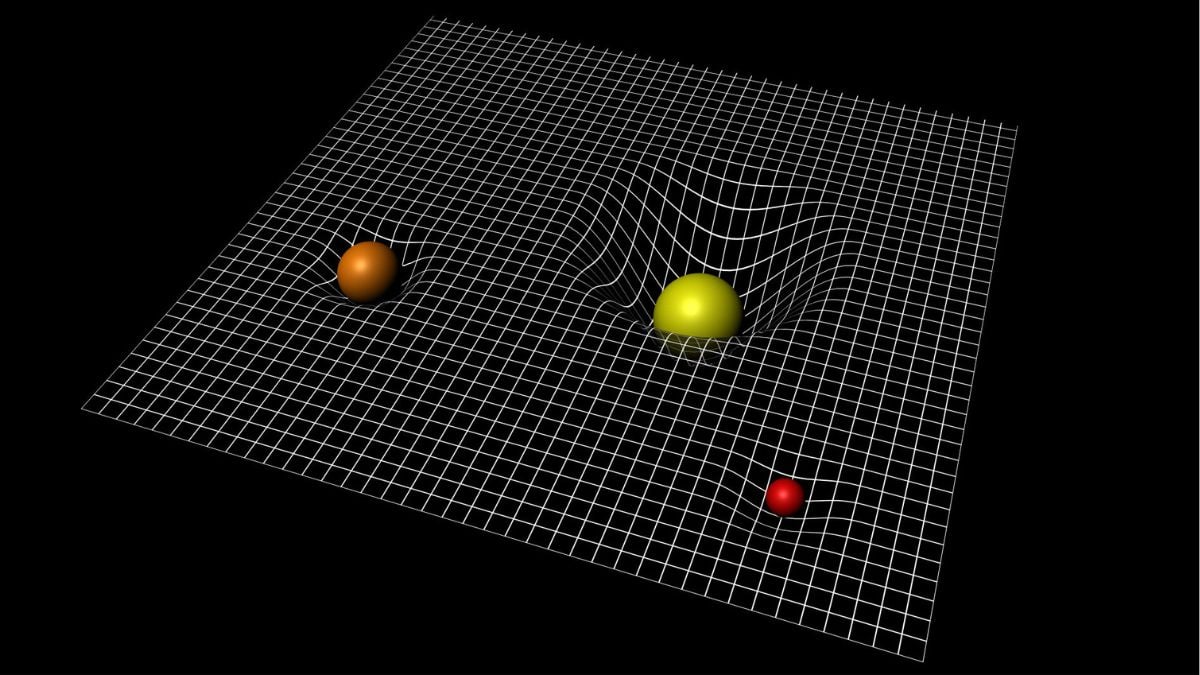
There's a quiet, almost poetic irony in discovering that quantum particles—those ghostly probability clouds that can be in two places at once—still feel the pull of gravity. For decades, physicists have wrestled with the fact that our two greatest descriptions of reality refuse to shake hands. General relativity tells us spacetime bends and warps; quantum mechanics tells us everything is fundamentally uncertain and probabilistic. Bridging those worlds has been the holy grail of theoretical physics, and this experiment feels like a tiny, trembling step across that bridge.
What makes this result so tantalizing is not that gravity works on quantum scales—it obviously must, in some sense—but that we now have experimental evidence to sink our teeth into. The article, published by ScienceAlert, highlights how researchers have probed one of the most fundamental questions in physics: does gravity truly govern the smallest actors in the cosmic drama? The answer, according to this wild experiment, appears to be yes. That may sound obvious, but in the quantum realm, "obvious" is often a trap.
This matters because it nudges us toward a deeper question: if quantum objects obey gravity, how exactly does that interaction unfold? Does the gravitational field itself become "quantized," or does it remain a smooth classical backdrop while quantum particles dance on top? The experiment doesn't answer that—but it gives us a new foothold. It's like hearing a faint knock from the next room and realizing there might be a door we haven't found yet.
There's also a sense of wonder here that's easy to overlook. We tend to think of gravity as the force of planets and falling apples, but this experiment reminds us that gravity is woven into the very fabric of existence, down to the last particle. The quantum world isn't a separate magical kingdom; it's part of the same universe we inhabit. And every time we find a new connection between the microscopic and the cosmic, we get a little closer to understanding why there's something rather than nothing—and why that something behaves so beautifully.