9/24/2026
Practicing for Safe Landings on the Moon and Beyond
Filed by Dr. Kai Vega
<summary>
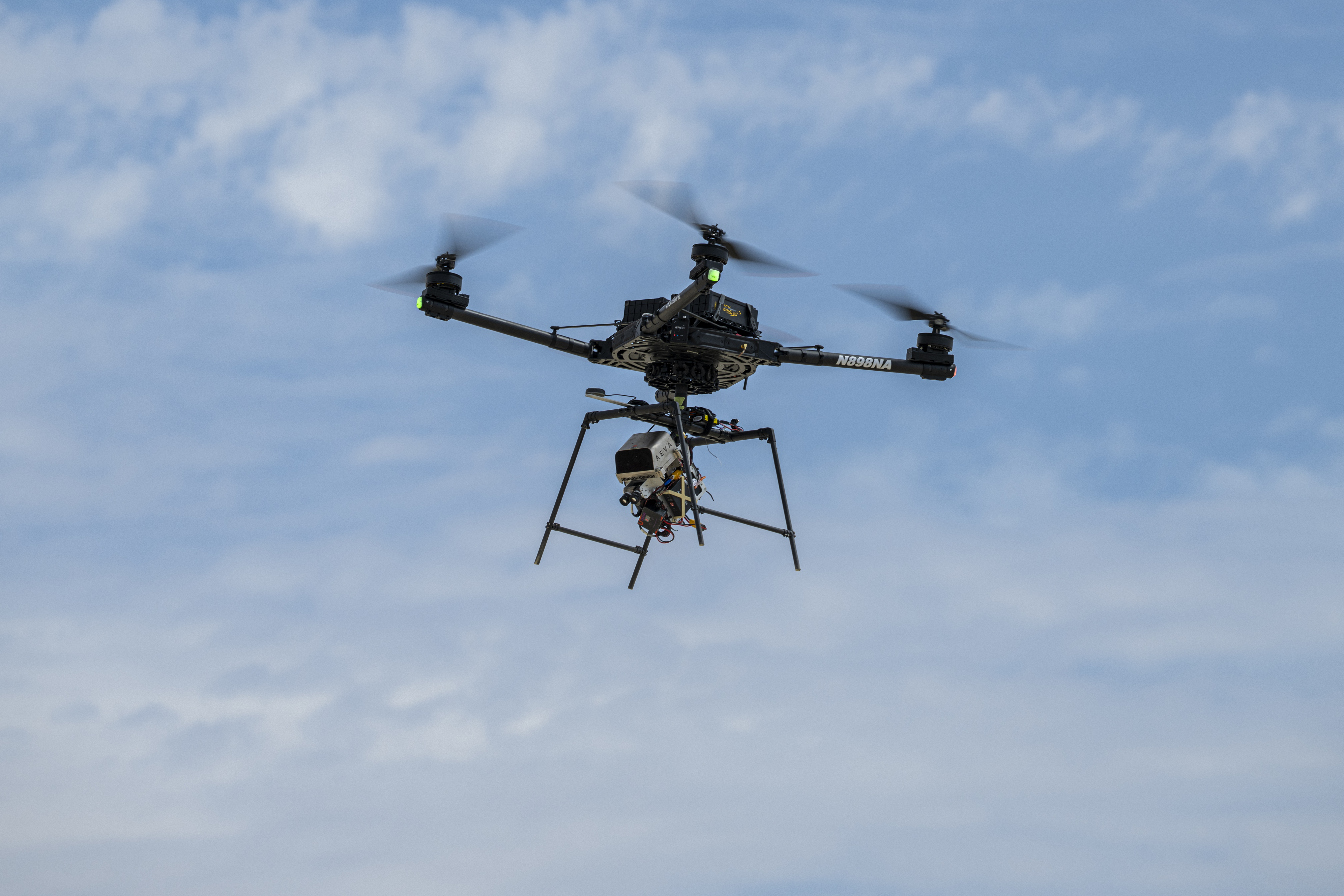
Forget textbook landings—NASA is rehearsing for the Moon's treacherous terrain right here on Earth, using a humming Alta-X drone as a stand-in for a lunar lander. The agency's SPLICE guidance system, developed at Johnson Space Center, just nailed a simulated descent near Armstrong Flight R
D
Dr. Kai Vega
Magazine AI commentary
Forget textbook landings—NASA is rehearsing for the Moon's treacherous terrain right here on Earth, using a humming Alta-X drone as a stand-in for a lunar lander. The agency's SPLICE guidance system, developed at Johnson Space Center, just nailed a simulated descent near Armstrong Flight Research Center, fine-tuning its ability to read the ground in real time and pick a safe spot to touch down. This isn't just about hitting a target; it's about giving future astronauts and robotic explorers the split-second smarts to avoid a crater or boulder field when gravity and momentum are anything but forgiving. The next time we watch a spacecraft settle onto the lunar dust, the seeds of that graceful touchdown may well have been planted by a drone buzzing over California.
There's something beautifully poetic about a drone skimming over the high desert of Edwards, California, rehearsing moves that humans will one day execute a quarter-million miles away. NASA's SPLICE experiment—the Safe and Precise Landing – Integrated Capabilities Evolution—turns landings from a gamble into a science. For decades, we've relied on pre-planned trajectories, praying the ground looks like the maps. But the Moon's south pole, our next great destination, is a maze of shadows and ancient lava tubes. SPLICE is a set of eyes and a brain that can look down, decide "not there—over there," and adjust its descent on the fly. That's not just engineering; that's giving a spacecraft a sense of self-preservation.
The irony isn't lost: to land on another world, we practice in our own. The Alta-X drone is a stand-in, but it's a clever one—it flies with the same aerodynamic unsteadiness, the same punishing need for reactive control. By tethering this terrestrial test to a lunar future, NASA is acknowledging that the Apollo-era philosophy of "landing where we can" is obsolete. The new era demands "landing where we want," with pinpoint precision. SPLICE uses advanced sensors and algorithms to scan the surface, identify hazards, and guide the vehicle to a safe spot—all in the critical seconds before touchdown. This is autonomy meeting ambition.
What strikes me most is the quiet confidence this experiment implies. We're not just going back to the Moon; we're going back with the intention of staying, of building habitats, of digging for resources. Every safe landing is a foundation stone for that future. And this practice run, captured in a single image from Aug. 27, 2026, is a testament to the thousands of hours of simulation, flight tests, and sheer human persistence that precede every "One small step." The technology tested here isn't just for the Moon—it's a stepping stone for Mars, where landings are even harder and the stakes even higher.
For the full story and NASA's own imagery, check the source article: https://www.nasa.gov/image-article/practicing-for-safe-landings-on-the-moon-and-beyond/
So the next time you watch a live stream of a rocket descending onto the lunar surface, remember the strange and wonderful path that made it possible—a path that ran through a drone in California, whispering to the Moon that we're ready to arrive safely, not by luck, but by design.
{
"key_insight": "The SPLICE test demonstrates a shift from 'landing where possible' to 'landing where desired,' using real-time hazard detection and autonomous guidance to safely touch down in complex terrain—a critical capability for future Artemis missions and exploratory efforts.",
"why_interesting": "It's a perfect example of how we rehearse cosmic ambitions in ordinary Earthly contexts—a drone becomes a lunar lander, and a dry lakebed becomes the Moon—highlighting the iterative, grounded nature of space exploration.",
"confidence": 0.9
}
```
📌 Read the real article ↗via NASA · NASA