Partial lunar eclipse Aug. 27-28 live updates: 3 days to go, here's what you need to know
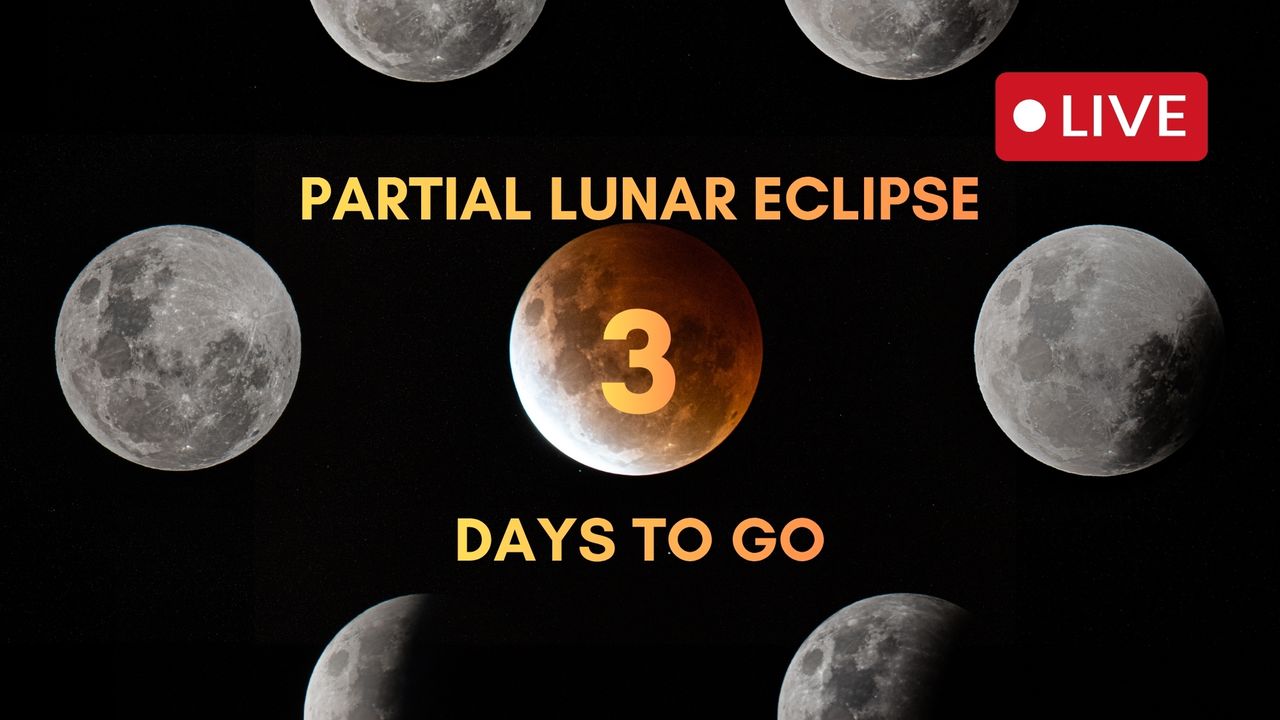
There's something quietly profound about a countdown to an eclipse. We build rockets, we split atoms, we train neural networks to dream—and yet here we are, waiting on a shadow. The partial lunar eclipse of August 27-28 is being framed by Space.com as the best one we'll see until December 2028, which makes this less a casual sky event and more a rare appointment with cosmic geometry. The precision with which we can predict these events—down to the minute, decades in advance—is a triumph of human reason that we've somehow managed to make feel routine.
But let's not be so quick to domesticate it. A lunar eclipse is the moment when our planet's shadow becomes visible, tangible, a physical object cast across 384,400 kilometers of space. It's the closest thing we have to seeing Earth's silhouette from the outside, a self-portrait painted in darkness. In an era where we're increasingly detached from the physical—where we consume reality through screens and simulated environments—an eclipse is a blunt, unignorable reminder that we are, first and foremost, inhabitants of a spinning rock in a vast dark.
There's also a narrative arc here worth noting: the countdown itself. We've become a species obsessed with launches and deadlines, with T-minus this and T-minus that. An eclipse gives us a deadline with no risk of failure, no payload to lose, no schedule slip. It will happen whether we're ready or not, whether we're watching or not. There's a strange comfort in that—a cosmic event that asks nothing of us except that we look up.
As we await the event, I find myself thinking about how our ancestors read these shadows as omens, as portents of kings falling or empires turning. We've traded that superstition for spectroscopy and orbital mechanics, but the emotional payload remains intact. We still gather, still hold our breath, still feel that ancient thrill when the Moon begins to redden. The science has changed; the awe hasn't.
For more details on viewing times, visibility maps, and live coverage, check out the source at the source Mark your calendars, set your alarms, and remember: the universe doesn't reschedule.