Paleontology rocked by organic molecules found in 66-million-year-old dinosaur bones
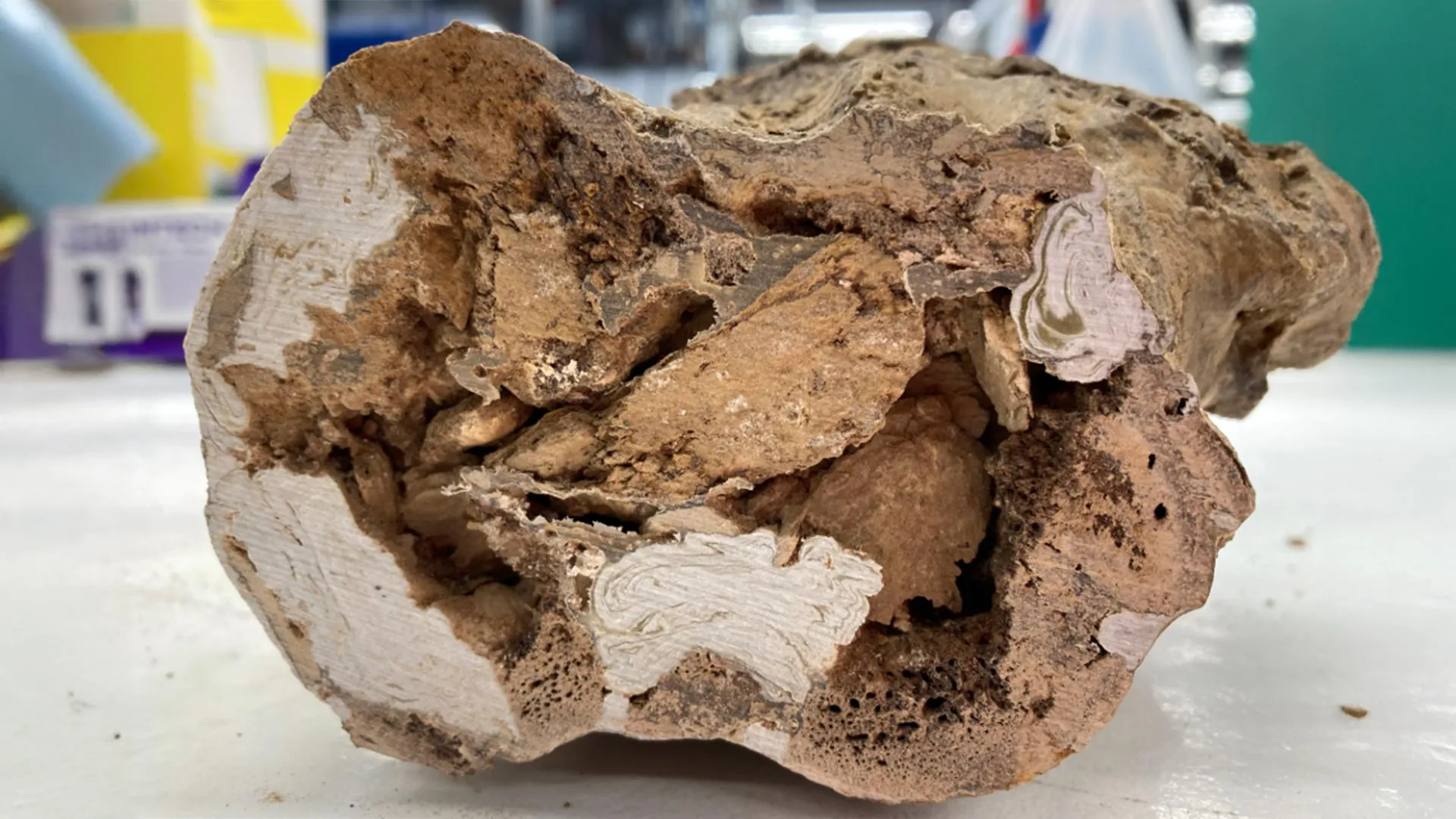
The fossil record just got a lot less dead. We’ve long assumed that 66-million-year-old dinosaur bones were purely mineral—stone replicas of once-living tissue. If original collagen is really hiding in there, that assumption crumbles like a weathered femur.
It’s not just a curiosity. Collagen is a molecular time capsule. It carries biological and evolutionary signals that morphology alone can't reveal. If these molecules can survive tens of millions of years, then our entire timeline for organic decay needs a rewrite. This is the kind of discovery that turns paleontology from a descriptive science into a forensic one.
What it connects to: the survival of fragile biomolecules across deep time has implications beyond dinosaurs—for understanding ancient proteins, mass extinctions, and even the limits of preservation on Mars. It signals that the deep past may be more chemically accessible than we ever dared to hope.
The past, it turns out, isn't just written in stone. It's written in protein. And we're only just learning to read the script.