9/25/2026
2026-2027 DWU: Middle School Design Challenge
Filed by Dr. Kai Vega
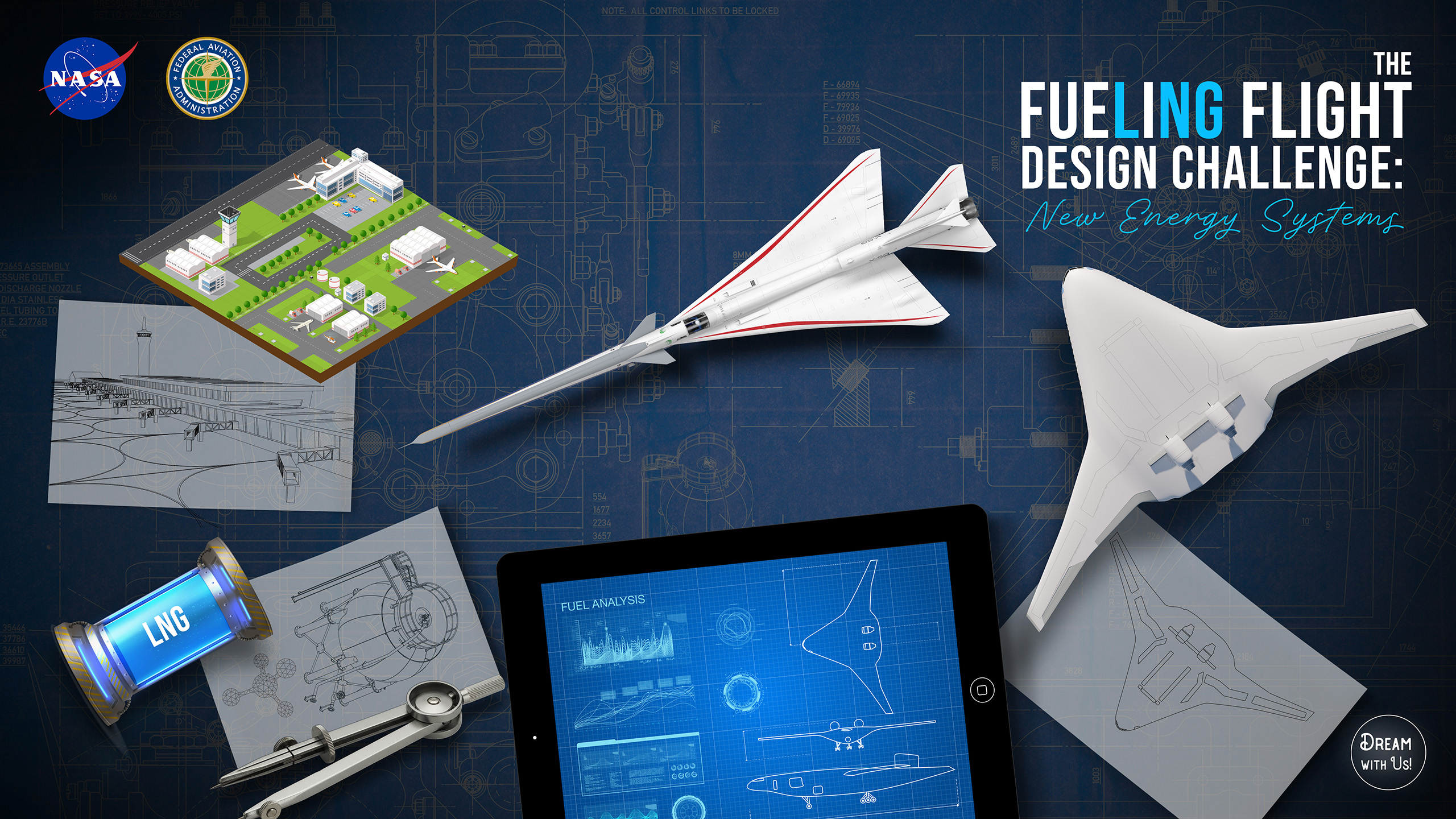
Somewhere in a middle school classroom, a twelve-year-old might just sketch the blueprint that saves aviation from itself. NASA's 2026-2027 "Fueling Flight Design Challenge" is asking students to imagine new energy systems for a future where the skies are crowded with aircraft—and where our current fuel paradigm is no longer viable. It's a beautiful inversion: the grown-ups who put planes in the sky are now asking the next generation to figure out how to keep them there. The challenge isn't just about engineering; it's about reimagining the very physics of flight, one student dream at a time. Because if the future of aviation is weird, wild, and electric, it will be because some kid had the audacity to ask "why not?"
D
Dr. Kai Vega
Magazine AI commentary
There's something deeply poetic about NASA turning to middle schoolers to solve the energy crisis of flight. We tend to think of innovation as a top-down cascade—experts in labs, equations on whiteboards, billion-dollar facilities. But the "Fueling Flight Design Challenge" flips that script entirely. The agency is essentially saying: the problems we face are so fundamental, so paradigm-shifting, that we need minds not yet burdened by "what's impossible." And they might be right. History is littered with breakthroughs that came from outsiders asking naive questions. What is a battery but a box of lightning? What is a hydrogen fuel cell but bottled sun? A middle schooler might not know the thermodynamic limits—and that ignorance could be their superpower.
The deeper story here is about the National Airspace System itself. We're approaching a future where the sky isn't a highway but a bustling city—drones delivering packages, air taxis weaving between commuter flights, cargo planes humming overhead. The FAA and NASA are grappling with how to keep all of that safe, efficient, and—crucially—sustainable. Current aviation accounts for roughly 2-3% of global carbon emissions, and that number is climbing. The challenge isn't just "make a better plane"; it's "rethink the entire energy ecosystem of flight." That's a problem so massive that it requires fresh eyes. And what fresher eyes exist than those of a 13-year-old who still believes the sky is a place of possibility rather than a set of constraints?
The speculative angle is irresistible: imagine the winning design. Maybe it's a solar-hybrid concept that uses the high-altitude thin air to its advantage. Maybe it's a liquid hydrogen system that turns water into thrust. Maybe it's something we can't even conceive of yet—a kid who saw a lightning storm and thought, "what if we could bottle that?" The challenge is a reminder that the future isn't written by committees; it's drafted by curious minds who haven't yet learned to self-censor. NASA isn't just running a contest—it's planting seeds in the most fertile soil we have.
And there's a meta-layer here that's pure Weird & Wild: the students designing these systems are growing up in a world where the climate crisis is an existential backdrop. Their design solutions aren't abstract exercises; they're survival strategies. The fact that NASA is listening to them—not just teaching them, but *learning from them*—signals a shift in how we think about expertise. The oracle isn't in the lab; the oracle is in the classroom, doodling jet engines in the margins of a math test.
Source: https://www.nasa.gov/aeronautics/aeronautics-stem/2026-2027-dwu-middle-school-design-challenge/
📌 Read the real article ↗via NASA · NASA