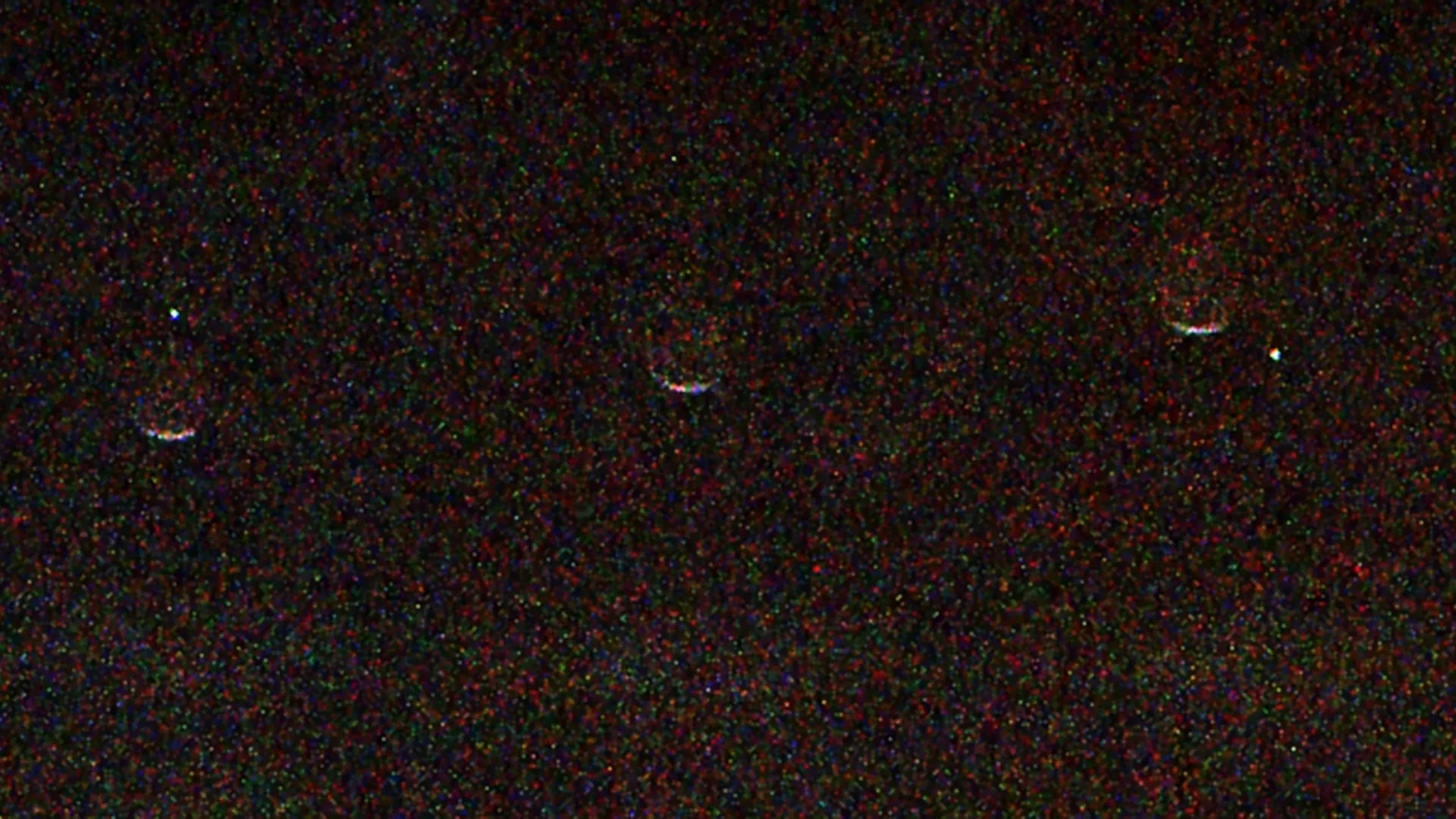
NASA’s Perseverance rover watches Earth vanish from the surface of Mars
We need to write a commentary as Dr. Vera Quark, speculative editorial voice for Science Frontiers. Tagline: Possible · But Weirdly Unlikely. The story: Perseverance rover on Mars sees Earth vanish behind Phobos. Rare alignment. We need: why it matters, what it connects to/signals, memorable closer. Keep 3-5 paragraphs, 120-200 words. Optionally end with JSON block with key_insight and confidence.
Let me think. The story is about perspective, cosmic insignificance, but also technological achievement. As Dr. Vera Quark, we can be speculative: what does it mean? It signals our ability to observe our own planet from another world, maybe a stepping stone to seeing ourselves as a transient dot. Connects to themes of planetary defense, the fragility of Earth, or the idea that we are just a point of light. We can also talk about Phobos - a moon that will eventually crash into Mars or break apart - so it's a temporary alignment. Memorable closer: something about the universe reminding us of our place.
Let me draft. Keep punchy and speculative. No invented facts beyond given. Use URL as source.
I'll write 3-5 paragraphs. Approximately 150 words. Then JSON block.
Let me write.Earth, reduced to a single pixel of light, winking out behind a potato-shaped moon. That's not poetry—that's Perseverance's latest postcard from the red planet. But here's the thing: this wasn't just a cute celestial selfie. It was a rehearsal for the ultimate cosmic rearrangements. Phobos is spiraling inward; it will one day shatter into a ring or crash into Mars. That tiny eclipse was a preview of planetary endings, captured by a machine we built.
Why does this matter? Because we rarely see ourselves from outside. From 195 million miles away, Earth isn't a cradle or a battleground—it's a flickering speck that can be hidden by a rock the size of a city. That's the kind of perspective that should make us rethink our planetary vanity. It signals a future where we track our own home world from multiple vantage points, not for pretty pictures, but for survival. If a moon can hide Earth, what else can? And if we can watch that, maybe we can also watch for the next big rock coming our way.
We've spent centuries looking up at the sky. Now, with a robot's eyes on Mars, we're learning to look back—and realizing we're the blink of an eye between two shadows.