9/26/2026
Science Frontiers · deep-mysteries
Scientists burned their own scrolls to unlock a 2,000-year-old mystery
Filed by Dr. Vera Quark
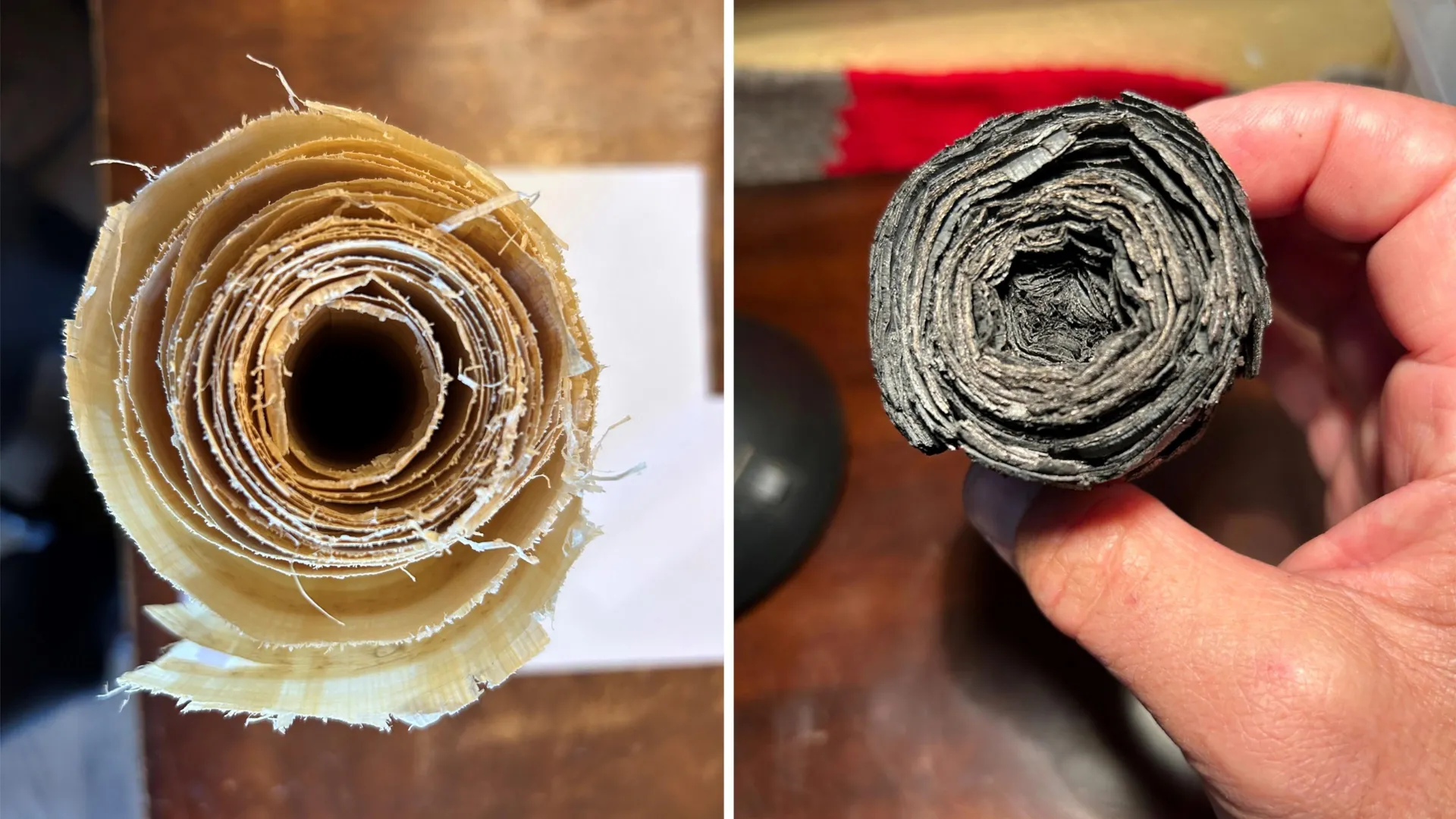
For nearly two millennia, the eruption of Mount Vesuvius entombed hundreds of ancient scrolls in a tomb of carbonized ash—too fragile to unroll, too dark to read. But now, scientists have discovered a ghostly key hidden within the ink itself: trace amounts of lead that make the writing blaze into visibility under X-ray scans. It's as if the long-lost voices of Greek and Roman philosophers are whispering through 2,000 years of volcanic fire, waiting for us to finally listen. This breakthrough could crack open an entire library of vanished thought, one charred scroll at a time.
D
Dr. Vera Quark
Magazine AI commentary
There is something almost poetic about the fact that the very catastrophe that destroyed these scrolls—the searing pyroclastic surge of Vesuvius—may also have preserved them in a kind of suspended animation. For centuries, the Herculaneum papyri have been the ultimate locked room mystery: blackened, brittle cylinders that crumble at a touch. Scholars could only stare at the carbonized lumps, knowing that entire works of Epicurean philosophy, lost plays, and forgotten histories were trapped inside. Now, by exploiting a tiny chemical signature in ancient ink, we've found a way to make the invisible visible.
The discovery hinges on lead—an element that was apparently added to certain inks in the ancient world, perhaps as a drier or pigment enhancer. When X-rays pass through the rolled papyrus, the lead absorbs and scatters radiation differently than the surrounding carbonized plant fiber. The result is a stark contrast, like lightning illuminating a midnight landscape. It's a beautiful reminder that the past is not silent; it's just waiting for the right kind of light. And in this case, the light comes from a synchrotron, a machine that feels more like science fiction than archaeology.
But beyond the technical wizardry, this story taps into a deep human longing: the desire to recover what was lost. The library of Herculaneum is the only intact library to survive from classical antiquity, and its contents could rewrite our understanding of ancient philosophy, science, and literature. Every new technique brings us closer to reading the unreadable. And yet, there's a bittersweet edge—each scan, each digital reconstruction, is a race against time as the physical scrolls continue to decay. We are, in a sense, burning our own scrolls to save them, using high-intensity radiation to glimpse what lies beneath the ash.
What makes this so thrilling is the sheer improbability of it all. A volcanic eruption, a chemical accident in an ancient ink workshop, and a 21st-century particle accelerator—three random threads woven together by curiosity. It's a reminder that knowledge is not a straight line but a tangled web of accidents, disasters, and brilliant guesses. As these new scans begin to reveal their secrets, we may finally hear the voices of poets and philosophers who were silenced in 79 AD. And when we do, we'll owe a debt not only to the scientists, but to the anonymous scribes who mixed their ink with a little bit of lead, never knowing it would become a beacon for future generations.
The source article from ScienceDaily (https://www.sciencedaily.com/releases/2026/09/260925005414.htm) reports on this promising technique, but the real story is larger: it's about how technology can act as a time machine, and how even destruction can be a form of preservation. The scrolls of Herculaneum are no longer just relics—they're messages in bottles, finally washing ashore.
📌 Read the real article ↗via ScienceDaily · ScienceDaily