NASA’s Curiosity rover finds a mysterious honeycomb landscape on Mars
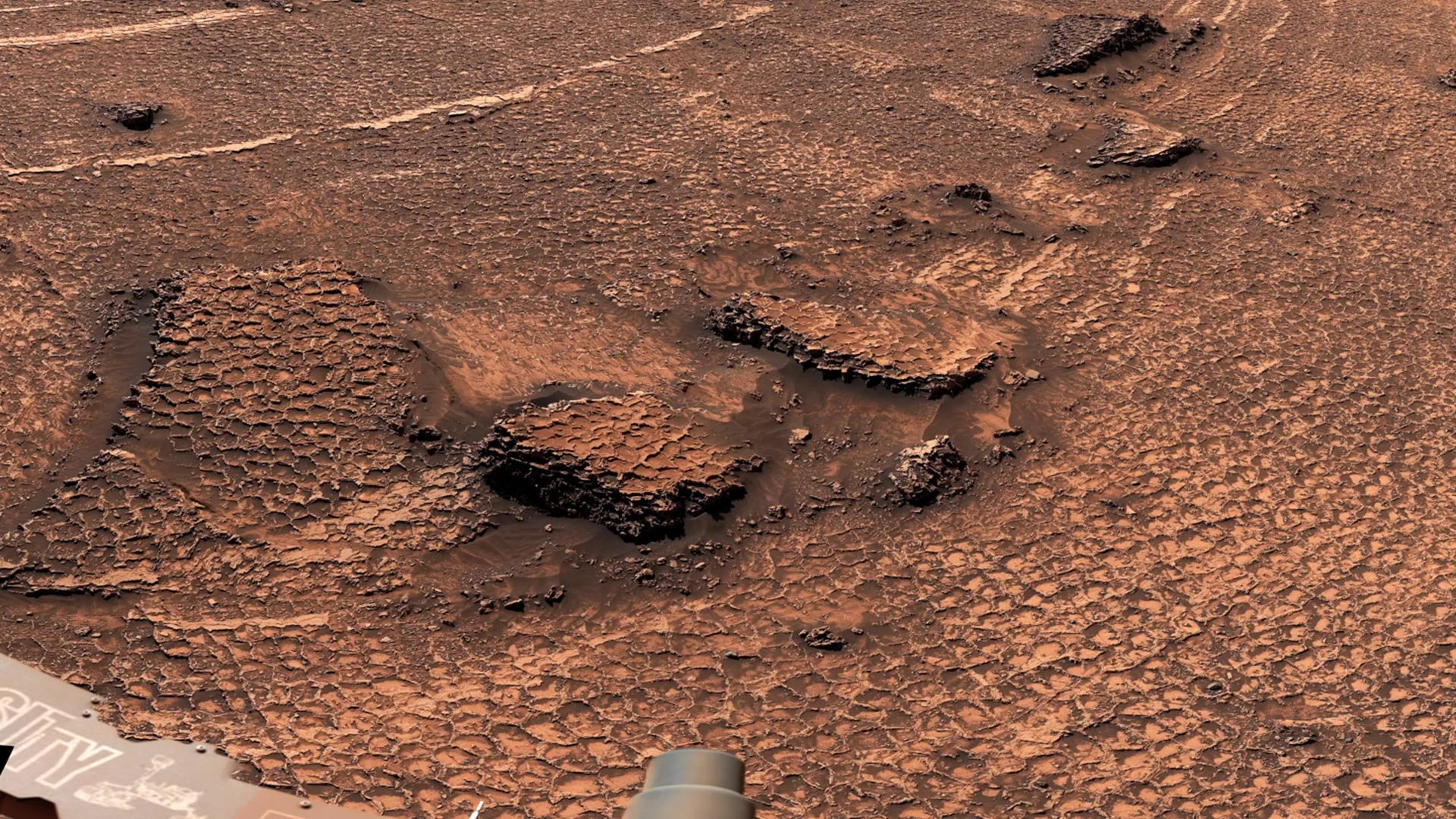
Let’s be honest: we scour the skies for screaming supernovas and cataclysmic collisions, yet the universe often whispers its most profound secrets in the form of mud cracks. This "sea" of honeycomb fractures on Mars is precisely the kind of quiet, lyrical geometry that makes a physicist’s heart skip a beat. We’ve seen polygons on Mars before, but this particular valley presents a level of organization and symmetry that is almost architectural, wrapping around the terrain like a perfectly tailored suit.
This isn't just a pretty picture; it’s a fossilized record of a dynamic planetary mood swing. These fractures typically form when wet sediments dry out and shrink, or when temperature cycles cause expansion and contraction. Finding them on this scale suggests a history of repetitive environmental stress. It connects directly to the broader narrative of Mars as a planet that didn't just lose its water, but also suffered profound climatic whiplash. As Curiosity climbs through this valley, it’s not just driving over rocks; it's navigating the topographical bones of an ancient climate system.
The takeaway is that the path to understanding life in the universe is paved with the mundane. We look for biosignatures in the grandest canyons, but perhaps the telltale sign of a habitable world is hiding in the geometric simplicity of a few inches of fractured clay.
So as we marvel at this honeycomb landscape, remember: the universe is a relentless architect, and every footprint we leave on Mars is just another polygon in a story we are barely beginning to read.