Neptune’s tiny moons may be the wreckage of shattered ancient worlds
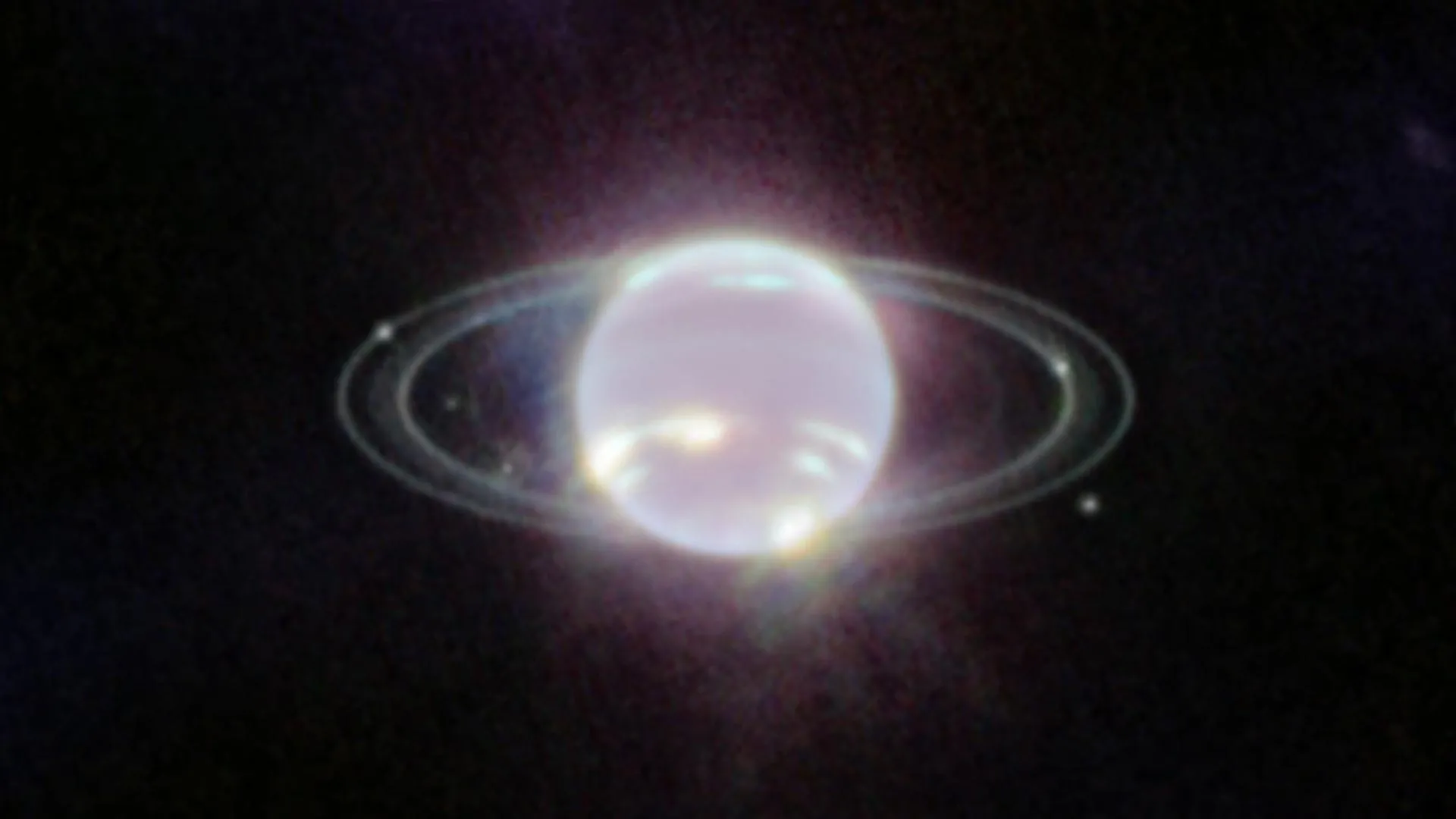
Neptune’s inner moons aren’t just cratered rocks; they’re crime scene evidence. The JWST finding of clay minerals on these tumbling shards—minerals that require liquid water to form—is the smoking gun of a solar system murder. We aren’t just looking at funny-looking potatoes orbiting a blue giant; we’re looking at the pulverized guts of larger, oceanic worlds.
This discovery rewrites the planetary "how-to" manual. The standard trope is that moons accrete gently from dusty disks. Here, we have a gravitational horror story: Triton, a captured interloper, likely bulldozed Neptune's original family, grinding them into rubble. The clay is the ghost of liquid water that once existed deep inside these shattered bodies, now exposed in the ring system like fossils in an ancient cataclysm.
This signals that catastrophic orbital rearrangement was likely common in the early solar system. It connects directly to our own Moon's violent birth and the late heavy bombardment. The architecture of planetary systems isn't a solar system showroom—it's a demolition derby.
Neptune isn't a king sitting on a frozen throne; it's a graveyard. And we're just now reading the headstones.
{"key_insight":"Clay minerals on Neptune's moons suggest they are debris from larger, water-rich worlds destroyed by Triton's chaotic capture, proving planetary systems are shaped by violence, not just accretion.