Astronomers watch a red giant star greedily devour a stellar 'Bao bun' before erupting: 'We couldn't quite believe our luck'
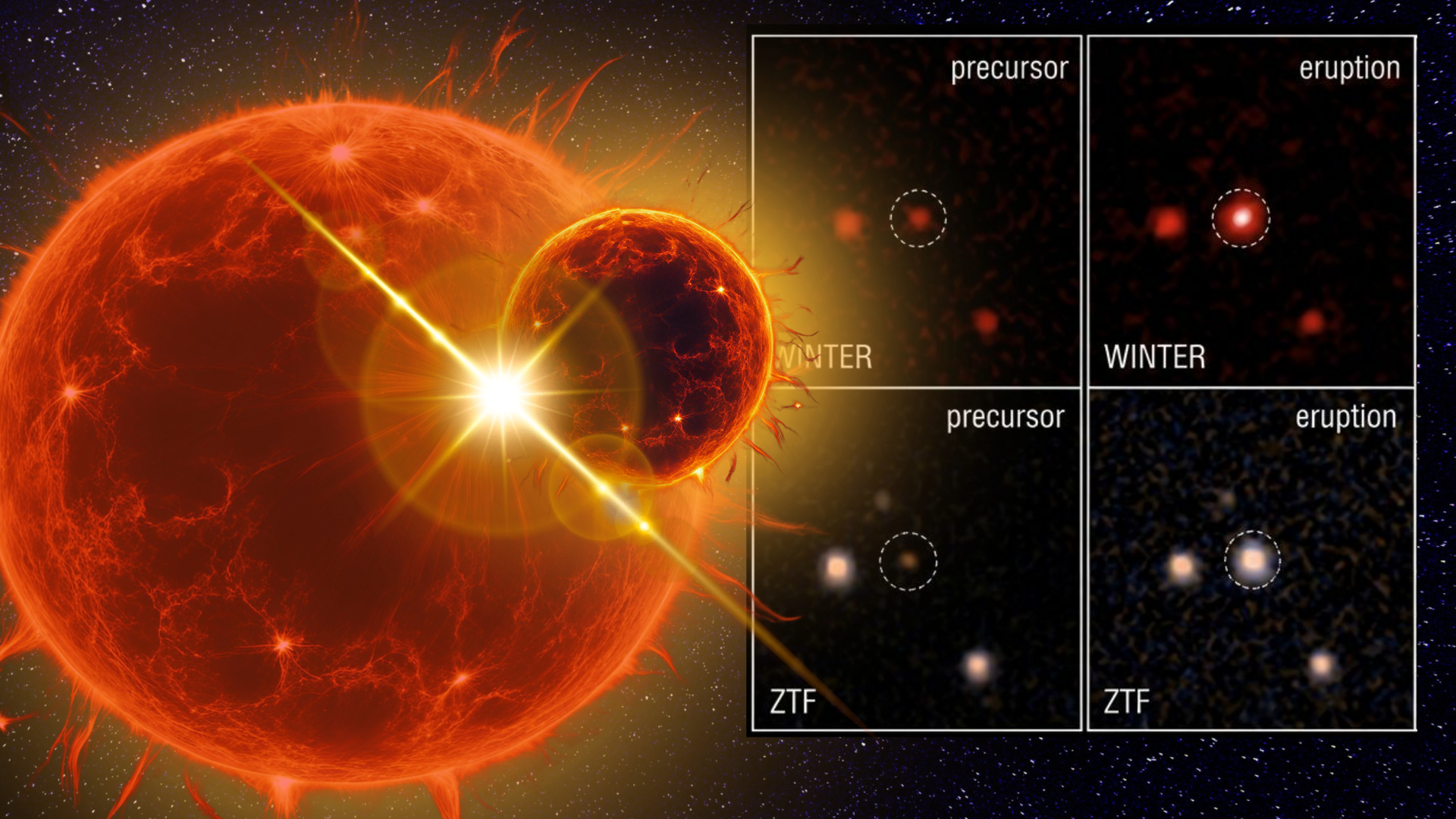
The image of a red giant wolfing down a Bao bun is going to stick with me, mostly because it's so accurate. These stars swell up to hundreds of times their original size, and when a smaller companion drifts too close, it gets enveloped and torn apart. We've known this happens, the physics has been on the books for decades, but catching one in the act is another matter entirely.
What makes this one special is the timing. The whole thing, from first bite to eruption, happened on a human timescale, fast enough that telescopes could actually follow along. The researchers say they couldn't believe their luck, and I get that. Astronomy is usually a waiting game, you point your instruments at the sky and hope something interesting happens before you run out of grant money.
I'd want to know more about what the eruption tells us about the system's future. Red giants are messy eaters, and whatever they don't consume gets flung back out into space, sometimes forming new structures, sometimes just drifting. The companion star is probably gone for good, but the debris it left behind might stick around for a long time.
I don't think this changes our models dramatically, but it gives us a rare data point on a process we've mostly inferred. The universe is full of these violent little meals, and every time we catch one, we get closer to understanding how stars live and die together.