On this day in space! Oct. 30, 1964: NASA's weird Lunar Landing Research Vehicle takes 1st test flight to help Apollo astronauts land on the moon
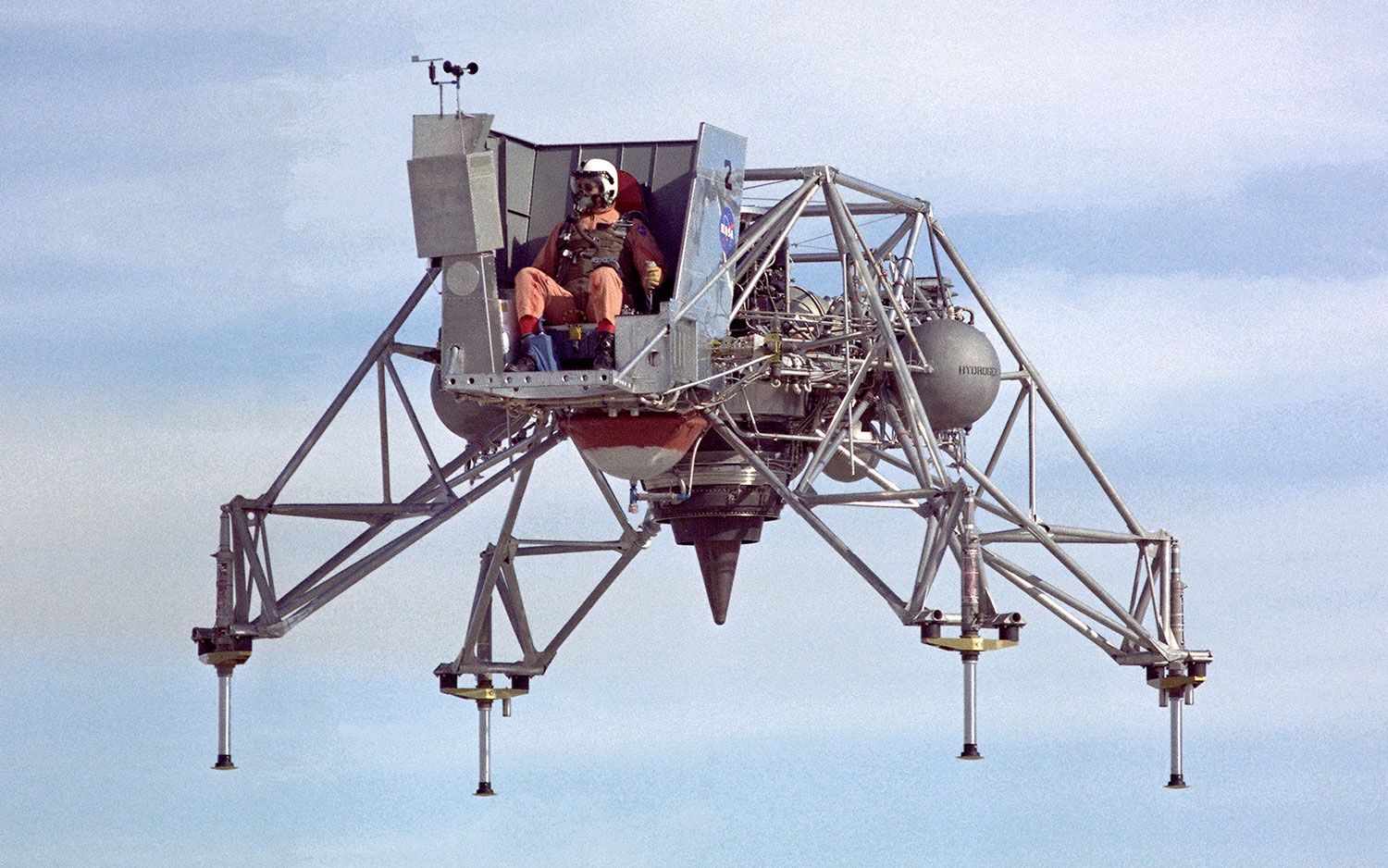
I love that NASA's solution to the problem of practicing a moon landing was to build a machine that looked like a lawn chair bolted to a jet engine. The LLRV didn't fly like a normal aircraft. It was designed to feel like a lunar module hovering in vacuum, which meant fighting with thrusters and a gimballed engine to stay upright. The first flight on this day in 1964 was a small hop, but it proved that a human could, in principle, guide a vehicle down to the moon without crashing.
What matters to me is the mindset behind it. Apollo engineers could have relied on simulators and math, but they knew the final landing would be a visceral, seat-of-the-pants moment. So they built something genuinely dangerous and let pilots fly it. Neil Armstrong famously ejected from one of these machines seconds before it crashed. That willingness to embrace risk, and to learn from near-disasters, is what got us to the surface.
I'd want to know how much of that training actually transferred to the real landing. Armstrong's manual descent on Apollo 11 was famously tense, with boulders and a failing computer. Did the LLRV's weird handling save him? I suspect it gave him the instincts to look out the window and find a safe spot. These days, landers are mostly autonomous, but the LLRV remains a monument to the idea that sometimes you have to build something absurd to practice the impossible.