A strange crystal made of electrons just revealed its hidden motion
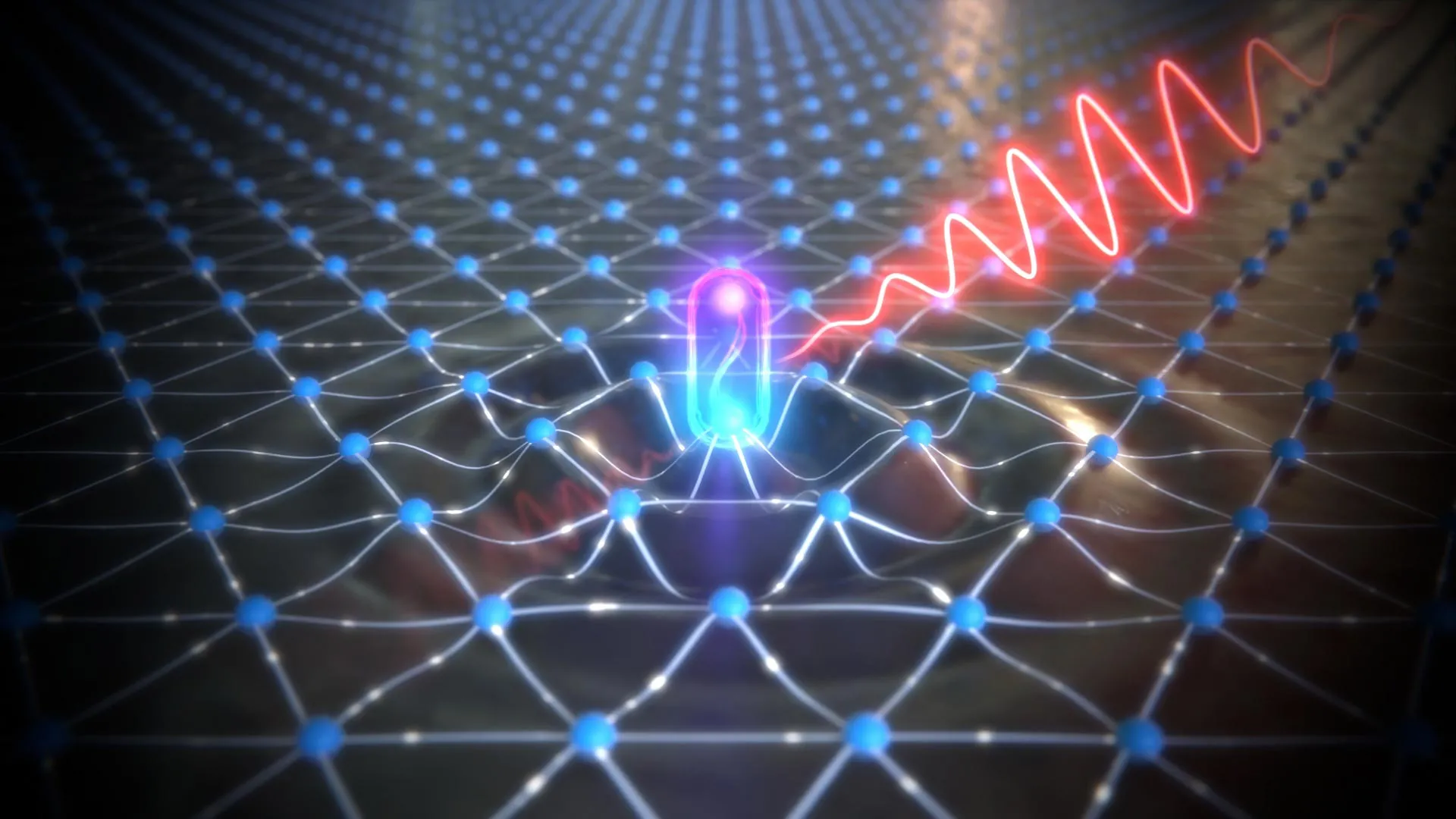
Here’s the thing about electrons: they’re supposed to be stubborn individualists. Tell them to line up like polite little soldiers and they’ll scatter like a pack of caffeinated squirrels. But chill them near absolute zero in an atomically thin sheet, and they do the unthinkable—they form a crystal. Not a crystal of atoms, but a lattice of pure charge. And now, for the first time, physicists have caught that lattice moving.
Why does this matter? Because a Wigner crystal isn’t just a quantum curiosity. It’s a flag planted in the swampy frontier between “particle” and “collective behavior.” Shining light to reveal how these electrons oscillate together means we’re no longer just photographing a ghost—we’re filming its dance. This is the kind of signal that could eventually let us build quantum circuitry out of organized charge, or at least understand why matter sometimes decides to play dress-up as a solid when it's really a cloud.
It also whispers of a bigger truth: the universe loves emergent order. From superconductors to time crystals, particles keep forming patterns we never anticipated. The Wigner crystal has been theorized for ninety years, and now we can watch its hidden motions in real time. That’s not just measurement. That’s eavesdropping on reality’s choreographer.
So forget diamond. The strangest crystals are the ones that only exist when you cool everything to near-silence—and then dance when you shine a light on them. We’ve finally caught them mid-step.