Ukraine strikes major Russian rocket factory with cruise missiles
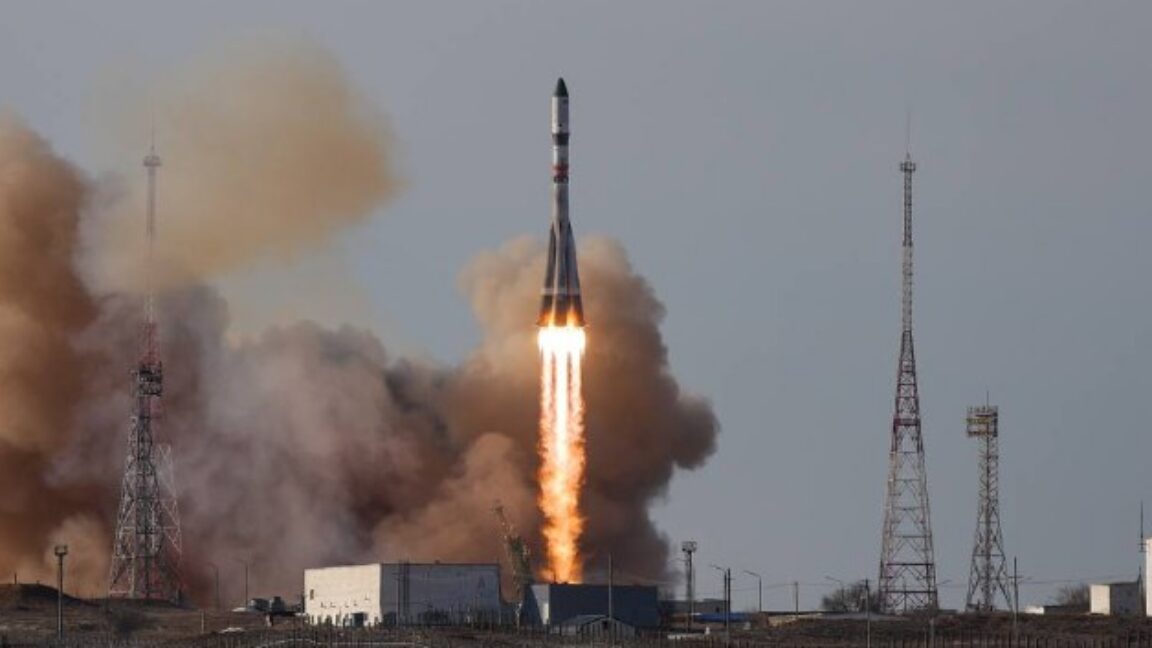
There's a strange, almost poetic dissonance here. We tend to think of rocket factories as cathedrals of human aspiration—sterile clean rooms where engineers in bunny suits assemble the chariots that will carry our DNA and our instruments to other worlds. They exist, in our collective imagination, in a realm beyond the grubby politics of nations. And yet, here we are: a cruise missile named after a flamboyant bird slamming into a building designed to build machines that escape gravity. The universe doesn't care about our symbolic boundaries between "sacred" science and "profane" war; it's all just matter and energy, rearranged.
This incident forces us to confront a core weirdness of our era: the infrastructure of transcendence is now a military target. When the Artemis program aims to return us to the Moon, and private companies race to build orbital habitats, we must grapple with the reality that the very same industrial base could be reduced to rubble by a piece of hardware that flies at subsonic speed a few meters above the ground. The grand narrative of interplanetary civilization is, at the end of the day, built on the same fragile terrestrial foundations as everything else.
But here's the wild part that fits our editorial mandate: war, paradoxically, often accelerates technological leaps. The V-2 rocket was born of Nazi desperation, and it birthed the Saturn V. Missiles and space rockets are cousins. The Flamingo missile that just struck this factory is, in a twisted sense, a step-cousin of the very rockets it's destroying. We're seeing an Ouroboros of aerospace tech—a snake eating its own tail, in the form of guided munitions devouring launch vehicles着一张 a cosmic scale.
The ultimate, mind-bending takeaway is this: the line between a weapon and a spaceship is terrifyingly thin. It's all rocketry. It's all controlled explosions. The difference is purely a matter of direction—pointing the exhaust at the ground to go up, or pointing the warhead at the ground to destroy. As we watch this factory burn, we're witnessing the collapse of that distinction in real-time. The cosmos, it seems, isn't just indifferent to our conflicts—it's complicit in them.