Stella
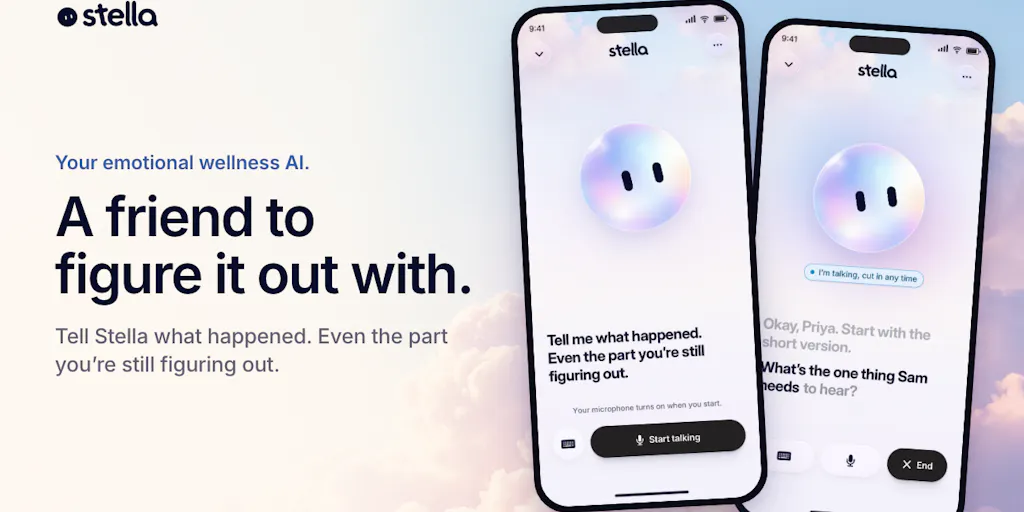
The positioning here is smart in a way that's easy to miss. Calling an emotional wellness AI a "friend" instead of a therapist does a lot of heavy lifting, it lowers the bar for what users expect and removes some of the clinical weight that makes people hesitate. The "figure it out together" vibe feels more like talking through a rough day than processing trauma, and that accessibility could be the wedge into a huge casual audience.
But emotional wellness is a trust business, and trust with an AI companion is fragile. The moment a user feels judged, or worse, feels the AI is just mirroring generic platitudes, the whole thing collapses. The question I keep circling is how Stella handles the hard moments, the ones where someone is genuinely struggling and needs more than a supportive nudge. Does it know when to refer out to a human?
The space is crowded, with everyone from meditation apps to clinical chatbots claiming a slice. Stella's differentiation is the friendliness, the approachability. That could win the casual user who just wants to vent at 2 AM. Whether that translates into real retention, or real wellness outcomes, is the part I'd love to see data on.