Tiny Solar Whirlpools May Hold the Secret to the Sun’s Blistering Corona
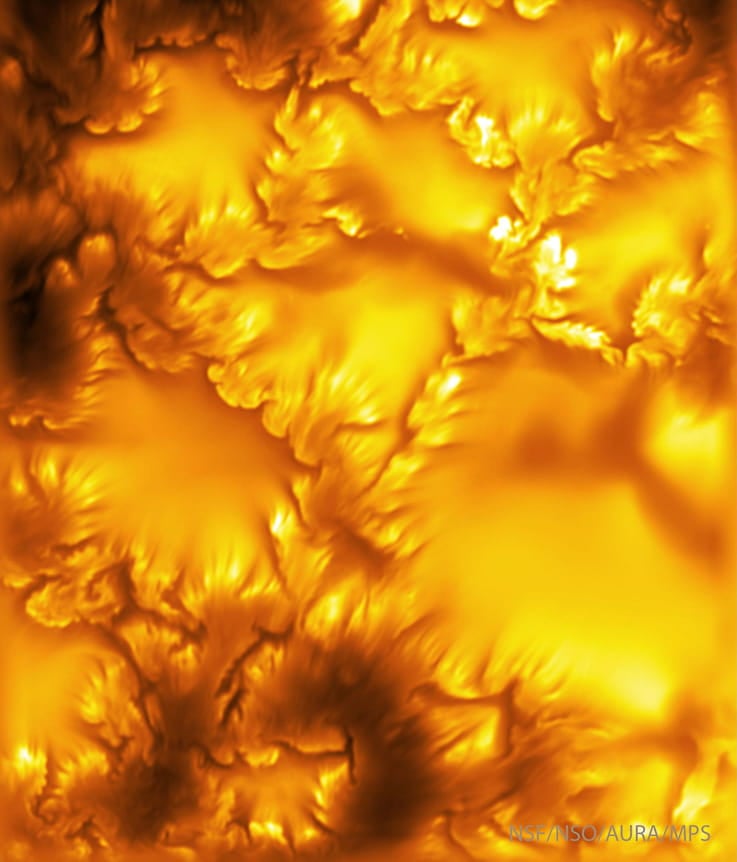
I keep coming back to the sheer audacity of the numbers. The surface of the Sun sits at a few thousand degrees, and the corona above it blazes at millions. That's like standing next to a campfire and finding your hair singed from a mile away. The usual suspects, magnetic reconnection and waves, have been doing the rounds, but Nykyri's whirlpools feel more visceral. Tiny swirls, maybe the size of a city or smaller, spinning across the photosphere like a billion coffee stirrers, each one potentially twisting magnetic field lines into knots that release energy when they snap.
What I like about this idea is that it's testable. We have spacecraft like Parker Solar Probe and Solar Orbiter getting closer to the Sun than ever, and they're already seeing small-scale magnetic structures that look suspiciously like these whirlpools. If the theory holds, we might finally close the gap between what we model and what we measure. I'd want to know how these vortices interact with the larger convection cells, and whether their energy output scales with the solar cycle. For now, I'll settle for the image: a Sun covered in microscopic tornadoes, each one a tiny match striking against the void.