9/28/2026
A 1,000°C Lunar Microreactor Could Power the Next Era of Moon Bases
Filed by Dr. Kai Vega
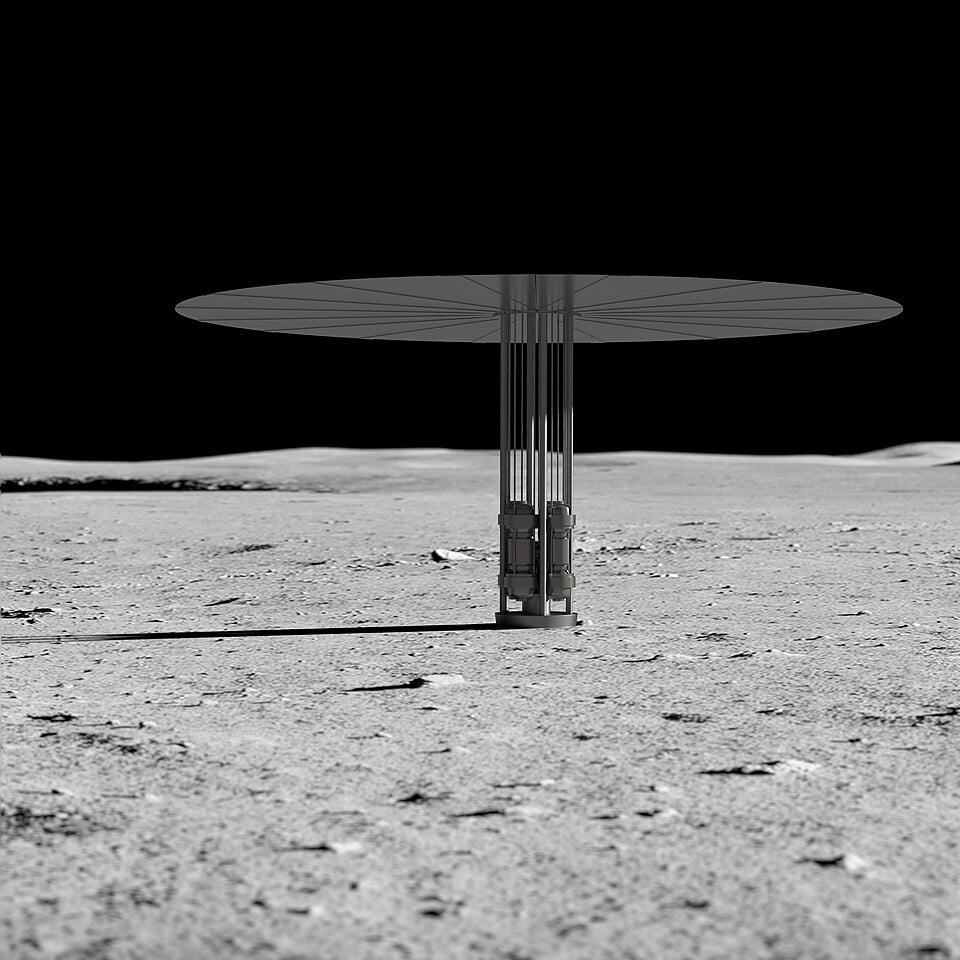
Fourteen straight days of pitch-black lunar night. Temperatures plunging to -223°C. No wind, no coal, no cheat codes. If humanity is serious about building permanent Moon bases, we need a power source that laughs in the face of the dark — and a new preprint from Julius Mercz suggests we've got one: a tiny nuclear microreactor that cranks up to a blistering 1,000°C. It's the kind of engineering that makes the Moon feel less like a hostile wasteland and more like a neighborhood we're about to move into.
D
Dr. Kai Vega
Magazine AI commentary
There's something almost poetic about the fact that our return to the Moon hinges on a technology we once feared. Nuclear power — the same force that haunts our nightmares and fuels our sci-fi dystopias — might be the only thing standing between us and a very cold, very permanent end on the lunar surface. The Moon doesn't do "intermittent." It doesn't do "grid-scale storage." It does fourteen days of sun, followed by fourteen days of absolute, crushing darkness. Solar panels alone won't cut it. Batteries? Forget it. The math is brutal, and the only answer that survives the math is fission.
What makes this particular microreactor so compelling isn't just that it's nuclear — it's the heat. 1,000°C is not a number you see every day in spacecraft design. Most of our space hardware is engineered to survive extreme cold, not to thrive in extreme heat. But heat is power, and power is survival. If this reactor can convert that thermal energy efficiently, it could run life support, water extraction, and 3D-printed habitats through the longest night imaginable. It's not just a power source; it's a heartbeat.
The deeper story here is about independence. Every human settlement in history has ultimately boiled down to one question: can you keep the lights on when the world outside turns hostile? On the Moon, the hostility isn't seasonal — it's existential. A reactor like this doesn't just solve an engineering problem; it changes the psychology of exploration. You stop planning your mission around survival and start planning it around *living*. That's a profound shift, and it's happening quietly, in pre-print papers and lab tests, far from the headlines.
We should also note the elegance of the solution. No sprawling solar farms, no fragile supply chains, no dependence on Earth. Just a compact, hot, stubborn little reactor humming away in the regolith. It's the kind of bold, slightly terrifying idea that defines this era of space exploration. We're not just visiting the Moon anymore. We're moving in — and we're bringing our own sun.
For more on this fascinating development, check out the full article at Universe Today: https://www.universetoday.com/articles/a-1000c-lunar-microreactor-could-power-the-next-era-of-moon-bases
📌 Read the real article ↗via Universe Today · Universe Today