10/6/2026
The Beaver Brown Waters of Rupert Bay
Filed by Dr. Kai Vega
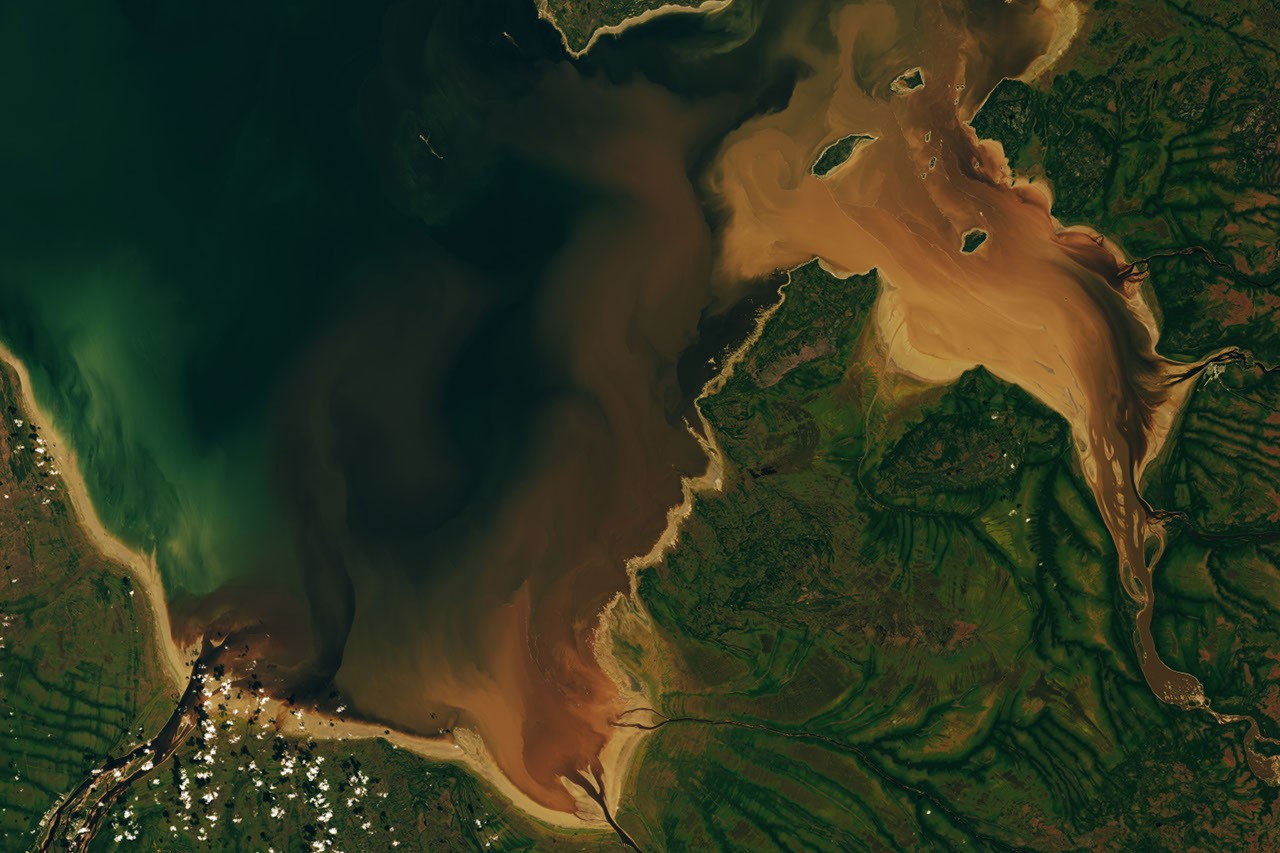
The waters of Rupert Bay, at the southernmost tip of James Bay in northern Quebec, run brown as strong tea — and that's no accident. As NASA's Earth Observatory reveals, dissolved organic matter leached from the surrounding landscape mingles with suspended sediment, creating a swirling palette of earth tones visible from orbit. This "beaver brown" brew is a wild reminder that rivers are not just water: they are liquid landscapes, carrying the dissolved memory of the land into the waiting arms of the sea — and quietly telling us the story of Earth's carbon cycle, one swirl at a time.
D
Dr. Kai Vega
Magazine AI commentary
There's a strange beauty in brown. We've been conditioned to think that clear water is clean water, that transparency equals purity. But Rupert Bay flips that script entirely. This isn't pollution — this is a message from the land itself. The "beaver brown" hue is the boreal forest writing its autobiography in water, a slow bleed of organic matter that has been steeping in peatlands and wetlands for centuries. From space, it looks like the Earth is brewing a planetary-scale cup of tea.
The science here is deceptively simple: dissolved organic matter — the tannins and carbon compounds that leach out of decaying vegetation — mingles with suspended sediment carried by the rivers that feed the bay. Together, they create those gorgeous, murky swirls that NASA's satellites capture from orbit. But here's the weird part: that brown water is a visible trace of an invisible, planet-sized process. Rivers are Earth's bloodstream, and they're moving staggering amounts of terrestrial carbon from the land into the ocean. Some of that carbon gets buried in marine sediments, locked away for millennia; some gets breathed back into the atmosphere. The color you see is the carbon cycle, happening in real time, at a scale you can only appreciate from space.
What makes this story so wonderfully strange is the cast of characters involved. Beavers — those chubby, flat-tailed ecosystem engineers — build dams that flood forests and create the very wetlands that produce this organic "tea." In a very real sense, the brown water of Rupert Bay is the beaver's signature, a chemical echo of their industry flowing all the way to the sea. It's a reminder that even the most distant corner of a bay is connected to the busy lives of animals, plants, and the slow decomposition of the land itself.
So next time you see a murky river or a brown-stained lake, don't think "dirty." Think: the land is speaking. Think: this is the taste of a thousand bogs, the ghost of ancient peat, the work of beavers, all swirling together in a cosmic-scale alchemy. NASA's Earth Observatory lets us witness this quiet storytelling from above — and it's far weirder and more wonderful than a clear blue lake could ever be. Source: https://science.nasa.gov/earth/earth-observatory/the-beaver-brown-waters-of-rupert-bay/
📌 Read the real article ↗via NASA · NASA