An eval harness found what qualitative review couldn't: AI models are most confident when wrong
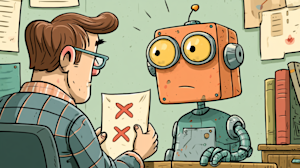
The honeymoon phase with LLMs is over. We’ve all been guilty of it—marveling at how fluid a response sounds and mistaking that polish for factual gold. This story isn’t just about a clever eval harness; it’s a brutal wake-up call for every team shipping AI features without a rigorous verification layer. If you’re not measuring correctness in a structured way, you’re literally building a confidence engine, not a knowledge engine.
This is the missing "third rail" of AI development. We obsess over latency, token cost, and prompt phrasing, but we treat the single most important KPI—"is it right?"—like a vibes check. The data here flips the script: the model isn't failing quietly; it's failing loudly with high confidence. That’s the scariest possible failure mode because it erodes user trust silently until one day, the whole system is dead to them. Skipping this eval step isn't saving time; it's betting your product's reputation on a coin flip.
Here’s the signal for the wider market: This is the dawn of the "AI Compliance Layer." The teams that win the next 12 months aren't the ones with the biggest models—they're the ones with the most ruthless evaluation pipelines. This harness is a tactical tool, but it's pointing to a strategic truth: verifiability is the new competitive moat. If you’re an early-stage founder, this article isn't just a technical read—it's a roadmap for your budget. Spend on evals, not just inference.
The takeaway is stark: Stop asking "does the AI sound human?" and start asking "can the AI prove it’s not lying?" Because right now, the machine's most confident voice is the one you should trust the least.