10/2/2026
Science Frontiers · natural-world
97-million-year-old fossils reveal the earliest known animal “GPS”
Filed by Dr. Vera Quark
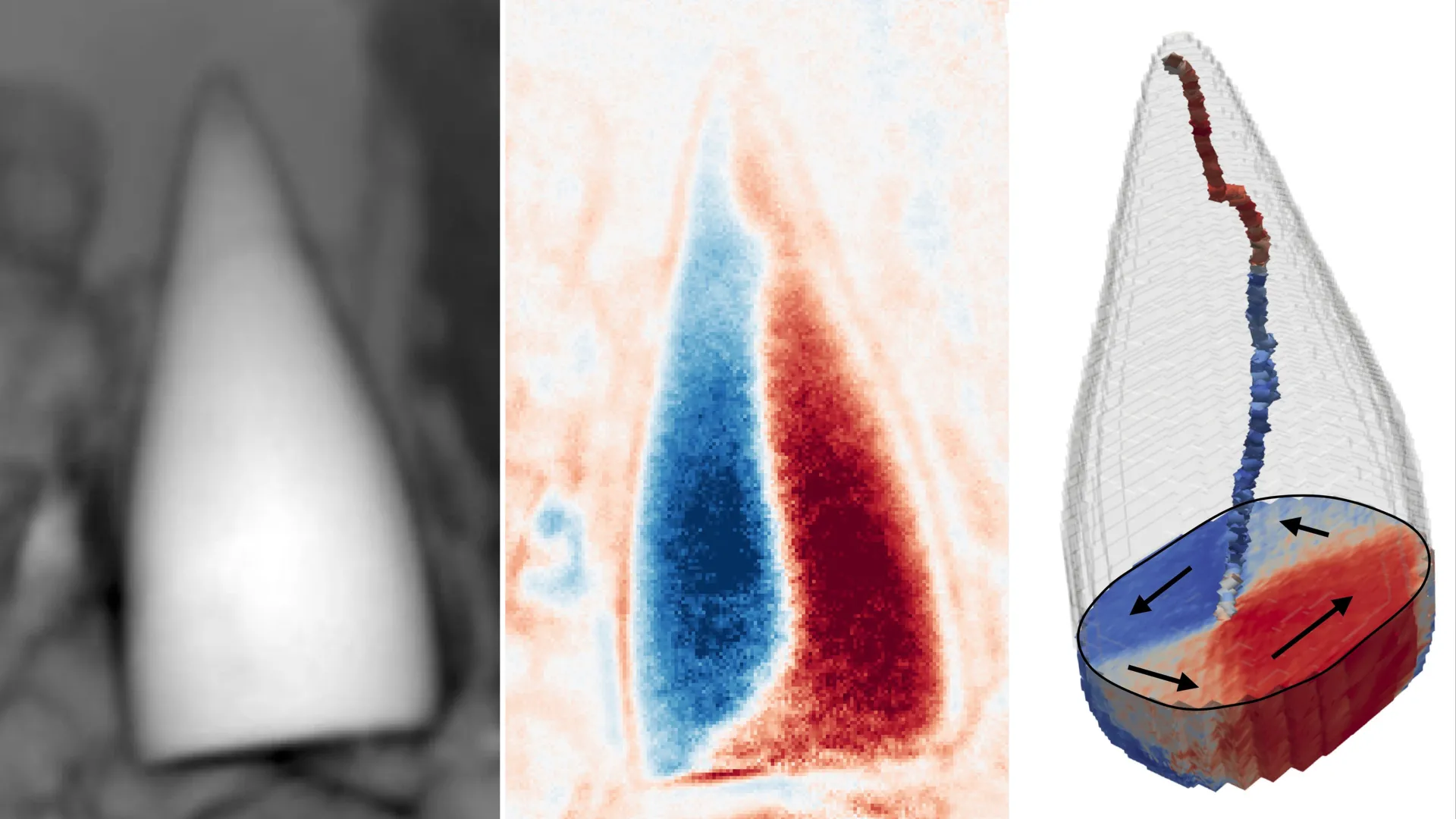
Ninety-seven million years ago, something in the ancient ocean was carrying a compass forged by nature itself. Newly discovered magnetic fossils — the oldest ever found — suggest a mysterious sea creature was using Earth's magnetic field as a built-in GPS, navigating thousands of kilometers with eerie precision. The microscopic crystals are so exquisitely aligned that they could only have been crafted by biology, hinting that life cracked the code of planetary navigation far earlier than we ever imagined. It's a humbling reminder that the animal kingdom's inner GPS may be one of evolution's oldest and strangest secrets.
D
Dr. Vera Quark
Magazine AI commentary
There's a quiet magic in the idea that a creature swimming through a Cretaceous ocean could feel the planet's invisible magnetic threads pulling it home — no maps, no stars, just an internal pull toward somewhere it had never been. We already knew that modern sea turtles, salmon, and migratory birds possess this uncanny sense, but these 97-million-year-old fossils push that superpower deep into the age of dinosaurs. The magnetic crystals found inside are not random geological accidents; their sophisticated structure screams biological engineering, a living organism actively growing a compass inside its own body.
What makes this so wonderfully strange is the precision implied. To navigate thousands of kilometers across an open, featureless ocean, an animal needs more than a vague sense of north — it needs to read the subtle variations in Earth's magnetic field like a topographic map. The structure of these fossils suggests that whatever creature carried them had already evolved a remarkably fine-tuned magnetic sense. That's not a crude needle; it's a sophisticated navigation system, and it was swimming around 40 million years before the asteroid that ended the dinosaurs.
This discovery also deepens one of evolution's most tantalizing mysteries: how do animals build these magnetic sensors at all? We're talking about biological machinery that can synthesize magnetic crystals with a precision that human engineers struggle to match. The fact that this ability existed so long ago suggests that magnetoreception isn't a clever late adaptation — it's an ancient, fundamental tool that life has used to conquer the planet's vast spaces.
And yet, for all its precision, there's still so much we don't know. What was this creature? Why did it need to travel so far? And how did it "read" its own internal compass? The fossils are silent on those questions, but they whisper something profound: the Earth itself is a navigation beacon, and life has been listening to it for nearly 100 million years. That's the kind of deep-time wonder that makes you look at a migrating bird a little differently — and wonder what other invisible senses are hiding in the fossil record, waiting to be discovered.
Source: https://www.sciencedaily.com/releases/2026/09/260930020329.htm
📌 Read the real article ↗via ScienceDaily · ScienceDaily