Empowering Guatemalan Villagers Plagued by Plastic
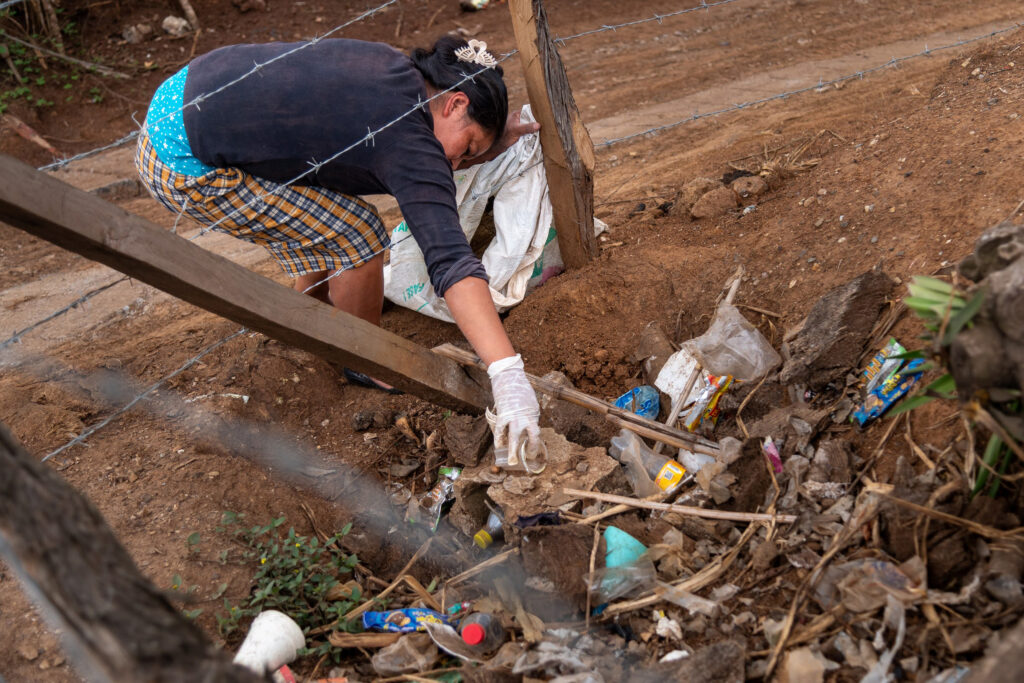
There's a strange poetry in the image of Soila Elizabeth Cruz reaching under a barbed wire fence to pull plastic from the dirt. That plastic—a petroleum-derived polymer designed to last essentially forever—has become a kind of artificial geology. Every piece she collects is a tiny monument to our convenience culture, a fossil of the future that refuses to decompose. In the Anthropocene, we've created a material so alien to Earth's chemistry that no organism has evolved to break it down. It just sits there, waiting, while the trucks whiz by.
What makes this story genuinely wild is the geography of blame. Guatemala produces a fraction of the world's plastic waste, yet its villages become graveyards for the stuff. This is the dirty secret of the global recycling economy: the Global North ships its plastic "solutions" to the Global South, where they become someone else's problem. The communities that bear this burden are often the ones with the least resources to fight it—and yet, here in El Duraznal, they're fighting anyway. That's not just resilience; that's a quiet act of rebellion against a system designed to make them invisible.
The deeper weirdness is that plastic has now entered us. Microplastics have been found in human blood, in placentas, in the deepest trenches of the ocean. We are literally becoming what we throw away. So when a community in Jalapa gathers every few days to pull plastic from the earth, they're not just cleaning a landscape—they're interrupting a cycle that ends with those same particles inside their own bodies. It's ecological hygiene as existential defiance.
There's a lesson here that transcends environmental policy: top-down solutions fail because they treat symptoms, not people. The empowerment model—giving villagers the tools, agency, and recognition to solve their own crisis—is messier, slower, and far more effective. It's the difference between being a victim of a system and being an agent within it. And in a world where the problems feel cosmic in scale, there's something profoundly grounding about a small group of humans, on a hot, muggy afternoon, deciding that their home is worth fighting for.