Checksum AI
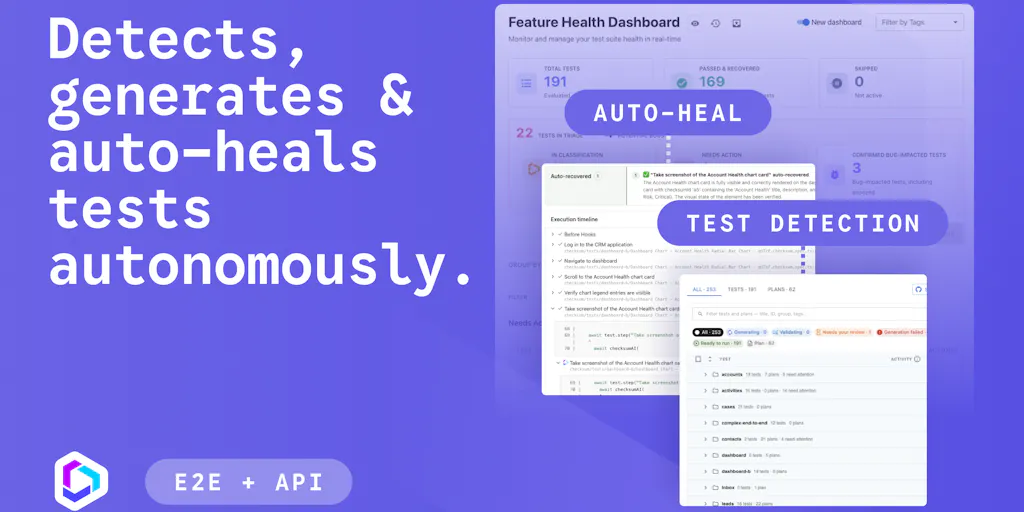
There's something almost mythic about the rise of AI coding agents—these digital Prometheuses that write code faster than any human could. But with great power comes great need for testing, and that's where Checksum AI steps in. We're witnessing a strange recursive loop: humans used to write code, now AI writes code, and now we need AI to test the AI's code. It's like watching a snake eat its own tail, but with more unit tests.
The deeper weirdness here is what it implies about the nature of software itself. For decades, we assumed code was a purely human artifact—a reflection of our logic, our biases, our errors. But when an AI agent writes the code, and another AI verifies it, we're entering a realm where software becomes a self-sustaining ecosystem. The human is increasingly just a bystander, setting the parameters and hoping for the best. It's a bit like watching two alien species communicate in a language we can't quite parse, and we're just checking that their conversation doesn't blow up the planet.
And yet, there's a profound beauty in this. The testing buddy concept suggests a new kind of partnership—not human-machine, but machine-machine, with humans as the orchestrators. Checksum AI isn't just a tool; it's a philosophical statement about where we're headed. The question isn't whether AI can write good code, but whether we can build systems that trust each other enough to build the future. It's weird, it's wild, and it's happening right now in our IDEs.
The source article paints a picture of this emerging reality. It's a reminder that the AI revolution isn't just about chatbots and image generators—it's about the quiet, unglamorous work that keeps our digital world from collapsing. Testing, verification, and quality assurance are becoming the new frontier, and the heroes are tools like Checksum AI.