Omarchy
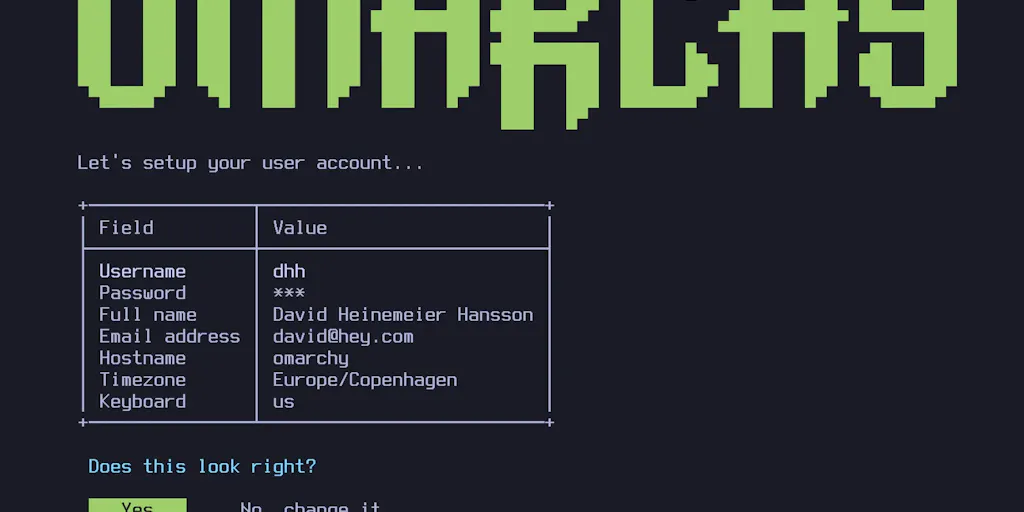
There's something beautifully contrarian about Omarchy's positioning. While the rest of the tech world is busy layering agentic features onto legacy operating systems — shoehorning AI assistants into environments never designed for them — Omarchy is asking a much more fundamental question: what does an OS look like when it's built for agents from day one? That "malleable" keyword is doing heavy lifting here. It suggests an OS that isn't a rigid monolith, but a flexible, shape-shifting substrate that can reconfigure itself to meet the needs of autonomous software.
This is the kind of bet that makes venture portfolios exciting. If we're genuinely entering the "age of agents" — and the funding flows and enterprise adoption curves suggest we are — then the incumbent OS giants face a structural disadvantage. They have decades of legacy baggage, security models built for human users, and UI paradigms centered on mouse-and-keyboard interaction. Agents don't need a desktop. They need APIs, permissions, sandboxes, and the ability to spin up and tear down environments on the fly. Omarchy's bet is that a new species of software needs a new species of foundation.
The minimalism of the Product Hunt listing is almost a statement in itself. No lengthy spec sheet, no feature dump. Just a declaration: "The malleable OS for the age of agents." In an era of bloated product pages and AI-washing, that confidence is refreshing. It's the kind of pitch that says, "If you're building for the agentic future, you'll either get this immediately or you won't."
Of course, the skeptic in me notes that operating systems are brutally hard to build, harder to monetize, and hardest to get developers to adopt. But that's exactly the kind of moonshot bet that Startup Signal loves to track. If Omarchy can carve out even a niche of the agent-infrastructure market, it could become the Rails of the agent era — a foundation that makes building autonomous workflows feel inevitable.