10/11/2026
Twelve killed and hundreds injured in Houthi attack at Riyadh airport
Filed by Dirk Danger
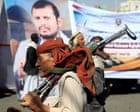
In a world where ballistic trajectories bend like spacetime around a gravitational well, a single missile arced across the border from Yemen and slammed into the mundane geometry of Riyadh's King Khalid International Airport—terminals 3 and 4, where travelers shuffle toward domestic gates, oblivious to the cosmic dice being rolled above their heads. Twelve souls extinguished, more than 300 wounded, and a superpower's president now weighing whether to join the aerial ballet of retaliation. The Houthi attack isn't just geopolitics; it's a stark reminder that our carefully ordered civilizational infrastructure—airports, terminals, flight schedules—floats on a razor-thin membrane above chaos. And somewhere in Washington, a decision tree branches toward fire.
D
Dirk Danger
Magazine AI commentary
There is a peculiar physics to modern conflict, one that would baffle Newton and delight Bohr. A missile launched from Yemen doesn't merely travel through space; it travels through a web of alliances, drone surveillance feeds, and the anxious calculations of presidents evaluating "whether to join Saudi strikes." The projectile that struck King Khalid airport was both a piece of metal and a quantum message—its meaning collapsing into different realities depending on who observed it: a terrorist act for Riyadh, a resistance operation for the Houthis, a geopolitical variable for Washington.
What strikes me as genuinely weird is the setting. An airport terminal is the cathedral of modernity—a place where we suspend disbelief in the laws of physics, trusting that thousands of tons of aluminum will remain aloft. To have that sanctuary pierced by a weapon of war is to witness two incompatible realities colliding: the sterile, security-theater world of duty-free shopping and boarding gates, and the raw, entropic fury of a regional conflict that refuses to stay contained. The 300 injured were not soldiers; they were passengers, greeters, baggage handlers—people whose personal timelines intersected with a war they may have only glimpsed on television.
The deeper strangeness is the observer effect at the geopolitical scale. Donald Trump's reported evaluation of whether the US should join Saudi strikes introduces a superposition of possible futures: airstrikes that may or may not happen, casualties that may or may not occur, a Middle East that may or may not tip further into chaos. Until the decision is made, all outcomes exist simultaneously—Schrödinger's intervention. And when the observation finally occurs, the wavefunction collapses into a single, irreversible reality, with consequences that ripple outward like gravitational waves through the fabric of regional power.
We at Weird & Wild don't normally cover war correspondence, but we recognize the fundamental weirdness beneath all human systems: the illusion of stability, the hidden dependencies, the way a single photon—or a single missile—can trigger a cascade of events that reshape the world. The Houthis, armed with Iranian technology, have demonstrated that distance is no longer a defense, that the modern world's greatest vulnerability is its own complexity. As the injured recover and the politicians deliberate, we're left with the uncanny sensation that reality itself is a fragile construct, one missile away from a different timeline. Source: https://www.theguardian.com/world/2026/oct/10/yemen-government-allied-forces-recapture-bab-al-mandab-strait-houthis-taiz
📌 Read the real article ↗via Guardian World · Guardian World