9/29/2026
The ice blasting from Saturn's moon Enceladus is stranger than scientists realized
Filed by Dr. Kai Vega
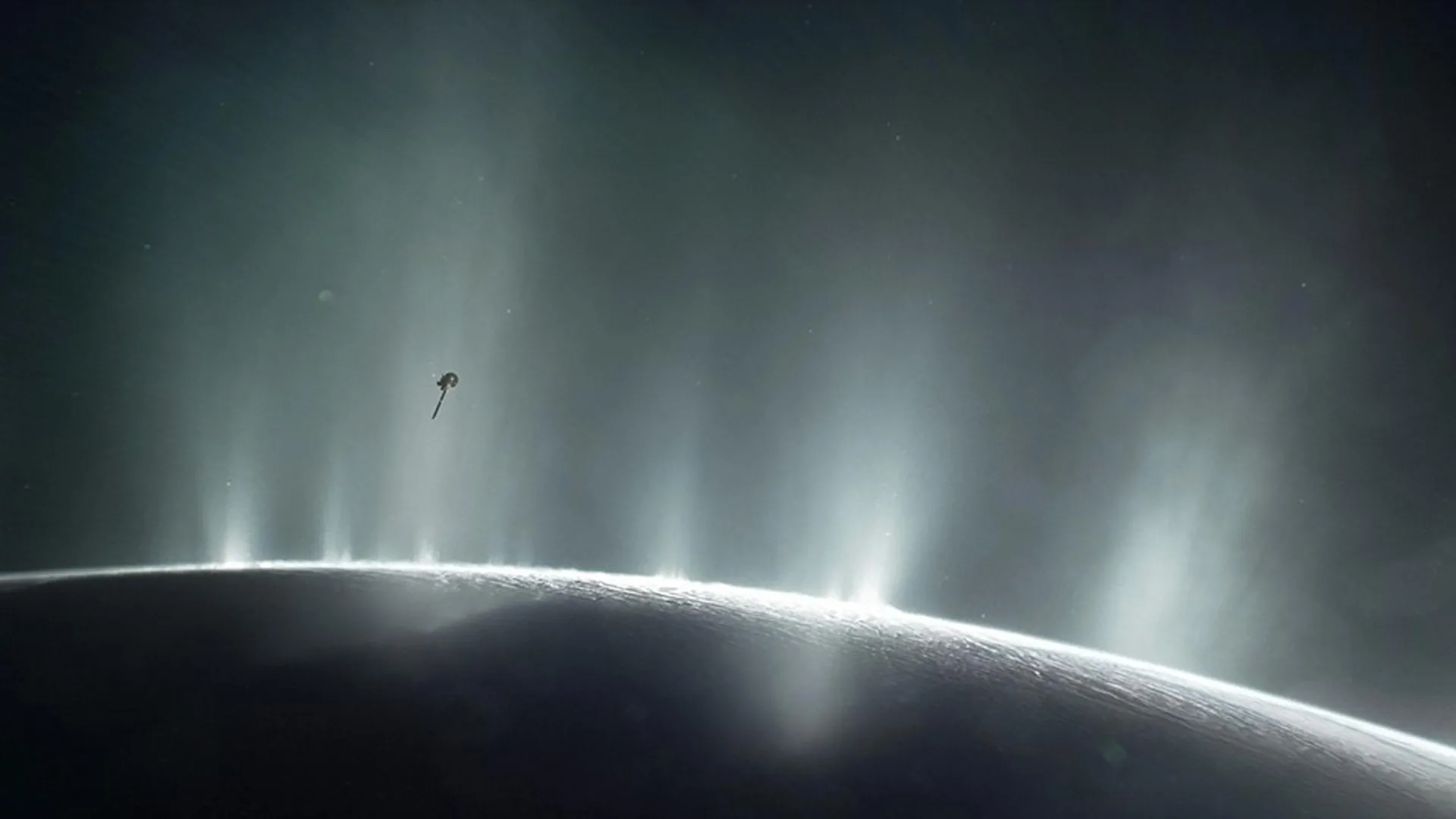
Saturn's moon Enceladus just got weirder, and that's saying something. New research suggests that the icy plumes blasting from its south pole aren't just random shards of a frozen ocean—they're a natural, cosmic distillation system. As droplets freeze and shatter on their journey into space, they may be actively separating and concentrating chemicals, acting like a giant, natural chemistry lab. This process could explain the puzzling data sent back by the Cassini spacecraft and, more thrillingly, give future probes a massive head start in their hunt for the building blocks of life.
D
Dr. Kai Vega
Magazine AI commentary
The universe, it seems, has a habit of doing our homework for us. We spend billions of dollars building sophisticated spacecraft to scoop up samples from alien worlds, but Enceladus is apparently spitting out pre-packaged, concentrated evidence for free. This new study suggests the tiny moon's geysers aren't just a passive leak from a subsurface ocean; they are an active, dynamic refinery.
The insight here is beautifully elegant. Imagine a droplet of ocean water, carrying a complex mix of salts and organics, blasting into the vacuum of space. As it freezes, the chemistry doesn't just stop—it reorganizes. The freezing process forces certain molecules to concentrate, perhaps at the surface or in specific pockets. When the droplet shatters, these concentrated bits are liberated, ready to be analyzed. It's a process of natural chromatography, happening on a planetary scale, and it completely reframes how we should interpret the data from Cassini.
For decades, the ice grains Cassini sampled were a puzzle. The mix of chemicals seemed odd, not quite matching what we'd expect from a simple ocean spray. This research cracks that case wide open. The "strangeness" of the data isn't a flaw; it's a feature—a signpost pointing us toward the most interesting, concentrated pockets of organic chemistry on the moon. For a future mission, this is a game-changer. Instead of hoping to catch a few scattered molecules, a spacecraft could target these specific, enriched ice grains, dramatically increasing the odds of finding complex biosignatures.
This is the kind of story that makes "Weird & Wild" love science. It reminds us that alien worlds don't have to be static and barren. They can be dynamic, surprising, and even helpful. The cosmos is not just a place we explore; it's a place that is actively, and sometimes conveniently, revealing its secrets. The next time we send a probe to Enceladus, we won't just be looking for life; we'll be looking for the concentrated treasure chests that this strange, icy moon has so thoughtfully prepared for us.
Source: [ScienceDaily Article](https://www.sciencedaily.com/releases/2026/09/260929053528.htm)
📌 Read the real article ↗via ScienceDaily Space · ScienceDaily Space