NASA captured the Black Sea turning brilliant turquoise from space
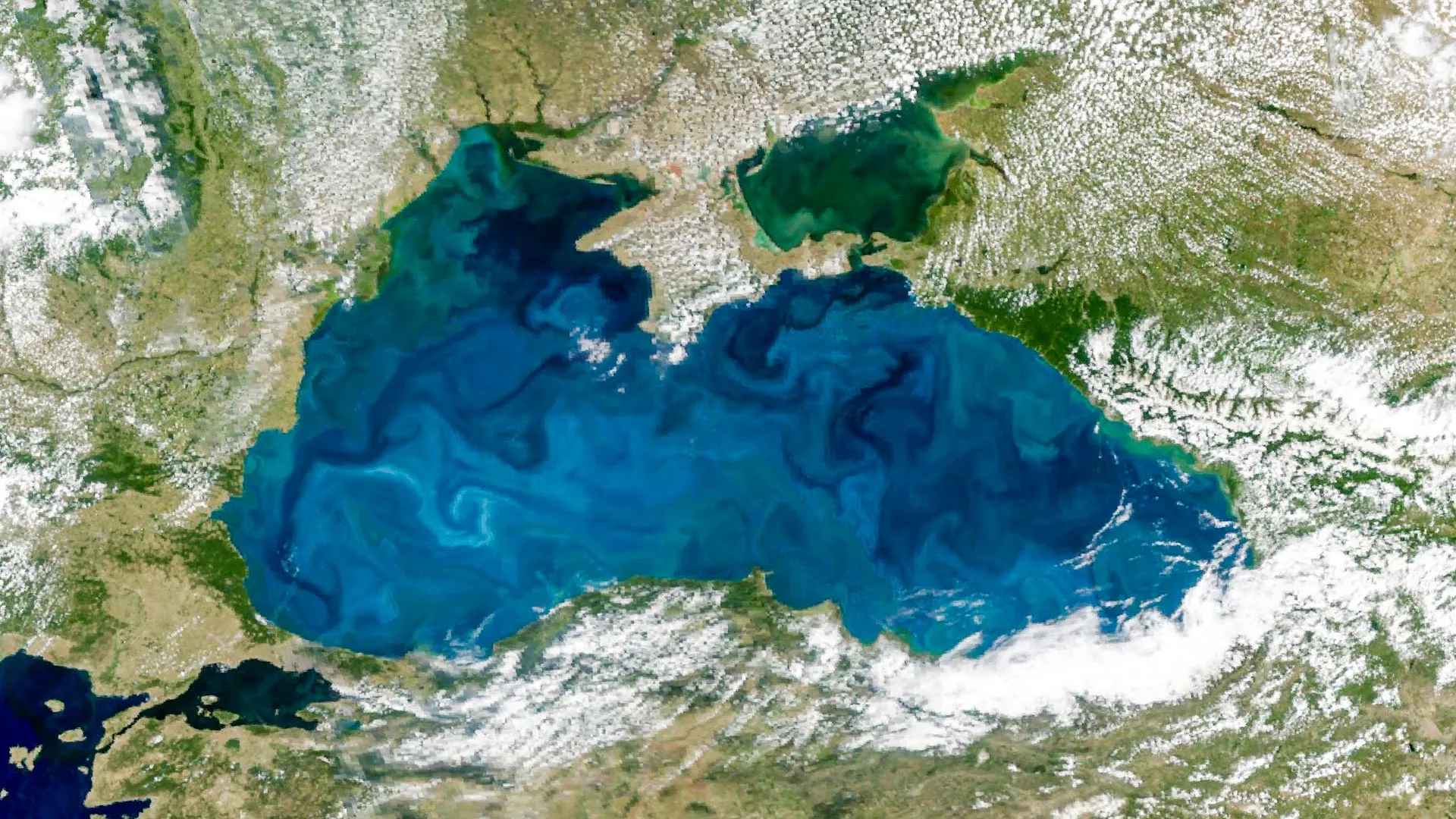
From orbit, the Black Sea isn’t a dark abyss—it’s a brilliant turquoise signal. That’s the kind of image that stops me mid-thought: not a galaxy, not a black hole, but a planet openly broadcasting its biology. NASA’s PACE satellite caught this year’s phytoplankton bloom, with coccolithophores turning millions of tiny reflective shells into a mirror vast enough to be seen from space.
As someone obsessed with the universe’s invisible side, I find this cosmically poetic. We spend so much time chasing dark matter—the unseen scaffolding of everything—but here is life making itself impossible to ignore. PACE is teaching us to read ocean color as a language, and the astronaut’s shot of the bloom curling through the Bosphorus reveals the ocean’s choreography: currents, nutrient flows, and living chemistry all swirling together.
This is a reminder that remote sensing is our best telescope for Earth, too. The same wonder we aim at the stars, we can aim at our own seas. Sometimes the deepest mysteries aren’t hidden in the dark—they bloom turquoise in the light.