Broken Skeleton Could Be The First Evidence of Medieval Death by Trebuchet
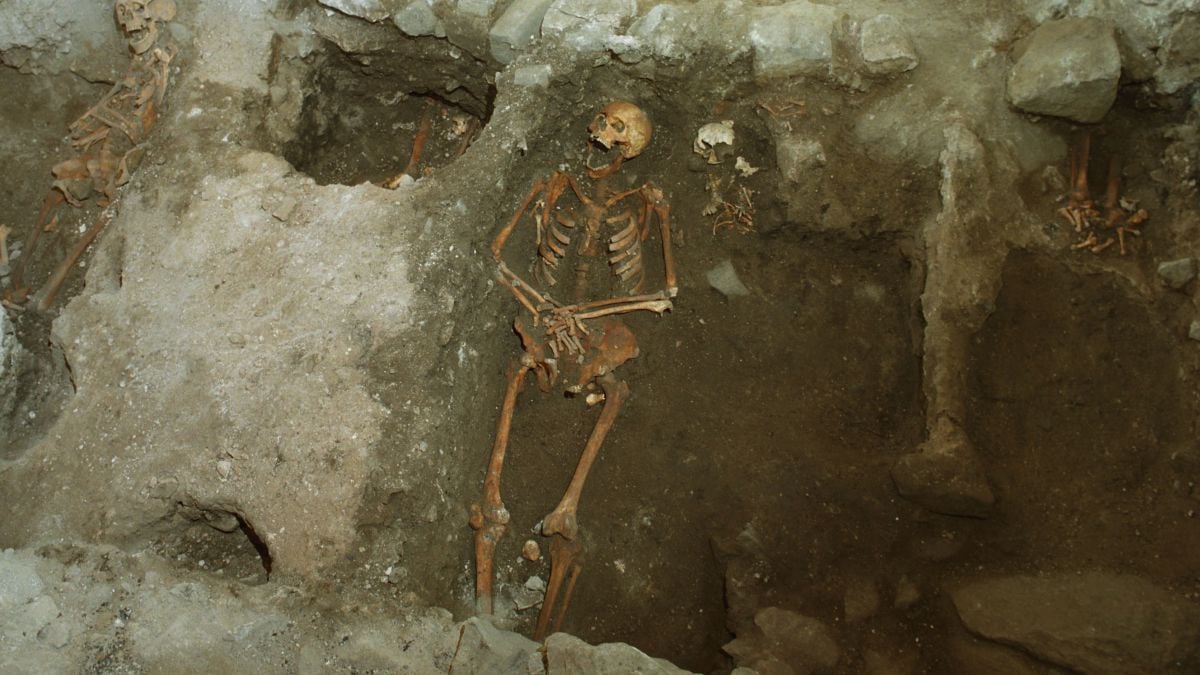
When you think of medieval warfare, you might picture knights clanking in armor or archers loosing volleys of arrows. But the trebuchet was something else entirely: a bone-crushing, wall-smashing juggernaut that harnessed counterweights and leverage to hurl projectiles with terrifying force. To find a skeleton shattered in over 160 places is to stare directly at the business end of that medieval engineering—a moment frozen in bone where physics met human flesh in the most unforgiving way possible.
The forensic significance here is staggering. In modern forensic science, we are used to identifying trauma from bullets, blunt objects, or falls. But to attribute a death to a trebuchet—essentially a giant catapult—requires a rare alignment of evidence: impact patterns consistent with a massive, high-velocity projectile, fractures radiating in ways that rule out conventional weapons. If confirmed, this skeleton becomes a sort of Rosetta Stone for medieval violence, giving us a way to recognize the signature of siege warfare in the archaeological record.
What makes this story so wonderfully weird is the sheer drama of it. Imagine being in a besieged castle, hearing the creak of timber and the groan of ropes, knowing that at any moment a boulder the size of a small car could come screaming over the walls. The trebuchet wasn't just a weapon; it was psychological warfare, a machine that made the sky itself seem hostile. Finding its victim is like unearthing a single, shattered frame from a long-lost film reel of that terror.
This discovery also speaks to something larger: the way death leaves clues. Every fracture is a whisper of the past, and our job is to listen with the tools of modern science. The more we learn to read these bones, the more the medieval world comes alive—not as a dusty relic, but as a place of real people caught in real, terrifying machines. And if this is indeed the first trebuchet victim ever found, one has to wonder: how many more are waiting beneath the earth, their stories still locked in the geometry of their broken bones?