Archaeologists in Egypt Discover a Mud-Brick Tomb Featuring a Heartbreaking Elegy to an Ancient Man's Father
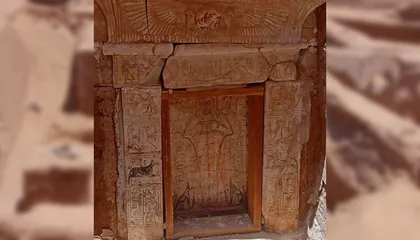
I keep thinking about that word "original." In a culture that spent millennia recycling the same prayers and funerary formulas, somebody sat down and wrote something that didn't follow the template. That's the human detail that gets me. This wasn't a priest ticking boxes for the afterlife. This was a guy who lost his dad and couldn't leave it at "he was a good man," so he wrote nineteen lines that a modern scholar still finds striking.
The mud-brick part matters too. The big tombs get the headlines and the museum space, but most people were buried in modest structures with whatever they could afford. This elegy survived because someone cared enough to carve it into stone, and that care outlasted the brick. I'd want to know who the father was, what he did, and whether the son's grief was conventional or something more specific. The scholar calls it literary, which makes me wonder if this was a professional poet's work or a grieving amateur's best effort. Either way, it's proof that heartbreak doesn't change much in four thousand years.