On this day in space! Nov. 5, 2002: NASA's Galileo spacecraft flies by Jupiter moon Amalthea only to find it's a 'pile of icy rubble less dense than water'
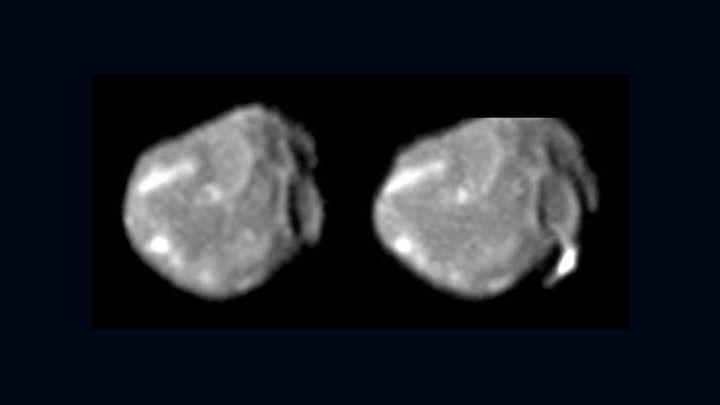
I keep coming back to the image of a moon that's less dense than water. Amalthea is this tiny, irregular speck of a world hugging Jupiter's fierce radiation belts, and it turns out it's basically a cosmic snowball of loosely packed fragments. Galileo was already past its prime by 2002, running on fumes and surviving radiation hits, yet it managed to pull off this discovery on what was essentially a bonus flyby. There's something poetic about an old spacecraft teaching us something new about a moon we'd mostly ignored.
The bigger implication is that our models of how moons form might need some loosening. If Amalthea is a rubble pile, it probably didn't form the way we assumed, maybe it's a leftover from a collision or a captured bit of debris that never got squeezed into something solid. I'd want to know how porous it really is, and whether other small moons around the gas giants are hiding the same secret. We tend to think of moons as either rocky or icy, but the reality is messier and more interesting than that. I'd love to see a mission go back and poke at it, though Jupiter's radiation makes that a tough ask. For now, I'm just glad an old probe got one last good look before it took its final plunge.