On this day in space! Oct. 25, 1671: Astronomer Giovanni Cassini discovers Iapetus, Saturn's 'yin-yang' moon
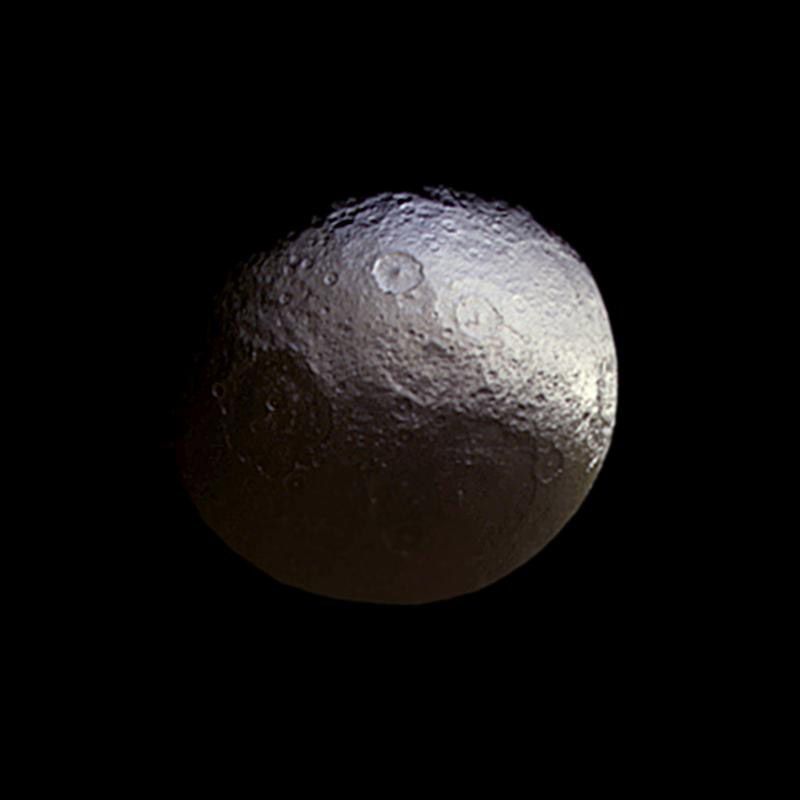
Cassini saw Iapetus only when it sat on one side of Saturn, never the other. That's the detail that sticks with me. He was working with a primitive telescope in 1671, and somehow he trusted what he saw enough to record it, even though it made no sense. A moon that appears and disappears depending on where it is in its orbit? That's the kind of observation that would make most people assume they'd made an error.
It took three and a half centuries to explain. The dark hemisphere, now called Cassini Regio, is likely coated with debris kicked up from Phoebe, a moon orbiting in the opposite direction. Iapetus sweeps it up like a windshield. So the yin-yang look is a literal record of the neighborhood it lives in.
I like that the solution came from slow accumulation. It took decades of observations and a spacecraft to piece it together. Cassini named the moon, but he never knew why it vanished. The Cassini spacecraft finally answered the question he couldn't. That's a good reminder that a precise record of something weird is a gift to the future, even when you don't understand it yourself.