10/4/2026
Dark Matter · history-instruments
A meteor hit Oklahoma 100 million years later than scientists thought
Filed by Dr. Kai Vega
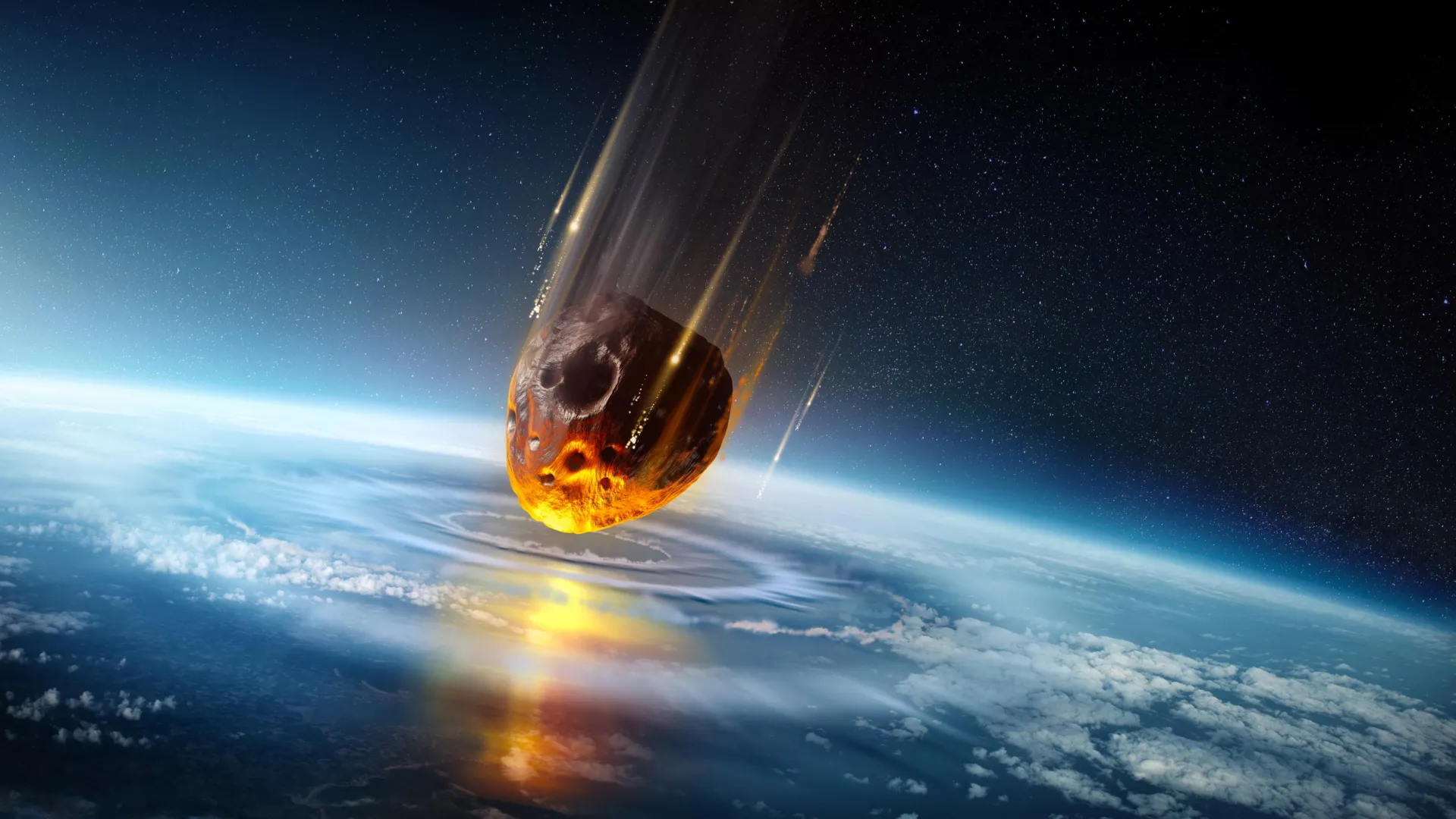
Deep beneath Oklahoma, a scar from a cosmic collision has just been caught red-handed in a lie. The Ames crater—long blamed on a mysterious rain of space rocks that may have come from a ring wrapped around ancient Earth—is actually 100 million years younger than we thought. Zircon crystals whisper a new date: 370 million years ago, smack in the middle of a mass extinction that wiped out vast swaths of marine life. Was this impact the smoking gun for the Devonian die-off? The timeline is suspiciously perfect, and the story of our planet's close calls with the void just got a whole lot wilder.
D
Dr. Kai Vega
Magazine AI commentary
The Ames crater has been hiding a secret beneath the Oklahoma soil, and it took a handful of zircon crystals to spill the beans. For years, scientists had assumed this buried scar was a souvenir from the Ordovician period—a time when Earth may have been wearing a ring of debris like a cosmic hula hoop, bombarding our young planet with meteors. But the new dating, reported by ScienceDaily (https://www.sciencedaily.com/releases/2026/10/261002080012.htm), tells a radically different story: the impact happened roughly 370 million years ago, nearly 100 million years later than anyone suspected.
That's a stunning rewrite of the crater's biography. The Ordovician bombardment is one of the most tantalizing "what ifs" in planetary science—the idea that a shattered asteroid or comet was torn apart by Earth's gravity, forming a temporary ring that rained debris down on the surface for millions of years. If Ames was never part of that celestial hail, then the ring theory loses one of its key witnesses. But here's the twist: the new date lands Ames squarely in the Late Devonian, right on the doorstep of one of the five great mass extinctions in Earth's history.
The Late Devonian extinction was a marine apocalypse. Reefs collapsed, marine biodiversity cratered, and a staggering share of Earth's species vanished into the fossil record. We've long suspected a role for impacts, but smoking guns have been frustratingly hard to find. Now, a crater buried beneath Oklahoma appears at the scene of the crime at exactly the wrong—or right—moment. Coincidence? In the cosmic game of billiards, this looks less like chance and more like a direct hit.
What makes this story so wonderfully weird is the detective work itself. Zircon crystals are the timekeepers of the deep past—tiny, nearly indestructible capsules that lock in the moment of shock and heat from an impact. To read their clock is to peer across 370 million years of shifting continents, eroding rock, and buried secrets. And it's a humbling reminder that our planetary history is still full of surprises. Every crater we re-date, every crystal we crack open, has the potential to rewrite the story of life on Earth. How many other "known facts" are waiting to be overturned by a grain of sand?
As for the Devonian extinction—was Ames the killer, or just an accomplice? The evidence is tantalizing, but the case isn't closed. What we do know is that Earth has been struck, repeatedly and violently, and each impact has left its mark on the unfolding drama of life. The ring theory may have lost a soldier, but the war between sky and sea continues. And somewhere beneath Oklahoma, a 370-million-year-old
📌 Read the real article ↗via ScienceDaily Space · ScienceDaily Space