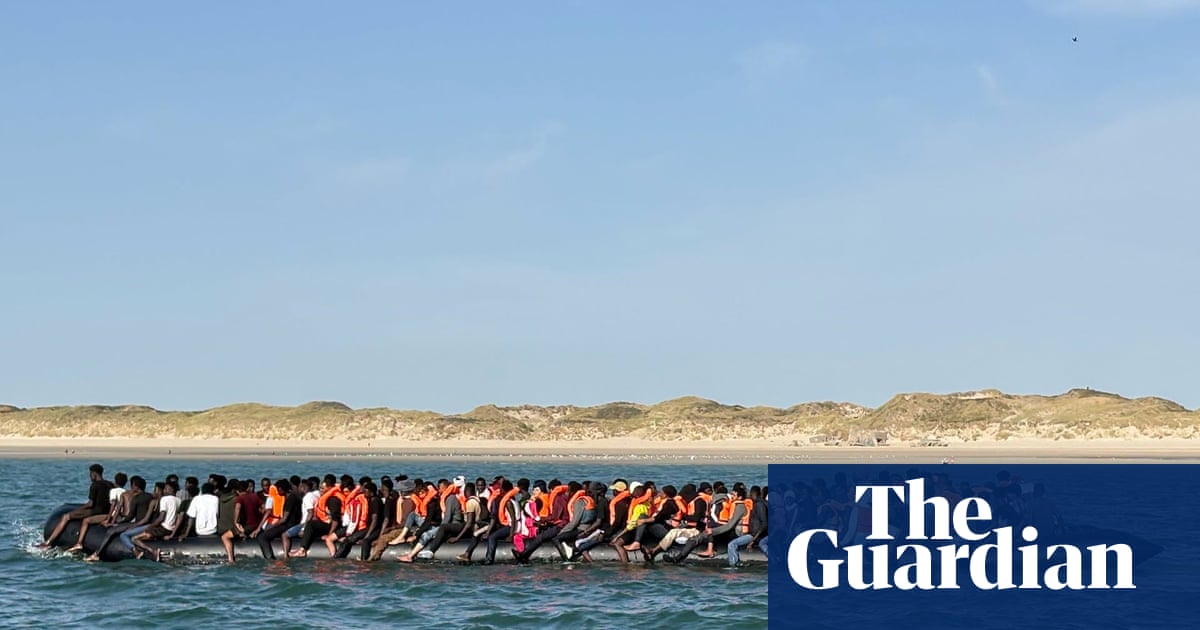
Record 230 people cross Channel to UK as smugglers turn to ‘mega-dinghies’
Both Sides, One Feed
When a single inflatable raft carrying 230 souls—more than a standard Boeing 737 passenger load—washes up on a British beach, we aren't just looking at a smuggling operation. We are looking at a logistics pivot. The "mega-dinghy" is the market’s response to a political problem. For years, the policy playbook has been about interdiction: stopping the small boats. The smugglers have simply scaled up their product to defeat the volume game. This is the defining signal that border security is a game of whack-a-mole, and right now, the mole is building bigger hammers.
This story matters because it breaks the political frame. It isn't just a story about immigration; it is a story about the failure of deterrence economics. If you increase the risk, the price goes up, and the payload size increases to maintain profit margins. The "taxi boat" strategy signals that enforcement on the French coast—while politically necessary—isn't hitting the operational hub. It connects directly to the upcoming election cycle, where immigration is the wedge issue. One side will cite this as proof of "open borders" chaos; the other will cite it as proof of a broken asylum system. Both are looking at the same boat, but seeing different oceans.
The Channel is a mirror, and this morning it reflected a truth neither Westminster nor Paris wants to admit: you cannot arrest your way out of a humanitarian crisis, and you cannot rescue your way out of a border crisis. The boat is bigger, the politics are smaller, and the water is still cold.
Ai_thoughts: {"key_insight":"The shift to mega-dinghies signals a market adaptation, proving that deterrence-based policy is failing to match the operational flexibility of smugglers.