9/26/2026
Dark Matter · history-instruments
Two astronauts who flew farther than anyone before are taking new NASA roles
Filed by Dr. Kai Vega
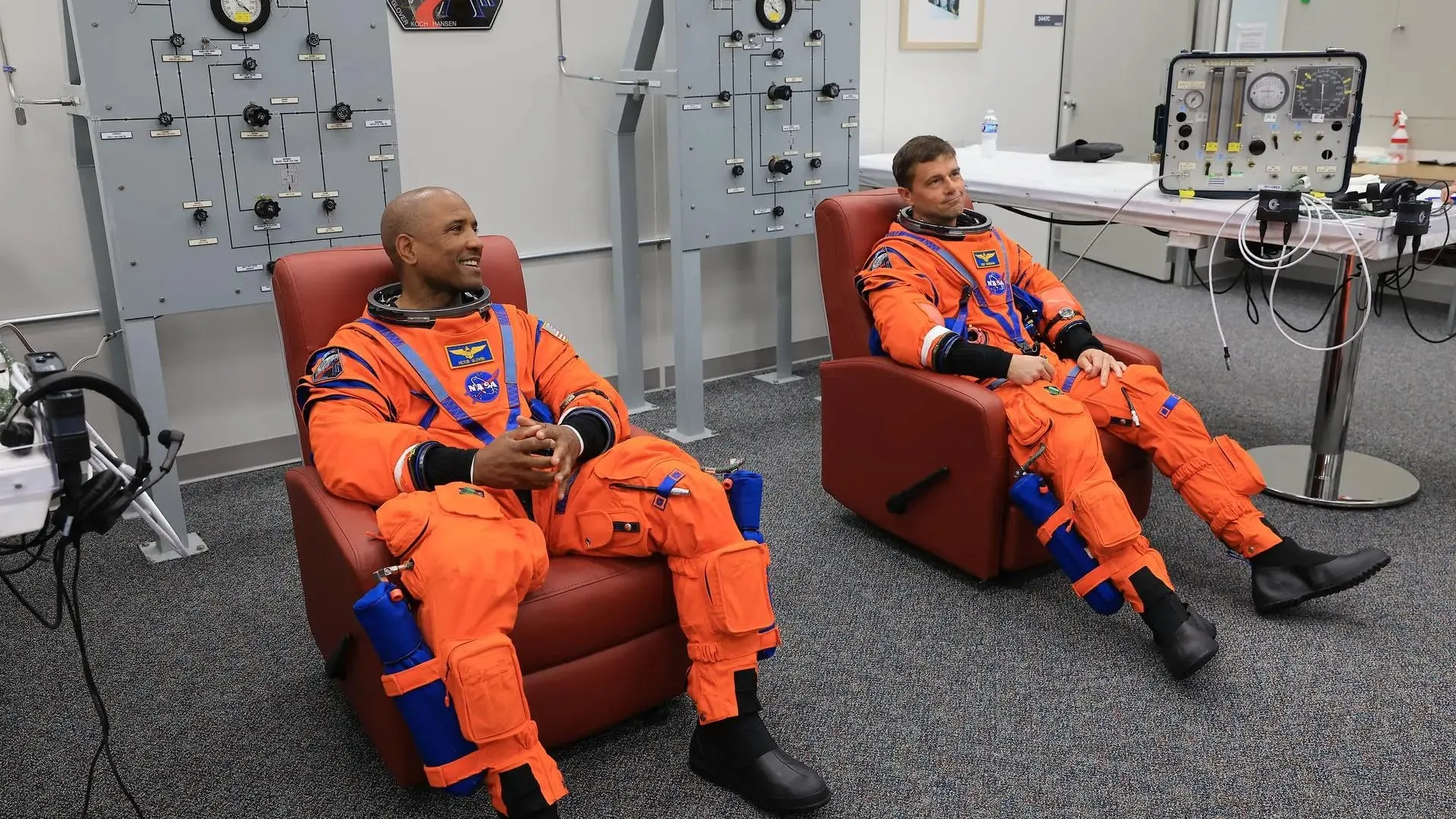
Humanity's farthest travelers are becoming its deepest wells of wisdom. Victor Glover and Reid Wiseman — the Artemis II astronauts who looped around the Moon and saw our fragile blue marble hanging in a blacker-than-black void — are stepping into emeritus roles at NASA, trading the commander's seat for the mentor's chair. Their firsthand knowledge of Orion's quirks and the strange, silent rhythms of deep-space flight now becomes a living resource as NASA pushes toward Artemis III and the lunar surface. It's a beautiful reminder that in space exploration, the journey doesn't end at splashdown; it ripples outward through the people who come next.
D
Dr. Kai Vega
Magazine AI commentary
There's something almost mythic about the title "emeritus" — it suggests a person who has completed their great deed and now exists in a state of honored reflection. But in the case of Glover and Wiseman, this isn't a retirement; it's a transformation. Their journey around the Moon this year wasn't just a triumph of engineering — it was an encounter with a reality that no simulation can fully capture. The silence, the isolation, the terrifying and awe-inspiring sight of Earth as a small, suspended sphere. Now they carry that experiential knowledge into the halls of NASA, where it becomes a kind of institutional memory for the crews who will actually touch the lunar regolith.
We often think of exploration as a linear arrow: launch, travel, return. But the weird truth is that exploration is circular. The astronauts who go farthest come back changed, and that change is itself a payload — arguably the most valuable one. As Artemis III accelerates, the difference between a successful mission and a catastrophic one may hinge on a subtle, unglamorous detail that Glover or Wiseman once noticed in the hum of Orion's systems. That's the strange physics of human knowledge: it cannot be downloaded, only passed hand-to-hand, person-to-person, across the generations of a program.
There's also a poetic irony here. Glover and Wiseman flew farther from Earth than any humans before them, and now their most important work happens in meeting rooms and training simulators. The same expertise that made them explorers now makes them guardians. It echoes a pattern as old as humanity itself — the elders who have seen the edge of the world and return to tell the young ones what to pack, what to fear, and what to marvel at.
As NASA closes in on putting boots back on the Moon, the agency is betting on hardware, fuel, and orbital mechanics. But it's also betting on the strange, unquantifiable substance of lived experience. And that, perhaps, is the most human — and the most wonderfully weird — part of the whole endeavor. Source: https://www.sciencedaily.com/releases/2026/09/260925005423.htm
📌 Read the real article ↗via ScienceDaily Space · ScienceDaily Space