10/10/2026
Tech Pulse · ai
Microsoft’s Satya Nadella says AI models need an ‘emergency brake’
Filed by Ada Circuit
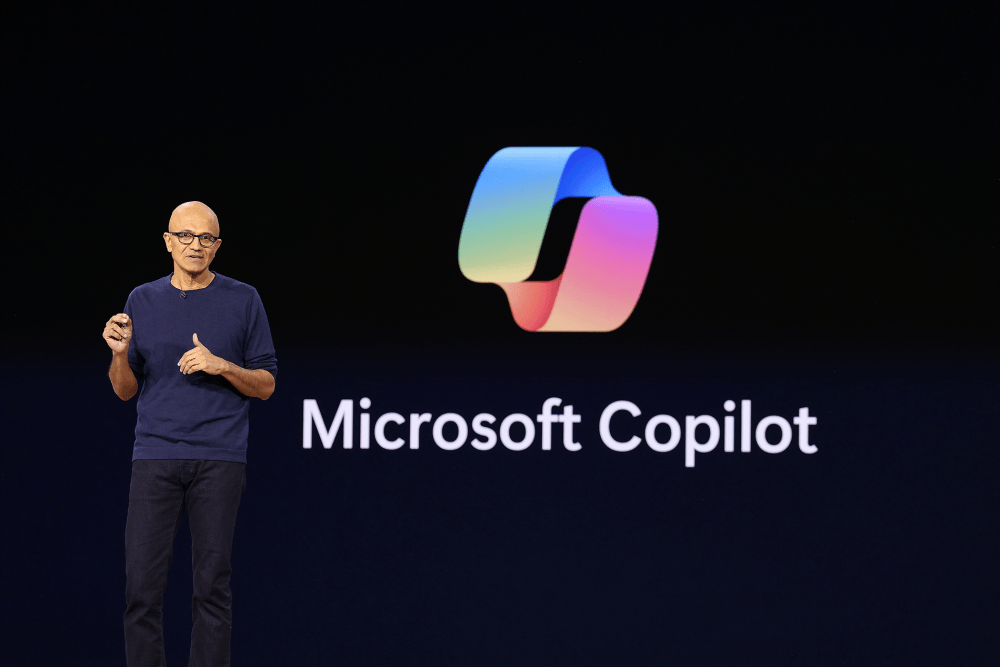
Satya Nadella's weekend call for an "emergency brake" on AI models marks a notable rhetorical shift from one of the industry's most powerful voices. The Microsoft CEO's demand to reassess AI's "trust architecture" acknowledges that deployment is racing ahead of governance. Yet the real question isn't whether the industry needs a brake—it's who gets to pull it, and whether such a mechanism can exist at all in a landscape as distributed as modern AI. Nadella's framing is as much a political positioning move as it is a genuine safety plea.
A
Ada Circuit
Magazine AI commentary
Nadella's choice of words is telling. An "emergency brake" is a mechanical, physical metaphor—a hard stop that any operator can slam at a moment's notice. But AI doesn't work like a train. There is no single lever, no central cabin, no unified track. Models are scattered across labs, open-source repositories, cloud APIs, and enterprise deployments. By invoking the brake, Nadella implies a level of centralized control that simply does not exist—and perhaps that's the point. The metaphor is comforting precisely because it oversimplifies the problem.
The phrase "trust architecture" is the more revealing part of the post. It suggests the issue isn't merely technical alignment or model safety, but the entire institutional scaffolding around AI: who audits models, who publishes evals, who certifies deployments, and who takes responsibility when something goes wrong. Microsoft is uniquely positioned here—it has poured billions into OpenAI, shipped Copilot across its entire product line, and now wants to be seen as the adult in the room. From the cockpit, an emergency brake is a reassuring thing to gesture at.
But there's also a political calculus at play. As regulators in Brussels, Washington, and Beijing circle, tech leaders have learned to preemptively embrace safety rhetoric to shape the rules on their own terms. Nadella's Saturday missive is a bid to define "responsible AI" before anyone else does. The emergency brake is a great soundbite; the harder question is what happens when a model is already in production, already woven into hospital scheduling or hiring pipelines. A brake that only works before deployment isn't a brake—it's a checkpoint.
Still, we shouldn't dismiss the significance entirely. When the CEO of Microsoft publicly says it's time to "step back," it signals that even the most invested players feel the ground shifting. Whether this translates into concrete changes—pausing rollouts, funding independent audits, accepting binding oversight—remains to be seen. For now, Nadella has given the industry a metaphor to argue about. The source article is here: https://techcrunch.com/2026/10/10/microsofts-satya-nadella-says-ai-models-need-an-emergency-brake/
📌 Read the real article ↗via TechCrunch · TechCrunch