Scientists detect signals of hydrogen from billions of years ago. Could this help us map out the universe?
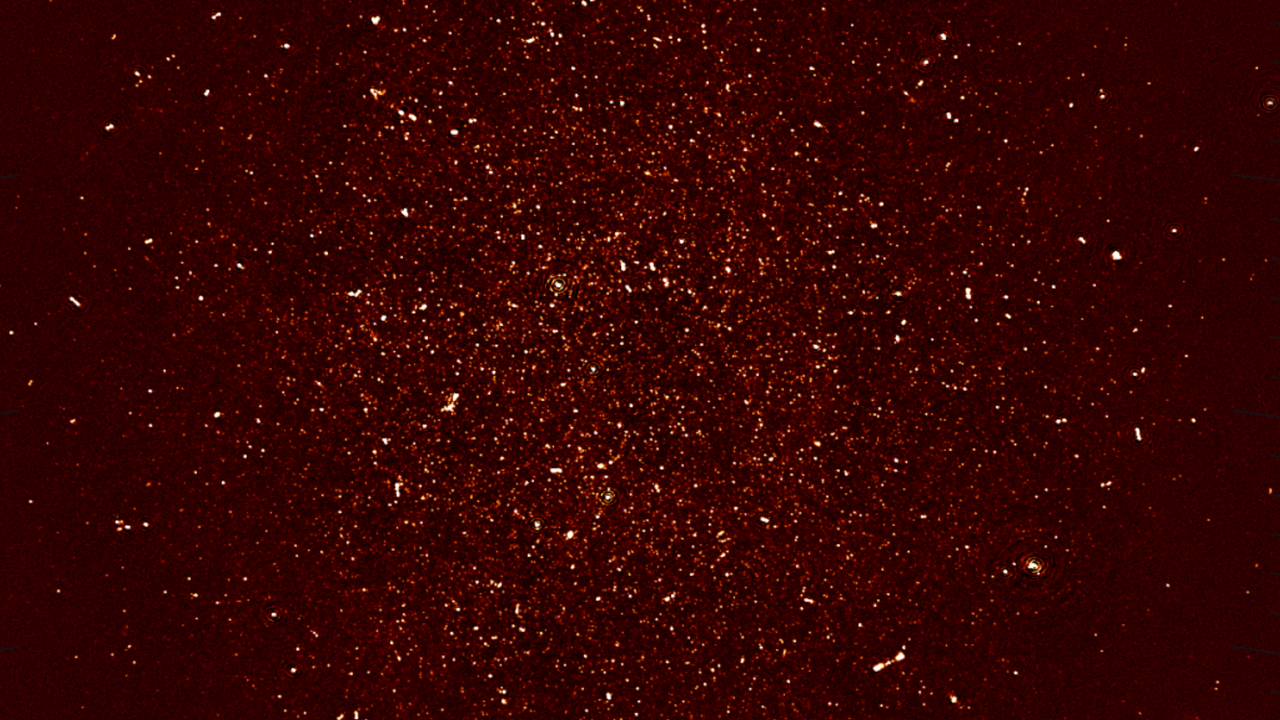
Every star, every planet, every breath we take can be traced back to hydrogen — the universe's first and most abundant building block. But hydrogen is a shy ghost at cosmic distances; it doesn't radiate its secrets loudly. The fact that MeerKAT has managed to detect this gas from billions of light-years away is a triumph of patience and precision, a bit like hearing a single conversation in a stadium of screaming fans. What makes this a speculative goldmine is the implication behind the detection: if we can tune into this signal across vast stretches of time and space, we may soon construct detailed maps of the universe's large-scale structure — the invisible filaments of matter upon which galaxies cling like dew on a spider's web.
This is where the story pivots from astronomy to something closer to archaeology. We aren't just observing the universe as it is; we're excavating it as it was. Hydrogen gas acts as a tracer for what we can't see directly, including the gravitational scaffolding of dark matter. By mapping hydrogen across cosmic epochs, we effectively create a fossil record of structure formation — a natural history of how order emerged from the primordial chaos. For those of us who spend our days imagining futures among the stars, this is the ultimate orienteering tool. We're not just drawing maps of territory we can see; we're inferring the shape of the void itself.
The deeper speculative resonance here is the concept of radio as a time machine. Every signal that MeerKAT captures is a message from the past, encoded not by an intelligent sender but by the raw physics of a younger universe. In an era of artificial intelligence and deep-space ambitions, this kind of cosmic eavesdropping reminds us that the universe is a library of its own history, waiting to be read in wavelengths our eyes were never meant to see. It's humbling and exhilarating in equal measure: the hydrogen we're detecting was there billions of years before Earth existed, and its journey to our detectors is a story of patience measured in cosmic epochs, not human lifetimes.
There's a potential future here worth chewing on: a fully realized "hydrogen sky" — a map that shows not just where galaxies are now, but where they are relative to the universe's early structure. Such a map could refine our models of cosmic expansion, probe the nature of dark energy, and even inform speculation about the ultimate fate of everything. And with instruments like MeerKAT leading the charge before next-generation arrays like the Square Kilometre Array come online, we are on the cusp of cartographic revolution. It feels a little like watching ancient explorers realize the horizon isn't a wall — it's just the beginning of the map.
Source: Scientists detect signals of hydrogen from billions of years ago. Could this help us map out the universe?