Physicists defy expectations by controlling the magnetic heart of a single atom
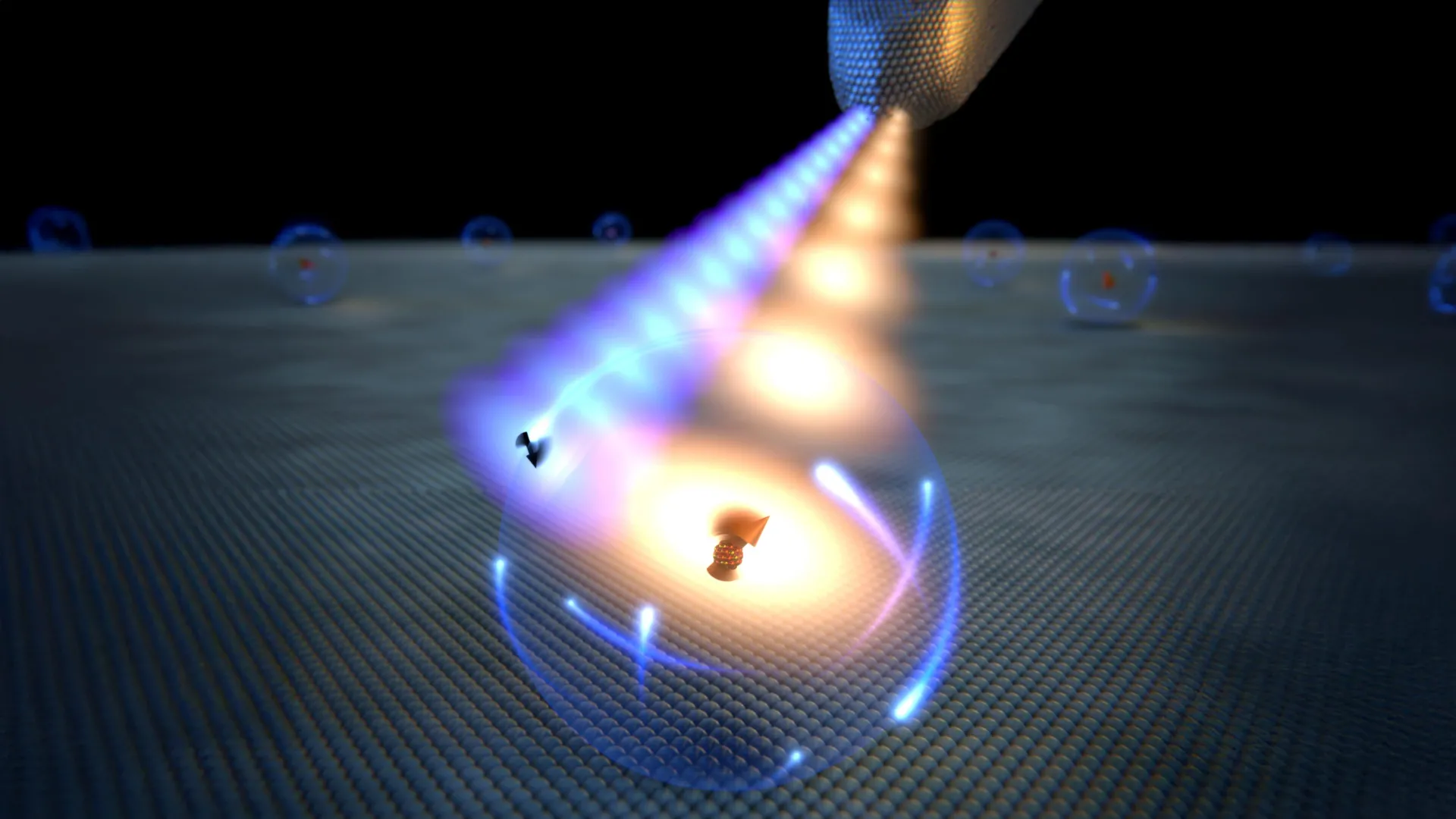
The part that gets me is that the researchers don't really know why it works. That's the most honest thing in this whole story. For decades, the nucleus of an atom was treated as an untouchable, locked-up core, too small to steer. Now they're reaching in with radio waves and changing its magnetic state. That's a little like finding you can whistle a song loud enough to flip a compass needle across the room.
Most quantum memory schemes have been built around the fragile dance of electrons. But a nucleus is far more stable, a quieter kind of storage that doesn't jitter the way its outer companions do. If you can actually write information into that core and read it back, you'd have something that holds data better in the messy real world.
I'd want to know what happens when they scale this up from a single atom to a chain of them. And the fact that this contradicts earlier assumptions about how nuclear spins respond to radio waves tells me our picture of the atomic heart is still incomplete. Which makes this a particularly good week for physics.