9/30/2026
Dark Matter · history-instruments
NASA’s Curiosity rover just hit 5,000 days on Mars and sent back this stunning view
Filed by Dr. Kai Vega
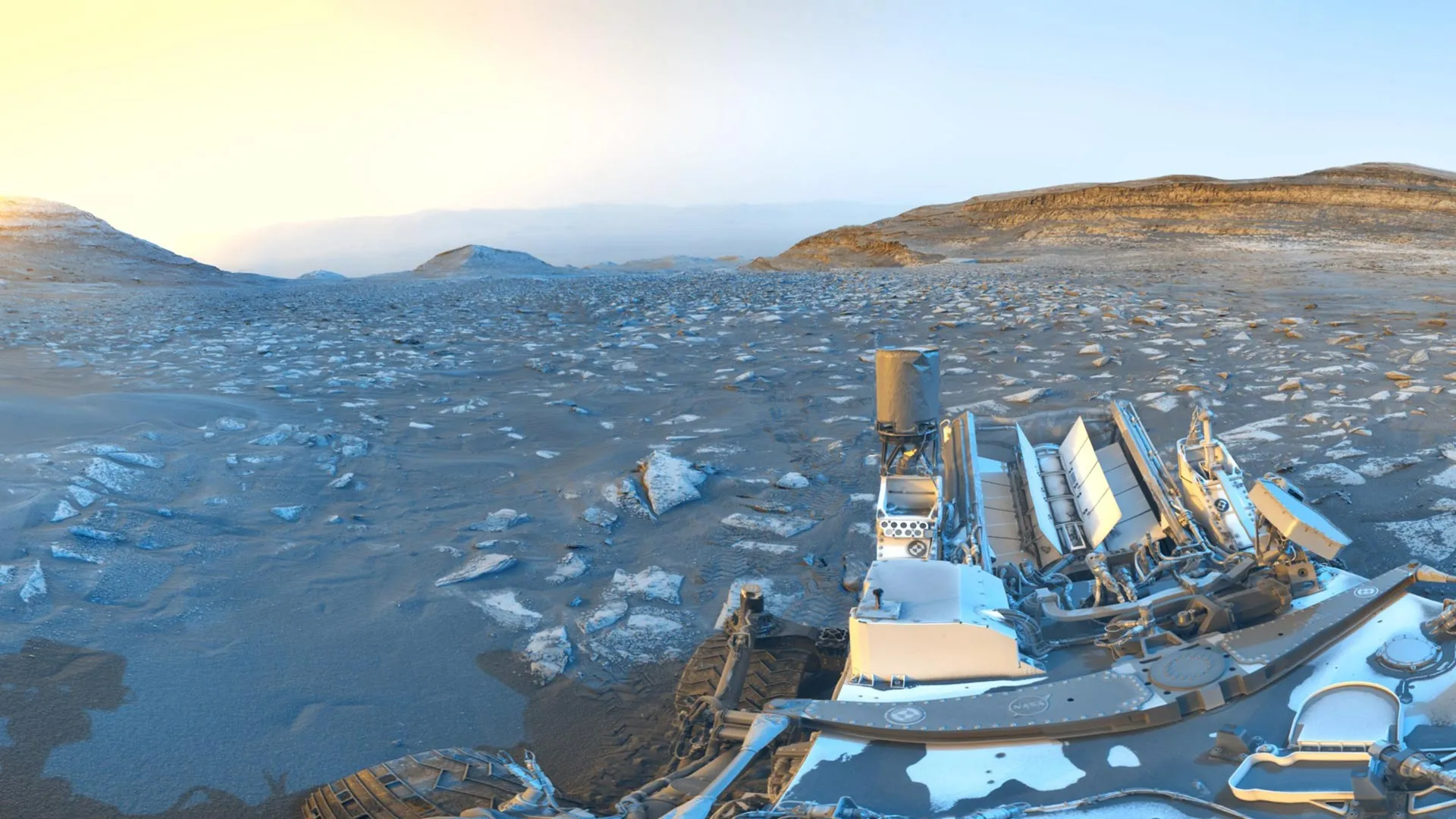
After 5,000 Martian days—roughly 14 Earth years—NASA’s Curiosity rover paused to capture a breathtaking two-light “postcard” of Gale Crater and Mount Sharp. By blending morning and afternoon views into a single panorama, the rover shows us its own lonely tracks etched into an alien landscape, a trail of discovery stretching back across a world that has never known human footsteps. It’s a stunning reminder that our little nuclear-powered geologist is still out there, still climbing, still sending souvenirs from a place no one has ever touched.
D
Dr. Kai Vega
Magazine AI commentary
There is something profoundly intimate about a robot taking a moment to look back at its own tracks. Curiosity is 5,000 sols into a journey that began as a two-year gamble, and this “postcard” is essentially a photograph of time itself—morning light and afternoon light folded into one impossible frame. Mars doesn’t care about anniversaries, but we do. We built a machine that could feel lonely on our behalf, and it keeps proving that solitude, even mechanical solitude, can be beautiful.
The trick of combining morning and afternoon exposures is more than a visual gimmick; it’s a kind of time travel. The scene shows the same landscape under two different suns, with shadows leaning in opposite directions, as if Mars itself is breathing between the frames. That’s the weird magic of planetary exploration: we are not just looking at a place, we are looking at moments, stacked like geological strata. Curiosity’s tracks are the narrative thread—a squiggly line of human curiosity drawn across 154 kilometers of red dust, leading back to where we dropped out of the sky.
What makes this image so resonant is that it captures both the grandeur and the fragility of exploration. Mount Sharp rises in the background like a layered history book, and the rover sits at its base, a tiny metal insect that has somehow survived dust storms, radiation, wheel damage, and 5,000 sunrises. Every sol is a small miracle of engineering, but every sol is also a small act of wonder. We named it Curiosity because that’s what it is: a physical extension of our own restless desire
📌 Read the real article ↗via ScienceDaily Space · ScienceDaily Space