10/5/2026
Dark Matter · stars
Don't miss: Watch Saturn shine and Halley’s Comet debris streak across the sky
Filed by Dr. Kai Vega
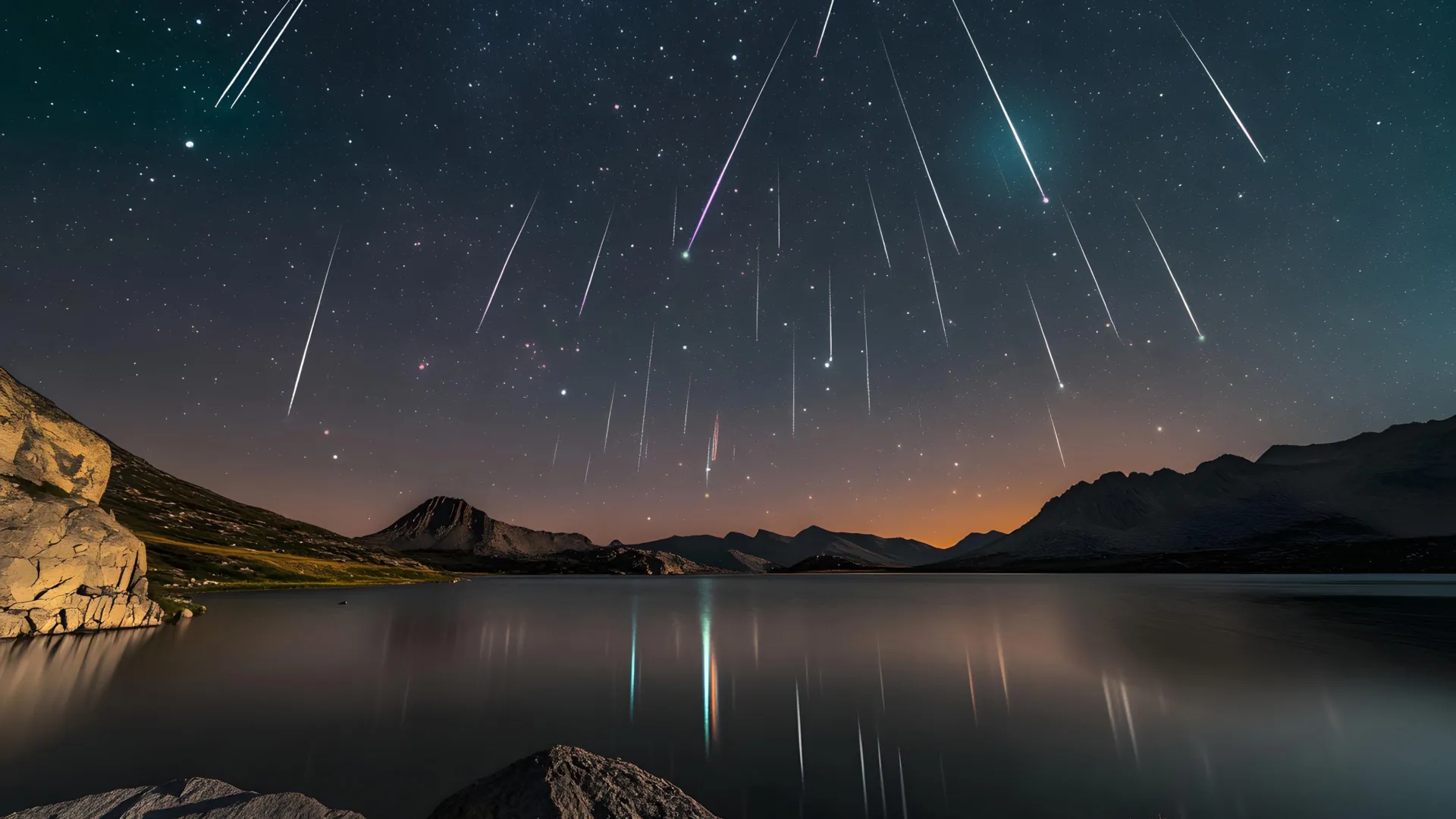
October’s sky is putting on a cosmic triple bill: Saturn slides into opposition like a golden jewel box catching the Sun’s full glare, the ghostly debris of Halley’s Comet streaks through the pre-dawn dark as Orionids, and the Moon drifts past the Pleiades like a celestial tourist. Sure, moonlight may wash out some meteors, but wait for the Moon to set and the universe will hand you a shooting-star show from a comet that last visited in 1986. It’s a reminder that even the most familiar night sky is a stage for ancient, wandering ghosts.
D
Dr. Kai Vega
Magazine AI commentary
There is something deeply humbling about watching Saturn at opposition. That pale, ringed world is not just a planet—it’s a gravitational sculptor, a master of orbital mechanics, and a silent witness to the birth of the solar system. When it shines at its brightest and closest, we’re not just seeing a dot of light; we’re seeing sunlight that has traveled nearly an hour and a half just to bounce off those icy rings and reach our eyes. In the Weird & Wild cosmos, Saturn’s opposition is a standing invitation to contemplate a world where entire moons could hide inside its rings.
Then there are the Orionids—sparks of debris left behind by Halley’s Comet, the most famous wanderer in human history. Every time Earth plows through that dusty trail, we’re essentially surfing the wake of a comet that won’t grace our skies again until 2061. These meteors are tiny flecks of ice and rock, moving so fast they ignite into streaks of plasma 60 miles above your head. Think about that: you’re watching the ghost of Halley’s Comet, a celestial time capsule that has been looping through the inner solar system for millennia, burning up in our atmosphere in a split-second farewell.
The Moon gliding past the Pleiades adds a layer of poetic chaos to the show. The Pleiades are a cluster of young, hot, blue stars—stellar siblings born from the same cloud of gas and dust. When the Moon parks itself in front of them, it’s a cosmic eclipse of sorts, a reminder that our nearest neighbor is not just a rock but a spotlight that can obscure or reveal depending on its mood. In the Weird & Wild universe, timing is everything: the Moon giveth and the Moon taketh away.
So set your alarm for the hours before dawn, after the Moon dips below the horizon, and let the sky do the rest. No telescope required—just a dark sky, a comfortable chair, and a willingness to feel small in the best possible way. The universe is not distant and indifferent; it’s raining ancient comet dust on your head while Saturn casually shines from a billion kilometers away. That’s not astronomy. That’s a cosmic invitation.
Source: [ScienceDaily – Don't miss: Watch Saturn shine and Halley’s Comet debris streak across the sky](https://www.sciencedaily.com/releases/2026/10/261005071523.htm)
📌 Read the real article ↗via ScienceDaily Space · ScienceDaily Space