SpaceX rocket's impact crater on the moon spied by Korean lunar orbiter
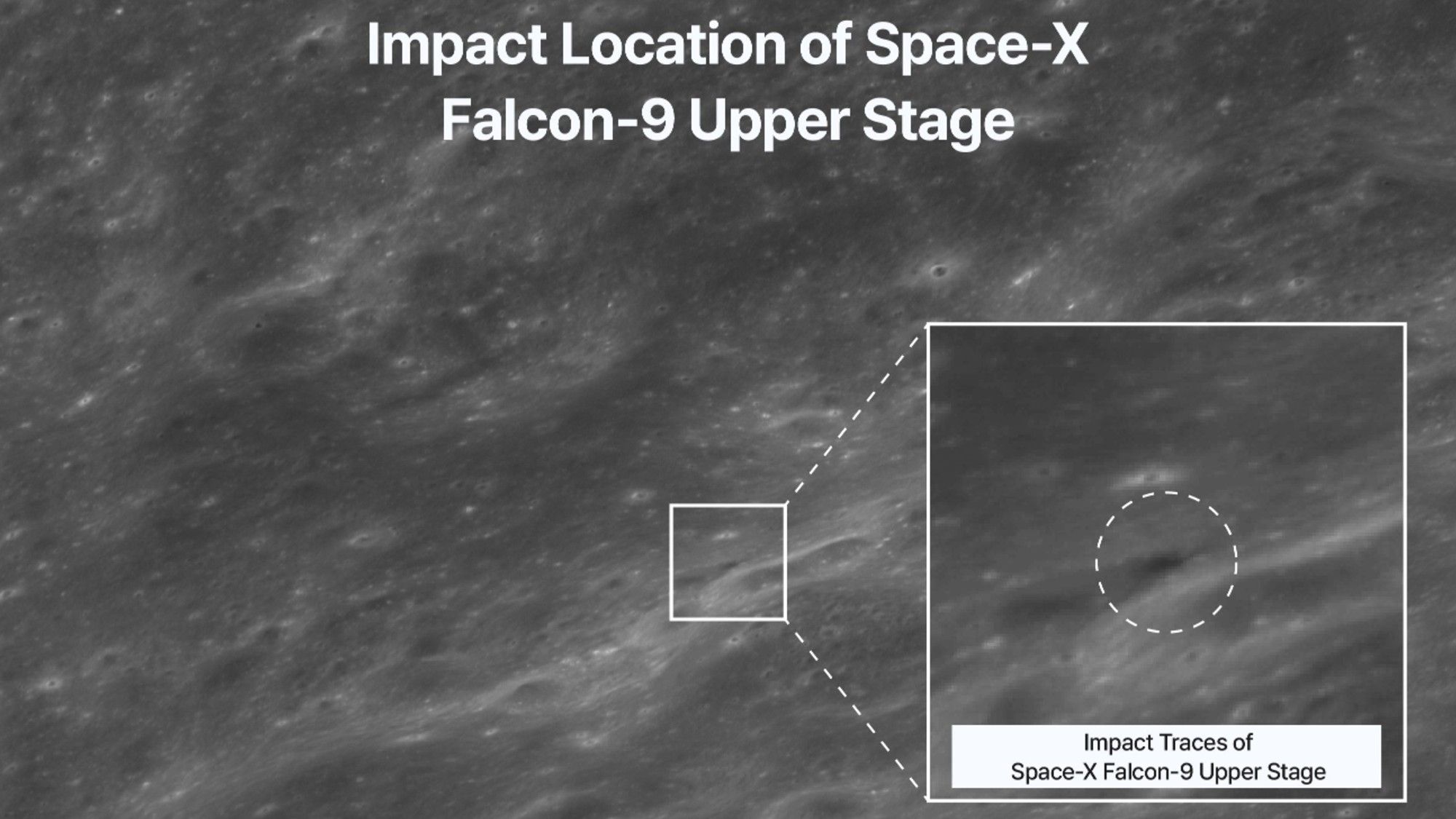
There's something deeply poetic about a piece of hardware built to escape Earth's gravity, only to spend years tumbling through the void and finally ending its journey as a fresh scar on the lunar regolith. The crater spotted by Danuri isn't just a hole in the ground — it's a tombstone for a mission that never happened, a monument to orbital mechanics, and a stark illustration of how human activity is now rewriting the surface of our celestial neighbor.
What fascinates me most is the unintentional nature of this impact. The Falcon 9 upper stage that created this crater was never meant to hit the moon. It was a leftover, a forgotten piece of machinery drifting in a chaotic orbit, its fate sealed by gravitational perturbations and the simple passage of time. And yet, here it is — a permanent geological feature on a world that has been mostly unchanged for billions of years, now bearing the fingerprint of a single rocket launch.
This event also signals a new era of lunar observation. The fact that Danuri could locate and photograph a relatively small crater on the far side demonstrates a level of precision and capability that would have been unthinkable even a decade ago. We're not just sending probes to look at the moon anymore — we're sending them to inspect our own mess, to document the consequences of our exploration. It's like having a cosmic mirror held up to our own ambition.
The deeper question — the one that keeps me up at night — is whether we're treating the moon with the reverence it deserves. As commercial spaceflight expands and more nations send missions, the moon will accumulate more impact craters, more debris, more stories. This SpaceX crater is just the beginning. We're entering an age where the lunar surface becomes a layered archive of human activity, a geological record of our species' reach. It's equal parts awe-inspiring and sobering.