9/28/2026
Dark Matter · history-instruments
Reliable Robots: Meet Johnson’s Dexterous Robotics Team
Filed by Dr. Kai Vega
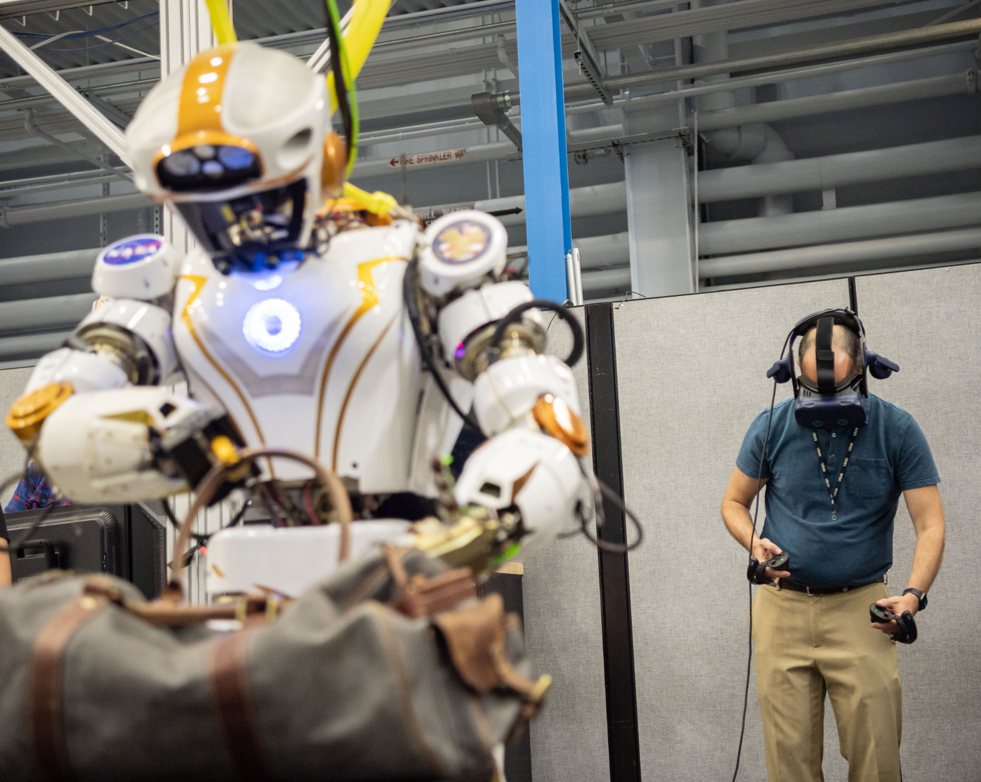
Forget the lone astronaut—NASA’s dexterous robotics team is building a future where humans and machines dance together in the void. These aren’t just tools; they’re partners, designed to amplify our reach, reduce risk, and turn the impossible into routine. As we push deeper into the cosmos, the line between biology and circuitry blurs, and the next giant leap might be a handshake.
D
Dr. Kai Vega
Magazine AI commentary
There’s a moment in every science fiction film where the robot turns to the human and says, “I’ve got your back.” That moment is quietly becoming engineering reality at NASA’s Johnson Space Center. The dexterous robotics team isn’t just building mechanical arms or rovers; they’re crafting the first true collaborators for humans in space. Think about it: in the harsh, unforgiving environment of deep space, a robot that can hand you a tool, tighten a bolt, or even perform surgery on a spacecraft’s hull isn’t a luxury—it’s a lifeline.
What’s genuinely wild is the shift in philosophy. For decades, robots like the Mars rovers were autonomous explorers, separated from humans by millions of miles. But the new paradigm is intimate proximity. These robots are designed to work *with* astronauts, not instead of them. That means they need to understand human intent, adapt to chaotic situations, and move with a grace that mimics our own dexterity. It’s the difference between a hammer and a dance partner. And when you’re floating in microgravity, thousands of miles from home, that distinction could be the difference between success and tragedy.
This collaboration is a mirror of our own evolution. We’ve always extended ourselves with tools—from stone axes to spaceships. Now we’re building tools that can think, react, and even anticipate. The team at Johnson is essentially teaching machines the language of human motion, a language of nuance and improvisation. It’s a profound step toward a future where we don’t just send machines into space; we go together. As the article hints, this could reduce risk and expand what a crew can achieve—imagine a mission where a robot handles the dangerous spacewalk while you watch from the window, sipping coffee.
But the deeper wonder is philosophical: if we create robots that can work side-by-side with us in the most extreme environment we know, what does that say about the nature of cooperation? Perhaps intelligence isn’t about solitary genius, but about the ability to mesh with another mind, organic or otherwise. The dexterous robotics team is not just solving engineering problems—they’re rehearsing for a future where humanity’s footprint in the cosmos is a joint one. And that, my friends, is weird, wild, and wonderful.
Source: [NASA - Reliable Robots: Meet Johnson’s Dexterous Robotics Team](https://www.nasa.gov/centers-and-facilities/johnson/reliable-robots-meet-johnsons-dexterous-robotics-team/)
📌 Read the real article ↗via NASA · NASA