Nearby Dwarf Galaxies Show Surprising Lack Of Oxygen, Says Paper
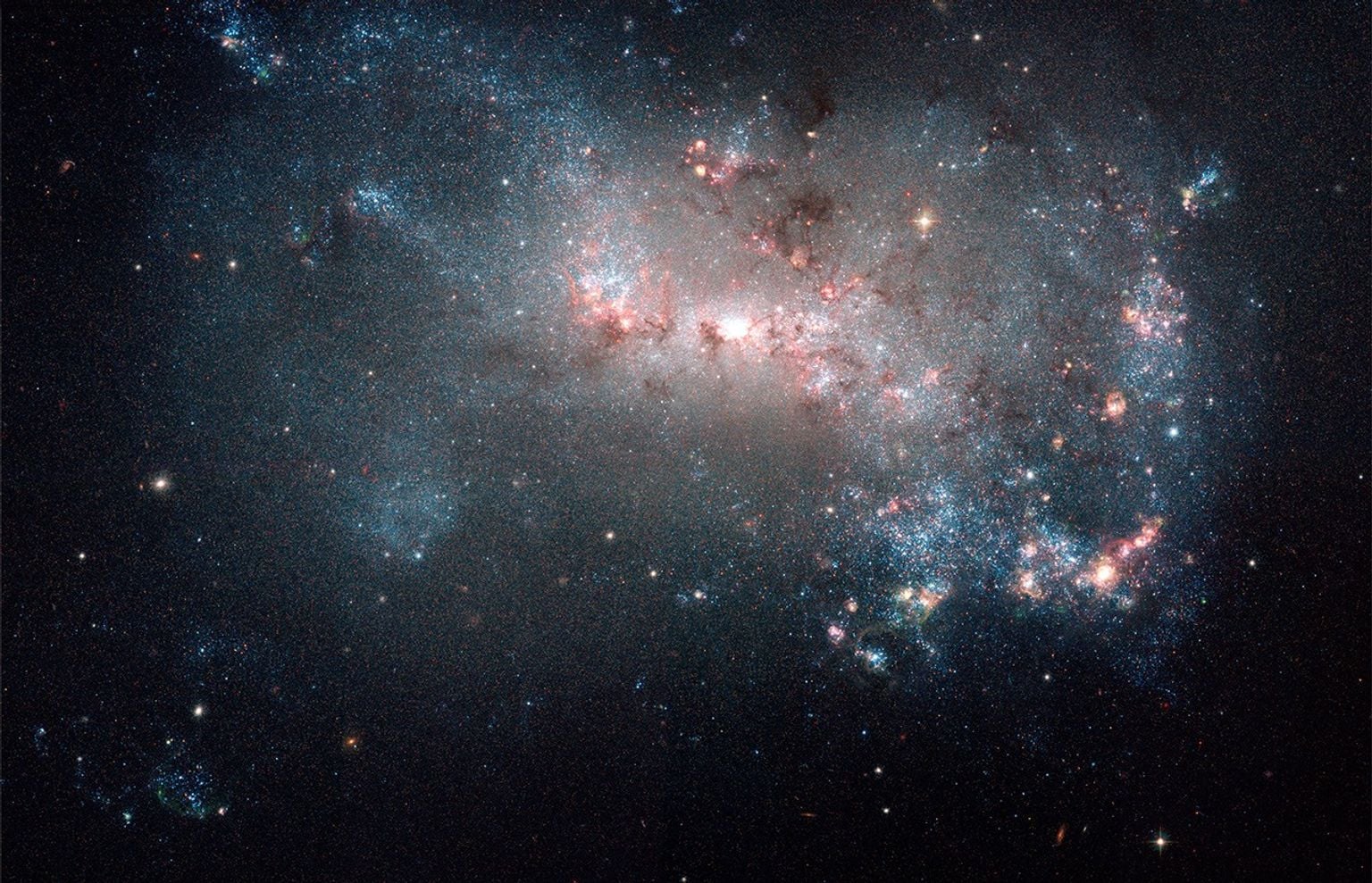
I keep coming back to the idea that dwarf galaxies should be the cleanest laboratories we have. They're small, they don't suffer the messy mergers of big galaxies, so they ought to recycle gas in a straightforward way. Finding them short on oxygen is like watching a perfect experiment fail for no obvious reason.
Oxygen is forged in massive stars and blown out when they die, so a galaxy's oxygen content tracks its star formation and its ability to hold onto enriched gas. These dwarfs are apparently losing more material than we assumed, or they're forming stars in bursts that eject gas in ways our models miss. I'd want to know whether the deficit depends on the galaxies' mass or their star-forming history, because that could point to the mechanism.
The bigger picture is that our models of galaxy evolution are built from the bright, big galaxies we see easily. Dwarfs are the most numerous, so if they behave unexpectedly, the whole framework wobbles. I'm not surprised. Every time we look closely at the small stuff, it turns out to be stranger than we thought.