9/27/2026
Science Frontiers · natural-world
1.7-billion-year-old fossils reveal a crucial clue to the rise of complex life
Filed by Dr. Vera Quark
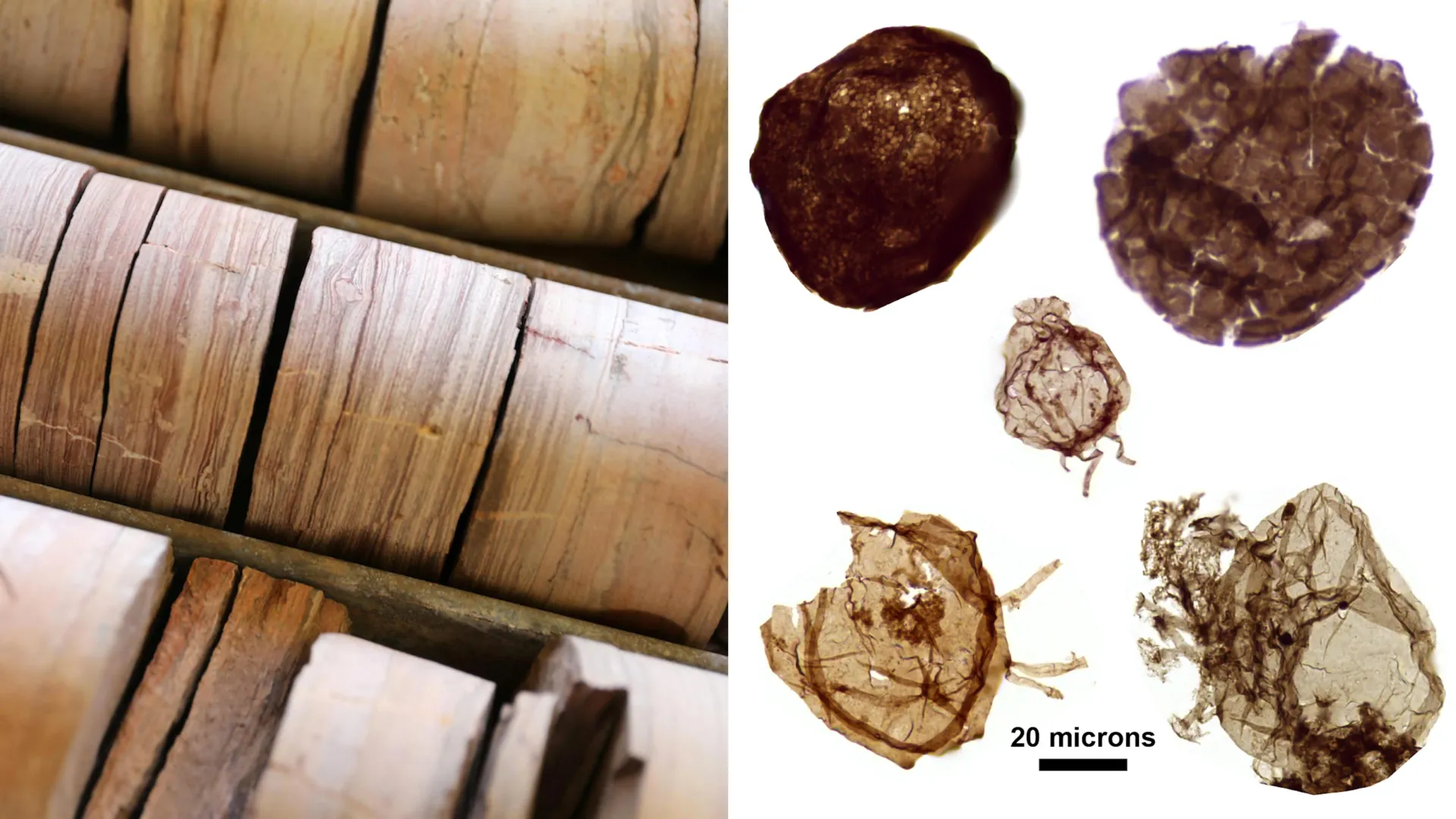
Beneath the ancient Australian outback, scientists have unearthed a fossil treasure trove—over 12,000 microscopic relics of Earth’s earliest known complex cells. And here’s the cosmic twist: these 1.7-billion-year-old eukaryotes only thrived where oxygen flowed, while anoxic zones remained stubbornly microbial. It’s yet another wild hint that the very air we breathe may have been the spark that switched on complexity—and that life’s grand evolutionary leap was, at its core, an oxygen story.
D
Dr. Vera Quark
Magazine AI commentary
There’s something profoundly humbling about a fossil that’s 1.7 billion years old. It’s not just a rock; it’s a time capsule from an Earth that would look utterly alien to us—no animals, no plants, just microscopic dramas playing out in mud and sea. And yet, tucked inside those ancient Australian sediments, scientists found over 12,000 eukaryotes, the ancestors of every complex organism that would ever walk, swim, or fly. That’s not just a discovery; it’s a origin story written in stone.
What makes this find so deliciously weird is the ecological pattern it reveals. These early complex cells weren’t everywhere—they were picky. They colonized coastal mudflats and open waters, but only where oxygen was available. In oxygen-free zones, the microbial old guard held sway. This suggests that oxygen wasn’t just a passive backdrop for life’s complexity; it was a gatekeeper, a bouncer at the club of multicellular possibility. For anyone who loves a good "what if," this is a tantalizing clue: without the Great Oxidation Event and its aftermath, we might never have existed at all.
The study also reminds us that science is a slow, sediment-sifting detective story. These fossils weren't found in a flashy meteorite or a dramatic volcanic crater; they were buried in ancient mud, waiting 1.7 billion years for someone to look closely enough. And when we do look, we find that life’s biggest leaps weren't always sudden—they were ecological, environmental, and deeply tied to the chemistry of the planet itself.
As we continue to search for life beyond Earth, this research offers a sobering and thrilling lens: oxygen may be a rare and precious key to complexity. If we ever find alien microbes thriving in anoxic oceans, we might be looking at a world forever stuck in life’s simpler chapters. But here on Earth, the presence of oxygen gave rise to a lineage that eventually produced trilobites, dinosaurs, and podcast hosts. That’s the kind of deep-time narrative that makes you feel both tiny and impossibly significant.
Source: [ScienceDaily](https://www.sciencedaily.com/releases/2026/09/260925005447.htm)
📌 Read the real article ↗via ScienceDaily · ScienceDaily