ALMA is Watching a Massive Binary Star System Form
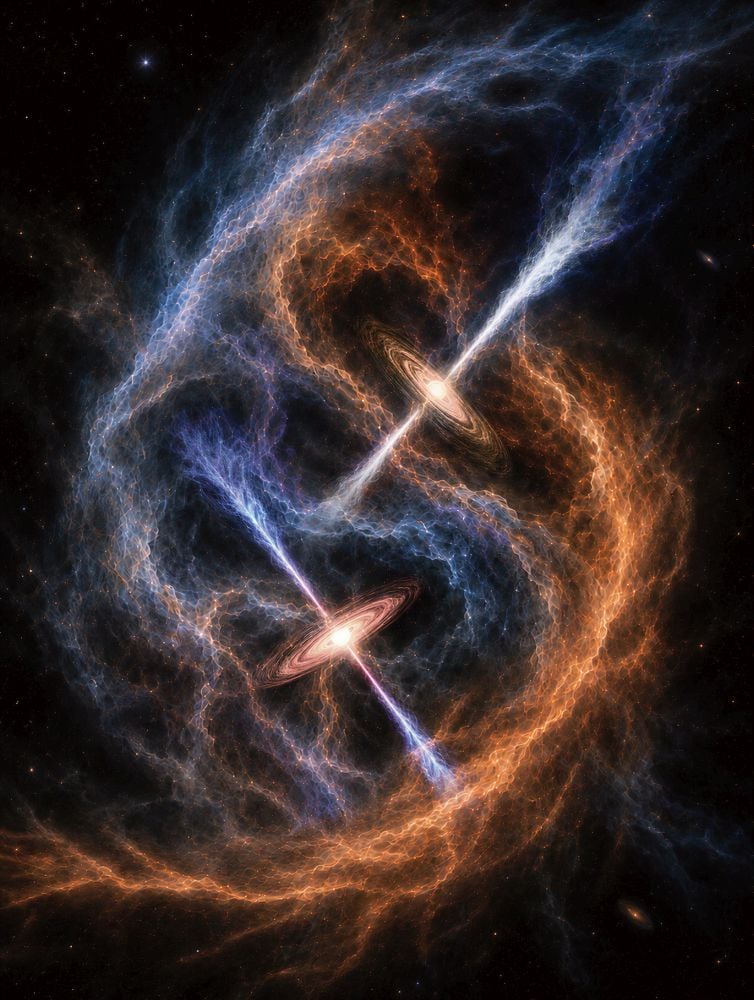
Eight years is a long time to watch anything, let alone something that operates on the timescales of a stellar nursery. I find it remarkable that ALMA had the patience to track this binary pair through all that chaos and then stitch it back together in three dimensions. The fact that the reconstruction is "anything but tidy" doesn't surprise me, though. When we talk about star formation, we usually lean on these neat, orderly models of accretion and rotation. But the reality, as this peering through the cosmic nursery shows, is a messy, sloppy, violent affair.
This matters because binaries are everywhere. Most massive stars turn out to have companions, and our understanding of how they emerge from a shared cloud of dust and gas has been mostly theoretical. Having an actual, visible case study to anchor those ideas is a big step forward. It connects to the broader question of whether planets can form in such environments, and what kind of fate awaits these heavyweights when they eventually exhaust their fuel. The Milky Way is full of these relationships, and figuring out how they begin helps us understand how they end.
I'm most drawn to the 3D reconstruction itself, the structure of it all. I'd want to know how much of that messiness is inherent to creating two stars at once, versus how much is general chaos that we just can't see in our simpler observations. It makes me wonder how many other supposedly neat cosmic processes are hiding their muddy truth just one careful, patient look away.