Launching 10,000 tiny 'femtosats' to Saturn? NASA funds 18 futuristic spaceflight ideas
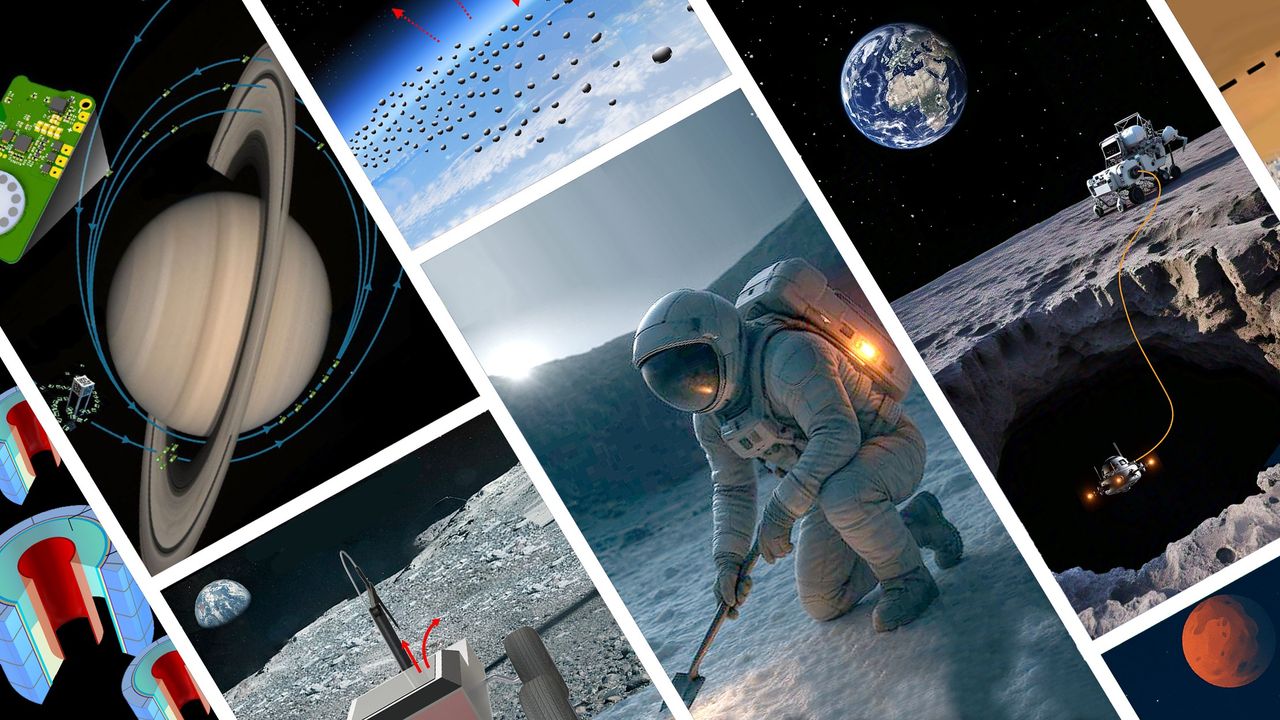
There's a particular magic in the moment when a wild idea stops being pure fiction and starts being a line item in a NASA budget. The femtosat concept—10,000 microscopic spacecraft, each no more than a few grams, sent to Saturn—feels like it was pulled from the pages of a golden-age space opera. But it's exactly the kind of "unreasonable" thinking that the NASA Innovative Advanced Concepts (NIAC) program exists to nurture. We're not talking about a mission that will launch next year; we're talking about seeding the technological soil for a harvest decades from now.
What strikes me most is the shift in philosophy. For sixty years, we've built bigger and bigger machines to go farther and farther. But a swarm of femtosats flips that equation: instead of one irreplaceable flagship, you get a thousand chances. If a single grain of a probe fails, the swarm barely notices. That's resilience not through engineering perfection, but through sheer numbers. And if they're propelled by light itself—solar sails, laser beacons, or even the faint push of sunlight—then the fuel is everywhere, free and infinite. It's exploration as a diaspora rather than a pilgrimage.
This also speaks to a deeper cultural moment. We're comfortable with swarms in software—clouds of bots, distributed ledgers, decentralized networks. Now we're applying that same logic to the physical universe. The idea of 10,000 tiny human-made artifacts settling into orbit around Saturn, whispering their data back to Earth, is both poetic and slightly unnerving. It's a reminder that our presence in the solar system doesn't have to be monolithic; it can be a murmuration.
Of course, NIAC is about planting seeds, not harvesting crops. Many of these eighteen ideas will wither in the harsh light of physics and budget reviews. But that's the point: you can't predict which one will bloom into the next Voyager or GPS. As the article from Space.com notes, the program is designed to turn "out-of-the-box ideas into out-of-this-world research." For a species that dreams of becoming interplanetary, we need to fund the impossible just to keep the possible within reach.