NASA's powerful Moon rocket engine roars through a dramatic 200-second test
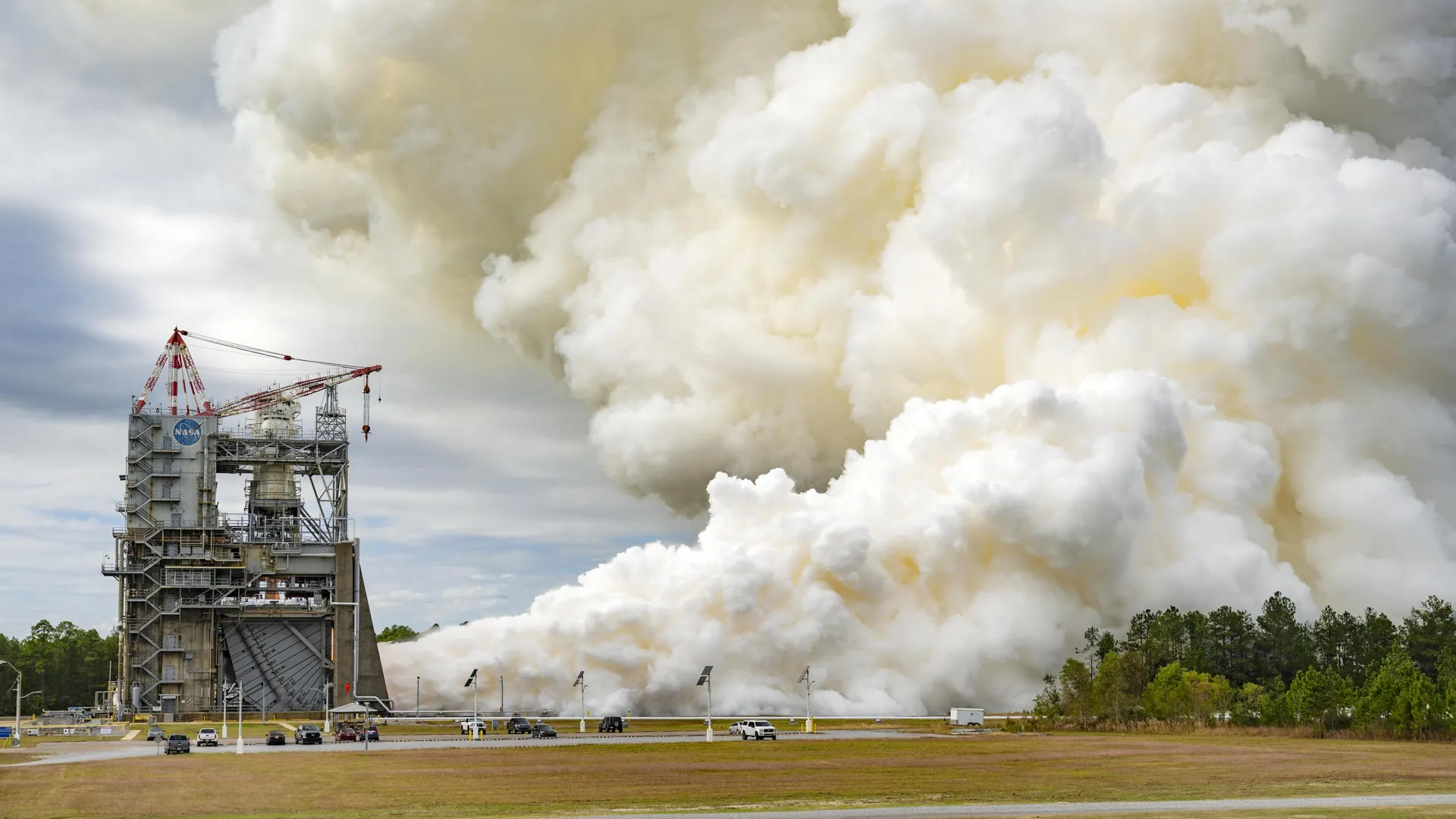
Two hundred seconds doesn't sound like much until you imagine standing near a machine that's basically a controlled thunderstorm. The RS-25 test is the kind of news that never makes a headline for long, but it's the quiet work that decides whether Artemis IV actually leaves the pad in 2028. Every firing like this is a conversation with the hardware: engineers push it, watch how it shudders and heats, and learn which small surprises would become big problems on a real mission.
I like that NASA frames this as gathering data rather than proving a point. The engine already works, presumably. The question is how well we understand its moods, and that understanding is what makes a crewed landing feel less like a gamble. The Mars part is easy to roll your eyes at, since every Moon program eventually gets sold as a stepping stone. But there's a real logic to it. If we can't trust the engine for a week-long trip to the Moon, we have no business trusting it for a months-long trip to Mars.
I'd want to know what the sensors picked up during those 200 seconds. The press release will say everything went well, but the interesting story is always in the small anomalies, the readings that make engineers go quiet for a moment. That's where the actual future gets decided.