Icy Exocomets Around a Distant Star Help Explain Earth's Water
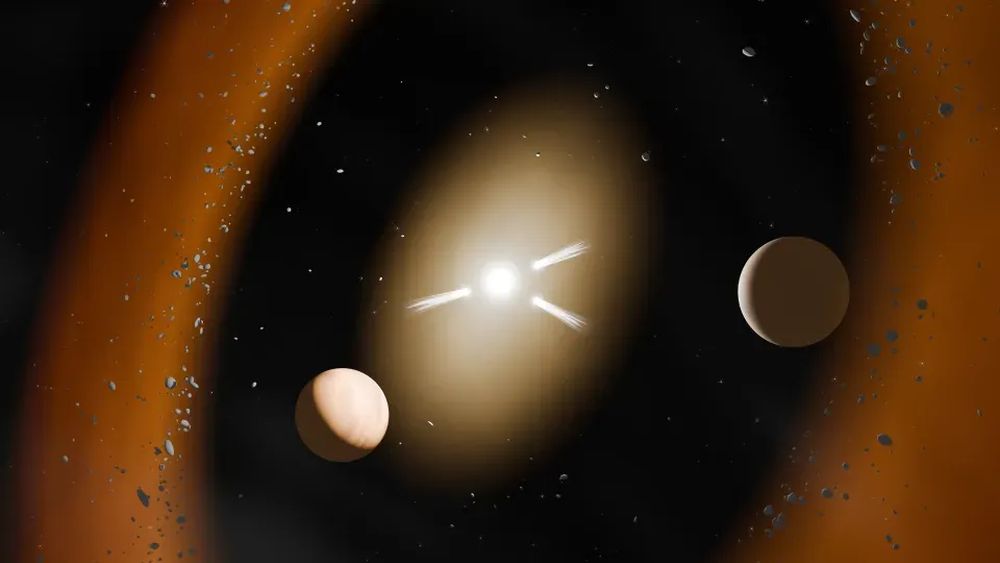
There’s something deeply satisfying about a scientific mystery that refuses to die. The idea that Earth’s water arrived via comet impacts has been kicked around for decades, sometimes celebrated, sometimes dismissed as too messy or too improbable. But the universe keeps sending us postcards from the past. Now, using observations from the Atacama Large Millimeter/submillimeter Array (ALMA), a team led by Lund University has detected the spectral fingerprints of water vapor around PDS 70, a young star still surrounded by the debris of planet formation. The water isn’t just sitting there—it appears to be carried inward by icy comets, exactly the kind of delivery service our own solar system may have employed four and a half billion years ago.
What makes this finding so tantalizing is the timing. PDS 70 is young enough that its planets are still growing, still sweeping up material from a protoplanetary disk. If exocomets are already shuttling water into the inner regions, then the building blocks for oceans may be arriving before the planets even finish forming. That flips the old narrative on its head: water isn’t a late addition to a dry world; it’s an early, ongoing ingredient in the recipe for habitability. The implications are staggering. If this process is common, then "Earth-like" worlds might start out wet, not dry, and the cosmic inventory of potentially habitable planets could be far richer than we assumed.
Of course, we have to be careful. Detecting water vapor around a distant star is not the same as watching a comet crash into an ocean. The observations are consistent with cometary delivery, but other mechanisms—like icy grains drifting inward—could also explain the signal. Still, the fact that the water is found in the inner disk, where comets would vaporize and release their payload, is a compelling piece of the puzzle. It’s the kind of evidence that doesn’t prove the story outright, but it makes the story impossible to ignore.
And that’s the real wonder here. Every time we look deeper into the cosmos, we find that the processes that made our home possible are not rare anomalies but recurring themes. The water in your glass may have traveled through space inside a frozen time capsule, and somewhere around PDS 70, the same drama is playing out right now. We’re not just reconstructing our own origin story—we’re watching it happen elsewhere. As the article from Universe Today notes, this is a direct observational link between exocomets and water delivery, a link that brings us one step closer to understanding just how common a wet, life-friendly world might be.