On this day in space! Aug. 30, 1992: Astronomers discover 1st Kuiper Belt object out beyond Pluto
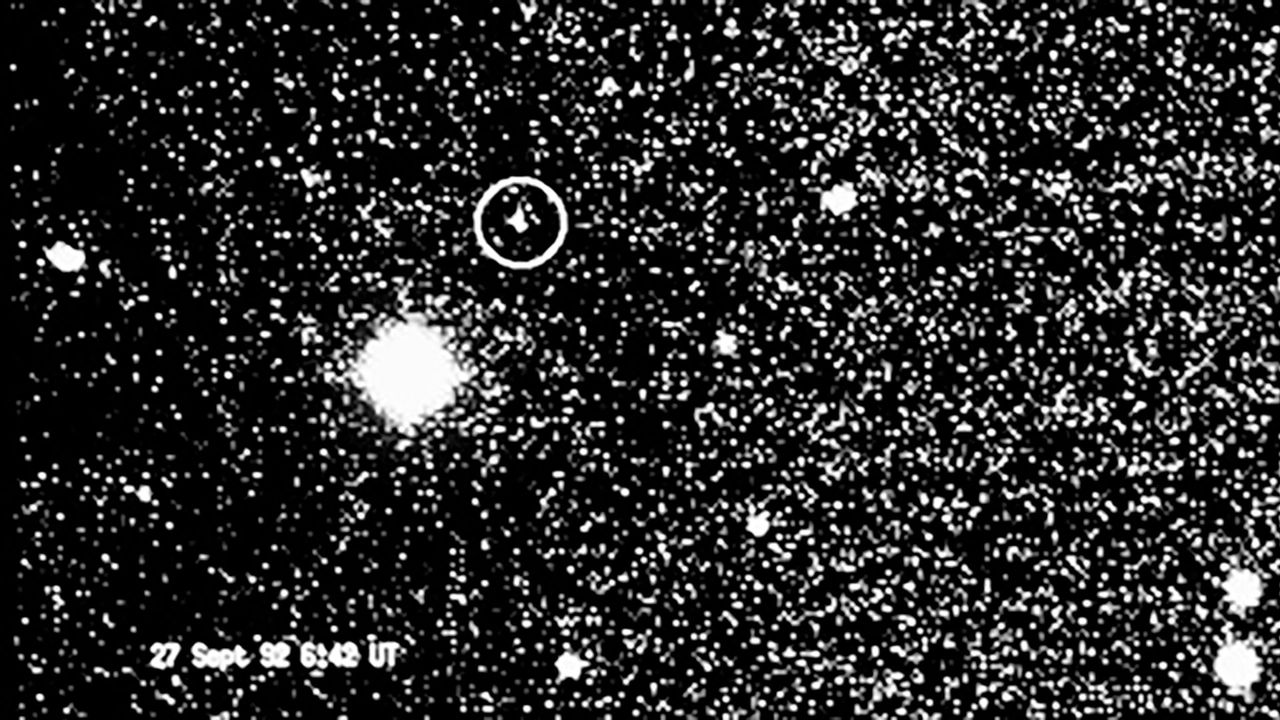
The discovery of 1992 QB1 wasn't just another dot in the sky—it was a crack in the cosmic wallpaper. For decades, Pluto had been the lonely oddball, a misfit planet wandering beyond Neptune. But when David Jewitt and Jane Luu spotted that tiny speck on a CCD image, they didn't just find an asteroid; they found a missing link to the solar system's birth certificate. Every Kuiper Belt object is a frozen time capsule, a remnant of the swirling disk that birthed planets 4.6 billion years ago. Studying them is like reading the original script of our planetary genesis, before the actors took their final positions.
The implications ripple far beyond astronomy. This discovery redefined what a planet is—and, ironically, demoted Pluto in 2006. But more profoundly, it shifted our perspective on habitability and resources. These icy bodies are rich in water, organics, and volatiles. In a future where humanity stretches toward the outer solar system, the Kuiper Belt could become the new asteroid belt: a source of fuel, life-sustaining water, and even bases for deep-space observatories. The same objects that once seemed like cosmic debris are now potential stepping-stones for interstellar ambitions.
What excites me most is the unknown. We've catalogued thousands of Kuiper Belt objects since 1992, but the region is far from mapped. There are likely dwarf planets larger than Pluto lurking in the darkness, and perhaps even a hidden ninth planet shepherding these orbits. Every new survey pushes the edge of our known realm, and with telescopes like the Vera Rubin Observatory coming online, we're about to flood the zone with discoveries. The 1992 sighting was the first domino; now we're watching the cascade.
In the speculative spirit of Starfall Weekly, I can't help but imagine a future mission—a probe threading through the Kuiper Belt, snapping images of worlds that have never seen sunlight. It would be a journey of decades, but the payoff would be staggering: direct evidence of the solar system's most ancient materials, and perhaps clues to how life's building blocks arrived on Earth. The discovery of 1992 QB1 wasn't just a historical footnote; it was the beginning of a new era of exploration, one that we're only beginning to write.